Welcome to Thousand Roads! You're welcome to view discussions or read our stories without registering, but you'll need an account to join in our events, interact with other members, or post one of your own fics. Why not become a member of our community? We'd love to have you!
Author’s Note: This trivia section was written under the assumption that readers had caught up with the full length of the story up to this point and touches frankly on major spoilers. If you’re stumbling across this from before reading Chapter 35, strongly consider revisiting it sometime after catching up.
How did you come up with Fähnlein Stärke?
From the very beginning of Once a Thief’s planning, Lacan and Sophia were envisioned as operating within a clandestine unit of Varhyde’s army whose purpose would be to fetch the ‘Dyad’ without drawing major attention to themselves and then bring her deep behind enemy lines to use as a weapon of war, which in the earliest drafts had the oh-so-creative working name of ‘Task Force’. Due to a combination of military history within the Germanosphere tending to be more fraught in terms of implications and to lean into the more old-timey vibes the in-setting society had, the decision was made that the unit would vibe after historically older military formations within the Germanosphere, which led to the decision to cast it as a Fähnlein as the predecessor unit to Companies within militaries in that cultural sphere, and led me to look at names in German that would accompany it.
For the longest time, the actual name of the unit was something that I wavered with what I wanted it to be, hence why it went unnamed until Chapter 20. One thing that I settled on quickly was that in light of Lacan and Sophia both being named in homage to the Xeno series, that it would be fitting if their unit followed a similar convention. The first direction that I considered since I had a Xenoblade X playthrough fresh on my mind, was to name it something thematically aligning with ‘Ganglion’ or ‘Growth’, after the primary antagonist faction from the game (‘Growth’ being the name of the faction in the Japanese release). For obvious reasons, it didn’t quite pan out since ‘Nervenknoten’ and ‘Wachstum’ both didn’t quite roll off the tongue. Eventually, I wound up looking back a bit further in the series for inspiration towards Xenogears, which had an antagonist faction connected to both Lacan and Sophia’s namesake characters called ‘Gebler’, a botched translation by Squaresoft’s US branch of ‘Gevurah’, the name of the sefirot of strength in Kabbalah. A quick glance at some German articles about the Tree of Life as a concept revealed that ‘Stärke’ or ‘strength’ was one of the attributes generally associated with the sefirot in German, and the rest was history.
For obvious reasons, Fähnlein Stärke did not attempt to directly mirror the role and character dynamics of its namesake organization, though it did influence some of the castings of recurring characters in it. If you happened to think that the names ‘Rank’, ‘Breuer’, ‘Helmholtz’, and ‘Strachey’ kept popping up, that was very much deliberate: they are the names of recurring minibosses from Gebler in Xenogears in the original Japanese / the game’s German fan translation, whose species castings deliberately evoke some combination of their appearances and fighting styles as bosses.
How did you come up with King Siegmund?
Siegmund was one of those characters whose identity was settled after the story took a firm decision that it would be shameless and unsubtle about leaning on the Xeno series for influence. It helped quite a bit with narrowing down what I wanted to do with a character that had the working name of ‘King’ and not terribly much to ground him other than that he was intended to get up there in years and be looking at desperate and drastic measures to carry his kingdom to victory as things started fraying around him.
In Siegmund’s case, he is an homage to Kaiser Sigmund from Xenogears (or ‘Siegmund’ in the original Japanese / its German fan translation. In Xenogears, Siegmund reigns over one of two nations in the game’s setting stuck in a Forever War with each other that is being manipulated by outside powers (a premise that should be quite familiar to players of later series games), and is perfectly willing and ready to use amoral means in order to shore up his realm amidst the strains of war. It also carried over to some of Siegmund’s character quirks in his portrayal such as his attire and his thing for organ music (which is a fairly transparent reference to how Kaiser Sigmund is introduced in his origin work).
There were a few other things that made a ‘Siegmund’ a pretty easy decision for a casting, but those are spoilers unto themselves so I will keep them in the block below:
In Xenogears, Si(e)gmund and Lacan (or more accurately, Si(e)gmund and Gra(h)f), are also linked to each other, with completely inverted character dynamics to what this story’s Siegmund and Lacan have. In Xenogears, it is Siegmund who is the younger of the two and dependent on the other as a more powerful benefactor.
Like his Xenogears namesake, Siegmund here in Once a Thief has a fairly fraught family life with a deceased wife and an estranged son. I won’t say too much more than that other than that due to the story not dealing with the topic openly other than that those who picked up on Siegmund being a homage character were likely able to very quickly identify who the crown prince of Varhyde mentioned in passing was.
As for why he’s a ‘King’ Siegmund as opposed to a ‘Kaiser’ Siegmund, that was one part not wanting to write a second ‘empire’ faction when my best-known work as a writer has one, and one part deliberate canonical ‘Tao mythos’ nod in which the rulers in the backstory mythology were ‘kings’. As for why he’s a Mienshao, that one’s easy: it’s a Pokémon one can run into as a random encounter in Dragonspiral Tower and it visually shares characteristics after Kaiser Sigmund’s design as a character, so it felt like a pretty natural casting.
How did you come up with Zeuge?
Zeuge is another one of those characters that originated as an homage to another one, though he is the rare bird in this story where he isn’t a Xeno series homage. Rather, Zeuge is a composite cameo of Martor Serperior from Pokémon Mystery Dungeon: Overthrown / Pokémon Mystery Dungeon: Dissolution. In those stories, Martor is a weapons researcher (in Overthrown) / scribe (in Dissolution) who makes appearances in the chapter teasers of those stories poking and prodding at things from his world’s past that were often best left forgotten. More than fitting for a scribe in this setting that dealt with relics and old records on a regular basis.
For a period of time during drafting, Zeuge was just flatly named ‘Martor’, but it was ultimately decided to roll a different but semantically related name in case the original character happened to ever make a proper appearance through his author’s pen someday. In this case, Zeuge is an occasionally encountered German surname that semantically means ‘witness’, while Martor is a roughly equivalent term in Romanian for the same concept.
How close Zeuge turned out to his source of inspiration is likely something only Knightfall will ever know, though it was also an opportunity to work in some deep cut referential fun here and there to Knightfall’s stories with things like him pining over a Floatzel historian from a ‘Silver City’ that had an untimely demise.
What was with those relics in the reliquary?
They are a grab bag of odds and ends from the Pokémon franchise (e.x. the case with Pokéballs) and excuses to do different references primarily to different Xeno media:
- The ‘box with knobs and cups’ with the “Vector Ah-Ghee” sigil ought to be familiar to anyone who played through Xenoblade 3: Future Redeemed, if a bit worse for wear.
- The ‘Steel Raven’ is a gutted background vehicle that can be seen around NLA in Xenoblade X with an added bonus of being a cross-fic reference to Pokémon Mystery Dungeon: Rebirth for anyone who’s read past a particular watershed chapter of that story.
- The ‘Skell’/‘Doll’ lying around is a reference to the mechs from Xenoblade X, which were called ‘Skells’/’Dolls’ depending on if one played one of the localized releases or the original Japanese. I won’t say too much about the power source that was shown off since that’s a story for another day in this tale, other than that Zeuge’s explanation of how it used to work is something readers familiar with Xenogears or Xenoblade 2’s supplemental lore likely thought sounded quite familiar.
How did you come up with Kim and Elly?
Simple, I came up ‘eternal recurrence’ subplot, of course, which was put together as a means for laying the foundations for some character dynamics for Fähnlein Stärke and its members that will become relevant in the second half of the story. As such, it was only natural that I’d look at Lacan and Sophia’s source of inspiration for ideas, which happened to provide an off-the-shelf option to work with through Kim Kasim and his lover, Elly from that game, who were similarly connected to that game’s Lacan and Sophia. A fuller explanation is below for the less spoiler-averse:
In Xenogears, Kim Kasim and Elly are preincarnations to the Lacan and Sophia of that game, who lived in a distant past while still having life arcs that followed similar trajectories and ended in a similarly star-crossed fashion.
As such, there is more than a little bit of deliberate paralleling between this story’s ‘Lacan and Sophia’ and ‘Kim and Elly’, through things such as the two having eerily similar handwriting and thought processes. It is also the source of some blink-and-miss-it character details such as Kim having a background as a healer, which are an intentional parallel to their namesakes.
And what about Fähnlein Jugend and Operation Avalanche?
Once again, the Xeno series references were out in force, with Fähnlein Jugend being named after the rather bluntly-named ‘Jugend Military Academy’ that feeds recruits into Gebler in Xenogears, which felt like a decent fit for the name of a unit that would effectively be Fähnlein Stärke's precursor. The story behind ‘Operation Avalanche’ is a bit more esoteric, but its name in German, ‘Operation Lawine’, is based on the name in the German fan translation of Xenogears for ‘Ravine’, a backstory rebel group that wound up intersecting with the lives of that ‘Kim and Elly’ as elaborated on below:
‘Kim and Elly’ join said rebel group in order to protect their daughter from one of the game’s central antagonists, which ultimately leads to their deaths.
In the case of the fan translation, the translators were having a giggle and made it a nod to Avalanche from Final Fantasy VII as a meta mythology gag to how Xenogears was a rejected candidate to be that game, thus why it did not opt for the more semantically faithful ‘Klamm’ or ‘Schlucht’, which is just as well since ‘Lawine’ rolled off the tongue a bit better.
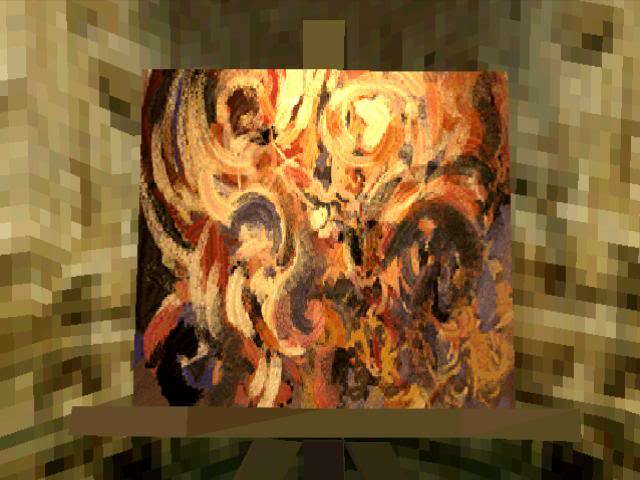
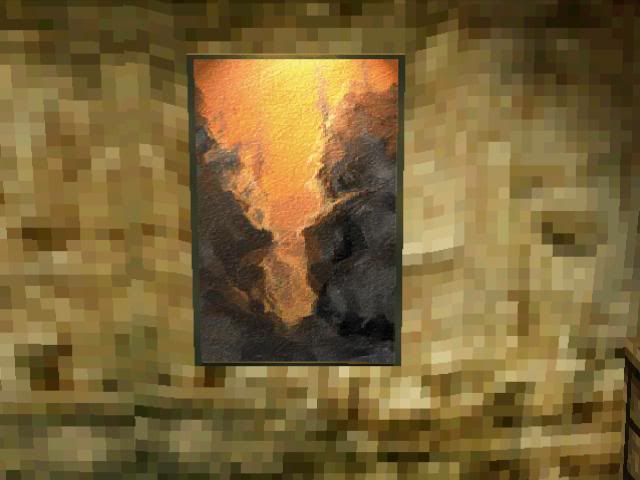
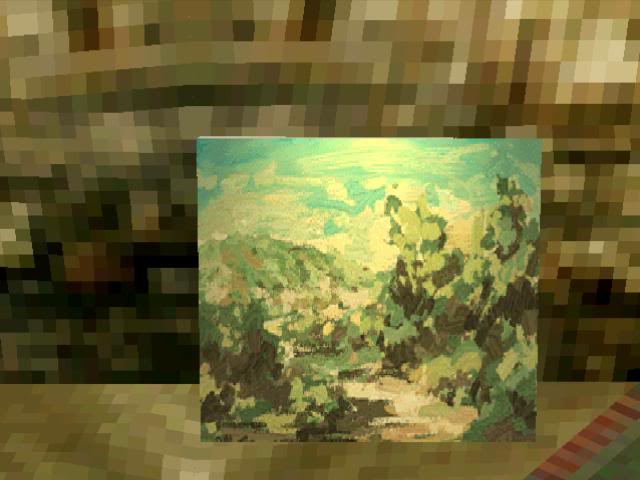
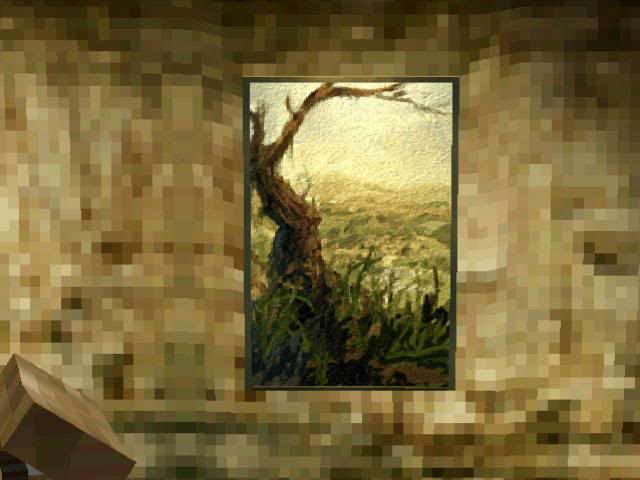
What was with those paintings in Lacan’s apartment?
As mentioned in passing to a review response some time ago, they are paintings that a player can encounter very early on while playing through Xenogears:
In Xenogears proper, they happen to be linked to Lacan’s namesake in the game, so I figured they would be appropriate for a cute cameo here. The fuller story is a bit of bigger spoiler, so once again, I shall include it in another nested spoiler:
In Xenogears, it is a reincarnation of its Lacan who makes the paintings that this story’s Lacan painted.
What’s with the armor that’s everywhere in the story?
It was one part because I thought it looked cool from the opening to M08 and one part conscious differentiation from the other big PMD work that I chip away at (even if it has since had armor worked into it in a more limited fashion). As a setting that is inherently more militarized, incorporating armor felt like an easy way to lean into those vibes and also add a degree of strategy for hostile encounters with the military.
The actual design of the standard-issue armor in this story was developed in mind for being cheap to build and discardable when degraded, which is essentially one and the same as linothorax, just with treatment to make it less flammable and prone to degrading from moisture. The dominant colors for armor used in setting being green and red is once again partly a M08 reference, as well as a less-than-subtle symbolism about how both are threats through the eyes of the cast when Lyle and Kate literally cannot distinguish between the two without added markings or cues from their wearers.
And what’s with this ‘Dyad’ thing that keeps coming up in the story?
Well, it wouldn’t be a story carrying heavy Xeno series influence without a dash of Gnostic mythos, now would it? The relationship between ‘Monad’, ‘Dyad’, and ‘Triad’ as mentioned in the teaser to Chapter 26 is almost a straight lift of the relationship that they have in Pythagoreanism and some schools of Gnosticism. Which felt more than a little fitting for a being that had been created by a great power to ultimately become three in the end.
What is with this ‘Wish’ and ‘Reality’ thing this story keeps doing with the Taos?
They are the Tao attributes that are utilized in the German localization of the Pokémon franchise: “Wunsch und Wirklichkeit”. They are utilized in this story as epithets roughly equivalent to calling Reshiram and Zekrom “Truth” and “Ideals” respectively, with Kyurem being mapped to its Pokédex category in that same localization. As for why “Truth” and “Ideals” themselves weren’t used for the Taos in this story, those were already spoken for as names for something else in this setting that will be a story for another batch of trivia in the future, as readers good at spotting details in the translation notes likely picked up on.
Es wird gesagt, dass die Menschen, als sie auf der Erde lebten, Kreaturen waren, die nach Wissen suchten. Sowohl als Mittel zur persönlichen Erleuchtung als auch zur Information über ständig fortschreitende Errungenschaften und Heldentaten. Sie erschufen Türme und Bauwerke, die unsere Ingenieurskunst nicht nachbilden konnte, und erschufen komplizierte Maschinen und Geräte mit Funktionen, die fast wie Magie wirkten.
Leistungen und Heldentaten, auf die viele von ihnen stolz waren. Genug damit, dass Klaus der Erbauer die Menschen in dessen damaliger Welt mit hochmütigen Worten wie "Einst war ein solches Wunder Göttern vorbehalten," prahlen hörte. "Aber heute geht die Menschheit einen Schritt auf das Göttliche zu!", als sie ihre großartigen Werke betrachteten.
Und dann, während des schicksalhaften Jahres, welches den Beginn unserer Ära markierte, kam der Glühende Blitz während der Mittsommertage von Heumond. In einem Augenblick hat es unsere Welt umgestaltet und dabei unzählige, noch unbekannte Wunder und das Wissen, sie im Handumdrehen neu zu erschaffen, weggefegt.
Als Pokémon in den folgenden Jahren versuchten, die Scherben aufzusammeln, soll sich der Erbauer Sorgen um einiges Wissen gemacht haben, das Pokémon bewahren wollte. Dass die Dämmerung der Menschheit von großer Hybris und Zwietracht geprägt war, auch unter denen, die einst die Macht hatten, das Schicksal der Menschheit zu ändern.
Er bestand darauf, dass ein Teil des Wissens am besten mit der Menschheit verblassen sollte, und er befürchtete, dass wir als Erben dieser Welt die gleichen Fehler erben würden, die dazu führten, dass die Menschen von der Teilung unserer Welt überrascht würden. Was dieses Wissen, das er so fürchtete, ist mit der Zeit verloren gegangen und kann nur erraten werden: Einige vermuten, dass es mit jenem strahlenden Glanz zusammenhängen könnte, der Wunsch und Wirklichkeit in dieser Welt zum ersten Mal in den Krieg gezogen hat.
Andere sagen, dass sich der Erbauer mehr Sorgen um die Denkweise von Pokémon wie uns gemacht hat. Dass wir, wenn wir uns zu sehr an die Lebensweise der Menschen klammern, dazu verdammt wären, ihre Fehler zu wiederholen. So ernüchternd die Prämisse auch ist, beim Blick auf die Geschichte unserer Zivilisationen kommt man nicht umhin, sich zu fragen, ob seine Befürchtungen gerechtfertigt waren.
- Auszug aus »Die Wahrheiter Chroniken – Eine kurze Geschichte der frühen Jahre unseres Königreichs«
The next six floors after the Monster House went in a tangled blur of towering trees and paths and chambers wedged amongst nigh-impenetrable undergrowth. True to the stories, Primordial Woods' Wilders really were strange types. Most were little runts, but occasionally Lyle and the rest of Team Forager would run into bigger and stronger Pokémon like an Armaldo and a Bastiodon, with even a Kabutops making an appearance after emerging from a stream.
As with the Tyrantrum and Aurorus, such Wilders weren't as strong as their imposing appearances made them look. But with each passing floor, the gap between perception and reality shrank further and further. By the time they'd made it to past the fifth floor down from their ambush, when they encountered an Aerodactyl, they opted to just lob a Stun Seed and hurriedly leg it away from the creature. With how quickly the Wilders they'd been encountering had been toughening up, they were not particularly eager to see how his strength compared to the Aerodactyl they'd fought from the caravan raid.
On the sixth floor down, under the shade of cascading falls that fell overhead from right to left into a seemingly endless abyss, Dalton chanced to spot a Pocket where they found a carved message from a prior traveler that marked it as the seventeenth floor of the dungeon as a whole. A quick consultation with their abridged copy of The Explorer's Handbook to Mystery Dungeons revealed that, much to their relief, they were but a few floors away from where a Link to Raptor Rock that connected the two Mystery Dungeons in spite of their vast distances apart from each other in the outside world was known to appear. A state of affairs which matched up with the guidance the Cranidos provided.
There were some things from the handbook that gave them pause, such as a worrying description of the Wilders that dwelled in Primordial Woods, as was a mention that some of the exits from Raptor Rock itself were within a day's journey of Newangle City. In spite of it, just knowing that there was an escape in sight from this miserable, damp weather was enough to lift Lyle's spirits somewhat.
"Let's try searching to the east. We've searched the entire western side of this floor, and I doubt we're going to find any more of a lead to the next set of stairs here."
Lyle blinked back to attention as Dalton pointed down a dirt path that headed off between one side lined with dense undergrowth, and fragments of a wall formed of what looked like concrete with pieces of rusted metal poking out along the top in parts. The Quilava waited for Dalton and Kate to set off, and followed after with Irune trailing behind him.
All the while, a lingering cloud seemed to hover over the group from the Axew's earlier outburst. Lyle supposed that he shouldn't have been surprised that Irune wouldn't have been cut from the same cloth as him, but something about her comments stung more than he expected. As he made his way forward trodding the damp earth underfoot, he cast a glance back at the Dragon-type from the corner of his eye, and noted that her gaze seemed to have drifted towards the ground below.
"Something the matter? You haven't said anything since that Monster House earlier," Lyle remarked. "You didn't exactly strike me as the quiet type."
Irune gave no answer for a brief moment, before turning up her gaze with a quiet scowl.
"Hrmph, we're in a Mystery Dungeon," she scoffed back. "The more noise we make, the more we'll give our position away to the Wilders that live here."
Lyle narrowed his eyes and flattened his ears out. However much the Axew was genuinely concerned about attracting Wilders, she obviously wasn't worried enough to not give that snippy retort.
"I think that our footsteps are making about as much of a racket," the Quilava harrumphed. "Besides, there was something that I wanted to know…"
"What?"
Lyle stopped, turning around and rearing up onto his hindquarters as Irune paused behind him. He folded his arms and looked down at the Axew, peering into her red eyes with a stern frown.
"Why us? There's a bunch of Pokémon out there in the world who could've helped you get out to the Divine Roost," he asked. "You obviously don't like being around us, so why didn't you ditch us back in Moonturn Square?"
Lyle waited for a reply as Irune stared back wordlessly. There was a brief, awkward silence between the two, before the Dragon-type shook her head and let out a quiet grumble.
"You don't have to like someone in order to work with them," she said. "You three were there, you all had the skills that I need for traveling partners, and I know how to get to the treasure that you want. Our interests just happened to align and we all didn't have other options."
Lyle honestly wasn't sure what to make of this kid. With how judgmental she'd been towards them, he was pretty sure she wasn't an Outlaw. At the same time, she sure knew a thing or two about keeping a 'mon at arm's length.
The Quilava frowned and let out a small huff in reply, before he turned back for his teammates and darted forward to try and make up for lost progress. When he and Irune caught up, they found that the lot of them had gathered in a chamber lined by a deep pool on their right, with two passages that branched off on opposite sides of a set of concrete pylons: one going forward, and one that turned off to their left.
Dalton eyed the pool and noted a narrow path that ran along its length towards the east, the Heliolisk taking a moment to brace himself before running at the water. Much to Lyle's astonishment, the lizard managed to run along the top of the water's surface for about half the length of the pool, before sinking into it and swimming the rest of the way over. Clearly the 'mon was a better fit for a band of river raiders than he'd given him credit for.
The Heliolisk pulled himself out of the pool, before he turned left and slipped out of view behind trees and ferns following a hidden path. After a few moments, the sound of dripping footsteps rang out, as Lyle, Kate, and Irune looked ahead to see Dalton approaching them from further down the forward path ahead of them, shaking his head.
"Alles klar.₁ This path's a straight shot, if a roundabout one," Dalton said. "It winds around past this patch of undergrowth here until it turns back towards the pond."
"Well, it narrows down our options at least," Irune grunted. "Though are we better off seeing what lies further down that path you found, or trying the left one?"
Lyle opened his mouth to answer, when he felt a sharp thump and watched as the nearby plants shook. His vents came alight with a start, the stoat feeling his muscles tense up as he turned warily to his teammates.
"What was that?"
Another thump shook the ground, and then another, and another. Kate flared her ears, when she turned towards the left entrance and listened in, before pinning them back and looking at her teammates with a tense grimace.
"Quick, go down the passage Dalton's in!" the Sneasel hissed. "Someone's coming from the left, and they don't exactly sound like bulliable runts!"
Lyle needed no further encouragement and scampered ahead on all fours after the Sneasel with Irune at his heels. The three hurriedly ducked down the path Dalton came from and tucked themselves up against a small, overgrown mound of concrete. The Fire-type looked back and felt his blood run cold as an Archeops and a Rampardos entered the chamber. He sucked in a sharp breath and hurriedly smothered his body's fire as he and his fellows went silent, just in time to see the two Rock-types warily eye their surroundings before turning to each other with sullen frowns.
"So why has everyone been in such a terrible mood today?" the Rampardos grumbled.
It's the lower levels," the Archeops harrumphed. "They've been in a panic since the Grazers haven't been bringing in enough berries as tribute to please Rankar."
Lyle twitched his ears and blinked at the Archeops' reply. "Tribute"? Wilders offered that to each other? That was the sort of thing that kings among Civils demanded of Pokémon who were their vassals. Conquered ones, at that.
"Still? Hasn't that useless glutton had his fill yet?" the Rampardos growled. "The hunting grounds outside have become increasingly barren ever since he developed that sweet tooth of his and even the Grazers are starting to complain about there not being enough food to forage! How could he possibly want more?"
Team Forager's members blinked from their hiding place, Kate giving a puzzled tilt of her ear as Lyle saw her glance over with a puzzled frown.
"Wait, are we listening to Wilders here?" Kate asked. "Or a pair of asshole nobles-?"
Lyle quietly shushed the Sneasel back and motioned for silence, as the Quilava and his companions continued to eavesdrop on the Wilders. The Archeops in the clearing ruffled his feathers briefly, before replying to the Rampardos with a low huff.
"Hrmph, well it sure seems like that old fossil is dead set on going out tearing apart this Mystery Dungeon and the alliances that have held its Pokemon together since time immemorial," the bird scoffed. "Though perhaps there's an opportunity amidst this madness for Pokémon like us…"
The Rampardos hesitated a moment, glancing about warily before he continued on in a low voice.
"What do you mean?"
"What I mean is all of the stub-arms left in this dungeon are either a bunch of unevolved runts, or have evolved early and weak from the Distortion's influence. After the way Rankar forced out the last High Chief, everyone else would be relieved to have a change of leadership," the Archeops explained. "Once he's gone, it'd be easy for the Chiefs of the other kinds of Pokémon like you or me to fill his place. Why simply backing off the Grazers' food and toning down the threats would get a good chunk of them on our side!"
The Archeops tented his wings, before shooting a knowing smirk at his counterpart.
"And if the stub-arms have an issue with it…" the bird mused. "Well, after Rankar's rule as High Chief, there'd be no shortage of the others inclined to banish the lot of them and let them try their fates outside these woods."
"You're getting ahead of yourself there, Rankar first needs to be dealt with first," the Rampardos harrumphed. "All of the old tricks that've been tried won't work on him. The 'mon holes up in his den and doesn't so much as eat without making someone else taste his food first!"
The Outlaws traded wary looks with one another, as Dalton shuffled his feet uneasily. From the mention of a 'High Chief' and the way the two Wilders were being so furtive, it was evident they were talking of some sort of leader of theirs. And more specifically how to dispose of him.
"If I didn't know any better, I'd think we were overhearing members of the Hofstaat₂ scheming against King Siegmund with talk like that," the Heliolisk murmured.
"Look," Irune whispered back. "Let's just turn around and try and find another way-"
The Archeops frowned back and looked out over the pool with a grumbling shake of his head.
"There must be a faster way… there has to be," the bird muttered.
"Wait," the Rampardos said.
All of a sudden, the Rampardos paused and raised his head, the dinosaur tensing up with narrowed eyes as he sniffed at the air.
"… I smell smoke," the Rampardos said. "Smoke like a fire was just burning here."
Lyle felt the color drain from his face and turned to see his teammates glancing at him wide-eyed. He hadn't thought the scent of his body's fire would've lingered that long, but whatever had stuck around on his pelt was enough for the Archeops to already make his way down the corridor in search. The four Outlaws hastily ducked back around the corner and darted for the path passing the pool, when they heard a sharp cry and turned to see the Archeops flying over its waters with bared teeth.
"Ah! There's Invaders here!" the bird snarled. "Get them!"
Lyle froze as the Archeops barreled forward, screeching and flashing his clawed wings for a lunging slash. The Quilava yelped and hastily dug through his bag, his paws settling on a glassy sphere that he pulled out that a parting glimpse revealed to be a Luminous Orb.
It'd have to do right now.
"Close your eyes!"
The stoat dashed the Orb against the ground, exploding it into a hail of glass shards and a blinding light that leaked through his eyelids just as the Rampardos rounded the corner. As the flash dissipated, Lyle heard a pair of sharp yelps, and opened his eyes to see the Archeops struggling to stay airborne as the Rampardos cradled his face and complained about "My eyes!"
They could work with that, Lyle hurriedly whirled around to his teammates, crying out the one word that crossed his rattled mind.
"Run!"
Lyle lowered his head and bounded forward, throwing himself forward with a Quick Attack down the corridor that made the surrounding jungle blur around him. When his vision settled, he looked back, seeing his fellows from Team Forager running after him for dear life. They caught up after a short while, as the four followed the winding course of the corridor around the bends and turns of a thickly-vegetated path all as bloodcurdling roars and heavy thumps rang out behind them.
He supposed that was as clear a sign as any that those Wilders weren't going to be content with just running them off. Dalton was at the middle of the group, while Kate was at the rear and dragging Irune ran along. The whole time, the Axew stole frantic glances behind her. A quick glimpse by Lyle to see what she'd seen revealed the silhouette of the Rampardos just falling on a ruined wall behind them.
"I don't suppose any of you picked up on some sort of hint to where the stairs were, did you?!" the Axew panted. "That Rampardos is catching up with us fast!"
"Just keep running!" Dalton cried. "We haven't checked the eastern side yet, so it must be somewhere there!"
That was all the motivation Lyle needed. He bounded ahead, coming out into a chamber ringed with walls of shattered concrete just as the others caught up with him. One that a quick scan revealed was overgrown with trees and vines and paths that branched off in three directions. Instinctively, Kate started off for the path branching rightward when a loud screech sliced through the air. Lyle turned his head and at once, his eyes shrink to pins. There was the Archeops, flying at them with fangs bared for Kate and Irune.
"Gah!" Kate yelped. "Not that way!"
The Sneasel hastily breathed frigid breath over her claws and flung a spray of icy flechettes, stopping the Archeops briefly before bolting for the corridor opposite their entrance. Lyle spat a Smokescreen at the Archeops for good measure before he and Dalton hurried after their Sneasel teammate. Lyle ducked as the sound of stones crashing into tree trunks rang out behind him and splinters zipped past his ears. Probably something like a Rock Slide, which was a sign that the Archeops wouldn't be bogged down by that Smokescreen for long.
The Quilava began to feel a burning pit in his stomach as he hurried after Kate and Irune down their present corridor. Gottverdammt, hadn't they been chased around enough for one day?! It was then that he noticed Irune turn her head, and as he snapped back to attention, Lyle heard it himself: the sound of grinding and creaking stone.
"Ah! That noise!" Irune exclaimed. "It's coming from the north!"
Lyle blinked a moment, when he realized that the creaking and groaning sounded just like a set of stairs forming on the floor. Not far away, from the sound of it, and with nary a moment to spare!
…Then again, it could've just as easily been the sound of a set of stairs sealing, but it was the only lead they had to work with. And with that Archeops and Rampardos nipping at their heels…
"Paws crossed that that's a way out…" the Quilava muttered. "Though come on! It sounded close!"
Lyle and his teammates cast a glance northwards, and while it didn't have ruined walls blocking the way, the thick undergrowth and densely spaced trees would've made attempting to move through it a fool's errand even without the Archeops hot on their tails.
"Fat lot of good that's going to do us here when we can't go that way!" Kate cried.
"We've got a Tunnel Wand somewhere in the bag!" the Quilava cried. "Just hang in there and cover me for a moment!"
A loud hiss rang out as the Archeops finally caught up with them, snarling with his wings spread and ready for a lunge.
"Got you!"
"I think not!" Dalton cried.
Lyle flinched as a loud crackle followed by a sharp screech rang out, glancing over his shoulder briefly as Dalton just finished up a Thunderbolt that stunning the ancient bird. Lyle briefly glimpsed Kate following up with an Ice Shard and Irune whigging a Totter Seed at the Archeops when he hurriedly turned his attention back to his bag. The Quilava hastily rooted through his bag, feeling a stick that a quick glance revealed to be the white, branched form of a Surround Wand, then the crook of a Switcher Wand… Gottverdammt, didn't those Hunters have any Wands that would actually help them out here?!
At last, his paws felt a pick-like shape, and a wave of relief came over him as he pulled it out and saw that sure enough, it was the Tunnel Wand he'd seen earlier. With one last glassy nub at its end marking it had a final use left in it.
"Get ready to run!" he cried. "We're going to need to make this count!"
The Quilava reflexively brought the wand down and heard the glassy layer around it shatter, followed by the wood of the Wand splintering. In a flash, the roar of rending dirt and trees joined in as the air distorted in front of them. The undergrowth and foliage in front of them abruptly parted left and right much as if a giant wedge had plowed them aside, as a gouge of cleared dirt formed directly in front of them.
Lyle didn't wait for the dust to settle and charged down the clearing, turning back and calling after his teammates.
"There's our exit! Come on!"
The rest of Team Forager's members didn't bother to protest and hurriedly ducked down the newly-opened corridor. For a brief moment, Lyle saw the Archeops stumble past it in a daze, before his teammates' bodies cut the bird off from view. Kate's ears swiveled briefly from a sound on the wind, when her eyes suddenly lit up in realization.
"Ah! Those stairs are close!" she said. "Come on, let's find them and get out of here!"
Lyle bounded ahead and out into a clearing ringed by overgrown ruins. He flinched briefly from the sudden change in light, though before he could make sense of their surroundings, he suddenly felt stones dig into his pelt and heard his teammates cry out. Lyle rolled along the ground, coming to a winded, wheezing stop on his flank as he weakly got up to his feet and saw his teammates doing likewise from being freshly sprawled out. Lyle panted as fire poured out of his vents, when his blood ran cold after a low snarl rang out from further ahead.
"Going somewhere?!"
Lyle and his companions turned towards the voice and he watched the color drain from their faces… and supposed the same was happening to him from the chill coming over his body. There, right in front of them were the steps onto the next floor, along with the Wilder Rampardos from earlier standing square in the way with his head lowered and ready to charge.
"Well I think not," the Rampardos growled back. "Since the only thing you Invaders will be seeing is the backs of your eyelids after you keel over!"
How the hell had he beaten them here?! Lyle and his teammates stood dumbfounded for a brief moment as the ground shook and the Rampardos began to charge. After a moment to shake his head, Lyle braced himself, and threw himself forward as he heard Irune cry out in alarm behind him.
"Lyle! What are you-?!"
"Just follow my lead and get to the stairs!" he shouted.
They just had to make it down the stairs before either of the Wilders, and even if the Rampardos packed a punch, if Lyle could run circles around Parker, he was sure as hell he could do the same to this Wilder. The Quilava ran at the Rock-type as fire wreathed his body, clipping him with a Flame Charge before he hurriedly sprang away. The Rampardos stumbled back slightly, before lowering his head with a menacing growl.
"Was that supposed to hurt?" the Rampardos sneered. "Your fire barely singed me!"
The dinosaur let out a loud roar and plowed ahead with another running charge. The Rampardos was right, that Flame Charge really hadn't done much to him. But that wasn't what Lyle was counting on right there.
Lyle waited as the Rampardos dashed at him, steeling himself as the ground trembled and he could hear his teammates' cries indistinctly in the background. He briefly saw the dome of the Rampardos' head, and right as the Rock-type was about to bear down on him…
"Hup!"
He sprang out of the way. The Rampardos dashed past, Lyle watching the dinosaur's head ram empty air and the Rock-type's red eyes widen just as he slipped behind him. Fire danced on Lyle's vents and white-hot cinders built up in his mouth just as the Rampardos turned his head back and noticed him.
"Huh?!"
Lyle spewed out a cone of whitish cinders, which found its mark on the Rampardos' rump. The dinosaur stiffened up with a sharp yelp, glancing back to see a fresh, reddening burn spreading over his scales. As the Wilder locked eyes with him, Lyle felt his heart pounding, mixed with a flash of confidence. Enough so that he turned his back towards the Rampardos and flared out fire from his vents, looked over his shoulder with a taunting smirk.
"Bet that one really burned your ass!" the stoat jeered. "For someone who wants to be king of this dump, you sure are a bad shot!"
From the bellowing roar the Rampardos replied with, it'd gotten under the 'mon's hide. And that was exactly what he was counting on. Lyle darted aside and sprang back and forth on his toes as the Wilder stomped the ground, calling up large stones from the ground that abruptly sailed at him. Lyle dropped and rolled out of the way as the stones zipped overhead, missing his body by mere hairs.
The Quilava sucked in a sharp breath. A bit close, but nothing he couldn't manage. Lyle got back onto his feet and bobbed around on his toes, weaving around a second hail of rocks. A glimpse back at the Rampardos revealed he was visibly fuming, the dinosaur losing his patience and then attempting to charge him, which proved even easier to weave about.
Hah! This Wilder made Parker look like an Accelgor with how easy it was to dance around him. A flash of confidence came over Lyle's face, as he stuck his tongue out at the now huffing and puffing Rampardos opposite him.
"Is that really the best you can do?!" Lyle sneered. "Hope that 'High Chief Rankar' you were going on about earlier's a slow fart like you!"
The Rampardos visibly grit his teeth in reply and glared back daggers. Lyle supposed he would have done the same himself if he had to deal with a foe that kept bouncing and weaving about just a few hairs out of his grasp.
"Stay still and fight, you cowardly furry!" the dinosaur snarled. "You'll never defeat me by just running away!"
The Rampardos was right. Even the items in Lyle's satchel wouldn't have been likely to turn this matchup around in a one-on-one fight. Except there was something the dinosaur didn't know about this matchup that Lyle did…
"You're right, I won't beat ya," the Quilava said. "But I don't need to!"
Footfalls pattering against stone rang out as the Rampardos turned his head and went wide-eyed. That was the cue that the jig was up and it was time to run. Lyle glanced over his shoulder, glimpsing Dalton and Irune running up a set of steps and into an overhanging earthen ledge as Kate followed closely behind. The Rampardos let out an exasperated cry, which Lyle quickly cut off by blowing smoke in his face. He turned and bolted as the dinosaur broke into hacking coughs afterwards, bounding ahead for the stairs when a sharp screech rang out.
"Not so fast!"
It lasted all but a few moments. First came the sound of wingbeats, then came the crushing tackle into Lyle's right flank. Lyle squealed as agony shot through his body, tumbling along the ground as he struck something sharp and sprawled out. The Quilava gasped for air as his vision went muddy, when he glanced up and saw the Archeops above him, diving in.
Lyle curled up and forced fire out of his vents, screwing his eyes shut with a low whine as he braced for the Wilder's blow. Except it never came. A pained squawk rang out and Lyle cracked his eyes open just in time to see the Flying-type reel from an Icy Wind. The Quilava panted hoarsely, when his body suddenly lurched off the ground and he stumbled to his feet after a rough tug, coming face to face with a wide-eyed Kate.
"Lyle, hurry it up already!" the Sneasel cried. "The stairs are starting to seal up!"
Lyle tore off along with Kate, pain shooting through the right side of his body as he limped after his Sneasel teammate. The Quilava looked up and to his horror saw the stairs began to seal off with earth sliding along the overhang's ceiling with a gods-awful grinding noise, the Fire-type lowered his head and lunged forward with a dash that made his surroundings blur even more around him. Not a moment too soon from the way the Archeops and the Rampardos were bellowing behind him. The stoat staggered up the steps as they quaked and groaned underfoot, when he suddenly felt small clawtips dig into his forepaws. The Fire-type's eyes widened as he was pulled sharply forward just as flying rocks struck the steps behind, sending stone fragments and dirt flying before he pitched forward face-first into damp, dark earth.
Lyle lay there as his heart pounded and his head spun as the grinding racket continued in the background. He let out a weak groan at the back of his throat and looked over to see Irune staring back at him wide-eyed. Had- Had she been the one who pulled him up the steps?
The Quilava watched as Dalton and Kate ran up and stared off at the steps, and for a second, he flinched, thinking that the Wilders had successfully followed them up the steps. And then the grinding noise stopped with a quiet click, and the floor fell silent beyond the sound of their hoarse breathing.
Lyle blinked and looked at the spot the stairs had sealed themselves off from the floor below, still gasping for air as he saw what had once been a passage sealed by dirt and rock. B-Blauflamme, that was way too close…
"L-Lyle! Are you alright?!"
Lyle looked over to see Irune running up and pawing at him. The Axew's eyes were visibly wide and startled. Was… she worried about him? The Quilava Outlaw dismissed her reaction as merely just being shaken from a close call. He was sure she'd be right back to harping on the lot of them for being thieving scum before he knew it. Lyle shook his head and staggered up, trying to project confidence in his voice, only for it to come out as a wavering stammer.
"Y-Yeah, just got nicked a bit by that bird back- Nrgh!"
Lyle flinched as he felt a sharp pain flash through the right side of his body. The Quilava looking back and saw just past his forearm, there was an oozing streak under his pelt where he'd struck the concrete outcropping. Lyle's breaths quickened and he felt his fire come alive in a panic at the sight. G-Gods, how badly had he gotten hurt back there?!
"Easy, Lyle. I don't think it's as bad as it looks."
Dalton came up to the Fire-type and eyed the wound with a quiet grimace, before shaking his head with a low sigh.
"I suppose this was to be expected, but at least it's nothing we can't patch up for now," the Heliolisk sighed. "Hang on, I think that we've got some berries that'll be able to seal this cut."
A few minutes later, Dalton had finished mashing the third piece of a quartered Oran Berry just above the wound on Lyle's flank and letting the juices seep in. Even if the topical application of healing berries could be skipped in a pinch in favor of just scarfing them down, after how harrowing the past floor had been, none of Team Forager's members were in the mood to try and make Lyle walk things off until his body metabolized the berry.
Irune looked on worriedly as Lyle lay on his side and Dalton pulled the Oran wedge back to examine the cut. A quick glance over revealed that Lyle's wound seemed to have coagulated enough for the last wedge to be applied directly onto it. Everything had worked out in the end…
… so why was she feeling this guilty about things?
"Dig in your paws and brace yourself, Lyle," Dalton instructed. "This last part's going to sting a bit."
The three of them were Outlaws, bandit scum who preyed on the weak for their pay. A part of her told her she ought to have felt coldly indifferent to their plight. They plied a dangerous trade and the only reason why they were on common ground to begin with was because of Lacan and his Fähnlein.
Except, as she watched Lyle fight against curling up into a fiery ball by reflex, those thoughts rang increasingly hollow. The more she saw the three like this, the more it gave her an uncomfortable sense of deja vu.
And it made her think of others she'd let herself grow close to against her better judgment since running from her hometown, and thoughts of what ultimately became of them. A sharp wince turned the Axew's attention back to Lyle and Dalton, just in time to see the Heliolisk pawing aside Oran-stained fur on Lyle's flank and pressing the final Oran wedge square into his wound. Irune cringed from her place on the side as the stoat audibly winced and fire danced from his vents with sharp flickers. She neared as Lyle panted from Dalton's treatment, focusing on the Quilava and then up at her other teammates with an alarmed stammer.
"Wh-Where did those two Wilders come from?!" the Axew cried. "We didn't run into any Pokémon that could do something like this on the earlier floors!"
"We've been going deeper into the Mystery Dungeon, it quite literally comes with the territory for just about any Mystery Dungeon," Dalton explained. "The Wilders that live in Mystery Dungeons like this usually like to make their homes in the Pockets further away from the entrance where they won't be disturbed. Their tougher members usually patrol closer to them to drive off would-be threats."
That… made a decent amount of sense, really. Irune herself had seen similar dynamics in other Mystery Dungeons since first going on the run back in the spring, just… not anywhere as dramatic as this. Kate pinned her ears back at Dalton's reply and turned a sharp scowl over at Irune. The Axew braced herself as the Sneasel exhaled a puff of icy breath out and folded her with a sharp huff.
"Just saying, but that's something we could have known if we had someone to guide us," the Sneasel grumbled.
Irune raised her mouth to protest indignantly, only to fall quiet and let her gaze drift to the ground. She… still didn't think much of the idea of them recruiting the Cranidos, especially knowing what the odds were for this 'Team Forager' all making it to the Divine Roost. But even then, it was hard to argue that things would've gone worse without his help.
Had she been too rash in making her decision? Even if the odds for her present teammates weren't favorable… had her choices made things worse for them? Had they made them worse for herself?
No answer came to those questions for her as Dalton finished applying the last Oran wedge. The Quilava let out a quiet wince, before snatching the pulp of the spent quarter out of the lizard's hand with a low grumble as low, irked flames simmered on his head and tail.
"Ngah… Dalton, what on earth did you do to that cut?" the Quilava demanded. "Press salt into it?"
"Oran juice carries a sting when it's applied to damaged hide," the Heliolisk harrumphed back, folding his arms. "You didn't strike me as being new to Mystery Dungeons, Lyle. You of all Pokémon should know that."
Irune told herself that it didn't make sense to dwell on things too much. After what became of the Balance Bandits, it was probably for the best to keep her present teammates at arm's length. She turned her head as Lyle bit into the pulp of his berry wedge and warily gaped about her surroundings. There weren't any ruins on this floor, and the towering, unnaturally tall and thick trees blotting out the sky weren't something they'd seen on the last floor either.
Even so, time was a luxury with the likes of Lacan and his underlings hounding their tails, and the longer they spent in Primordial Woods, the more likely he or his underlings would catch up with them. From the looks of it, Kate had realized it too with the way she uneasily shuffled and pawed at her shoulders.
"So now what?" the Sneasel asked. "Are we supposed to just hop right back into delving and hope we don't draw the short stick for run-ins again?"
Irune noticed Lyle glance over at her from the corner of her eyes. She thought of speaking up and saying something, but let her eyes drift towards the ground. Wh-What was she supposed to say to him? That she should've kept her mouth shut after the Monster House? Thankfully, the stoat didn't linger long on her before looking over at Dalton, who brought a hand up to his chin in thought before speaking up.
"We should find a Pocket and rest for a while," the Heliolisk said.
At once, Irune jolted up and stared wide-eyed at the Electric-type. Lyle and Kate looked similarly alarmed right now. W-Was Dalton even listening to himself right now?! They hadn't gone that deep into the Mystery Dungeon since they first entered it!
"B-But we're just six floors from that exit the Cranidos told us about!" Irune spluttered. "If we linger here, Lacan will-!"
"Be highly unlikely to catch up with us without us knowing it," Dalton answered. "After how much trouble the local Wilders have been giving us, do you really think entire squads of soldiers are going to be able to just march through here without us hearing them getting into fights?"
Irune blinked a few times. Now that Dalton mentioned it, with how fiercely the local Wilders had defended their territory, and how big their stronger Pokémon were… would Lacan and his underlings have been able to cow the Wilders into backing down from them? It certainly didn't seem like a safe bet.
Irune paused in thought, before she heard Dalton's tail brush the ground, and looked up to see the Heliolisk frowning down at her.
"Look, you already made it clear that you're not exactly fond about working with us, but charging ahead with Lyle in this state isn't exactly a safe gamble," Dalton harrumphed. "We should at least give him time for the berry's healing effects to kick in before we continue on again in earnest."
Irune quietly bit her tongue. She knew she'd gotten pointed after the Monster House, but she didn't go so far that she'd scared her teammates off… had she? The Axew quietly grimaced and looked away, just as she heard Lyle sigh to her right. The stoat looked down at his now-treated wound, which still sported juice stains from the Oran Berry that had been applied, before shaking his head back.
"Sounds like music to my ears," he grumbled. "Let's just hurry up and find that Pocket. There's no sense in worrying about that treasure if we can't make it off this floor in one piece."
So they were still ready to work with her. Or at least until they made it to that treasure that awaited them in the Divine Roost.
One by one, Team Forager's members set off. Lyle opted to take the rear just after Irune this time. It was hard to blame him given how he surely wouldn't fare well if he stumbled headfirst into another skirmish. A part of Irune was quietly grateful that he'd done so. Even if it wasn't as noticeable in a jungle like this versus in more normal climates for this time of year, she could swear that the air felt ever so slightly warmer around him.
Somehow, it made a little part of her feel more at peace.
Irune followed along after her Heliolisk and Sneasel teammates, as quiet doubts began to swirl in her mind. Was… she doing the right thing? She knew she didn't have many choices, and even if she hadn't fully gathered what Lacan planned on using her for, it was surely for nothing good. But if her teammates fully knew what they were facing, would the Divine Roost's treasure still be enough to motivate them? She supposed she hadn't lied to them at any point about it, but…
Irune snapped back to attention after feeling something furry and warm prod at her back. The Axew turned her head, and saw Lyle frowning over at her.
"Hey, stay focused for now," he insisted. "We're not exactly in a safe place here."
No. Even if everything she'd been told about herself really was true, those three didn't need to know about it. And if she told them everything and they ran off from her afterwards, Lacan would likely just hunt them down for leads to her and then do gods-knew-what to them. They had shared interests at the moment, and until that was no longer the case, it made sense to stick together.
…Even if it made her uncomfortable. Even if it meant that the past repeated itself.
About twenty minutes later, Team Forager came across a vine-shrouded gap between the thick roots of a tree that towered unnaturally high up into the Distortion—enough so that for a second, Kate thought they'd found a cave entrance of some sort. There, the familiar presence of Dungeon Fog spilled out, tipping them off that they were approaching a space where the Distortion's effects ended and some manner of stability began.
One quick retrieval of her guiding string from her bag and a march through later, Kate and her teammates found themselves in the hollow of a giant tree that wrapped up a stony cave at its base, with the wood growing in on each other to form what looked like a solid wall ringing the entire space. That was as clear a sign as any that they were in a Pocket and not truly back out on the surface.
That didn't worry her. What did was the presence of large, three-toed footprints in the cave's earth, along with red scales, stray white feathers, and the broken remains of brown eggshells. It was a sign that the den in the Pocket they were in belonged to a Tyrantrum.
… Or at least it had at some point. None of them could catch the scent of any Pokémon that had been in the Pocket lately, and the feathers and scales similarly lacked odor—a sign they'd been shed some time ago. Faint gouges here and there in the den's stone and healed scars in the wood gave the impression that there'd been a fierce battle here once… one that made her doubt the Wilder Tyrantrum that once lived here would ever come back to claim this place again. That should've been the end of that line of curiosity and to let her rest easy like she was supposed to, but after overhearing that Rampardos and Archeops, something kept making her wonder just what on earth happened here.
Team Forager had kept shifts since then, taking turns posting one of their number in the foggy passage back out onto the floor before coming back and trading places. Kate's turn had ended some time ago, and it had mercifully been uneventful…
Pshhhh…
Aside from how it'd been pouring buckets since about five minutes after they arrived into their Pocket and how the trip in and out of their shelter had gotten her soaked. As the sound pricking her ears reminded her, those rains hadn't gone anywhere. The sound of cascading water and a faint drip on her snout prompted Kate to sit up and turn her head towards the cave entrance. That would explain why she was thinking about Wilders' affairs. It took her mind off of having to think about that.
Dalton said that book about Mystery Dungeons they'd stolen said something about this place having midday downpours as part of its local climate. They must've lucked out while going through the past few floors, since Kate could only imagine how miserable the experience would've been if they had to go through them drenched on top of everything else.
The Sneasel laid her head down and tried to close her eyes, when she noticed a dim glow of orange fire on the walls. She turned her head and saw Lyle curled up, staring at the ground as small flames flickered on his head and tail vents.
Kate got up and made her way over beside her Quilava teammate, giving him a quiet nudge at his shoulder with her claws.
"…Can't sleep?" she asked. "You are the one who needs rest the most, you know."
The Quilava looked up at her briefly with a small frown, before turning away with a grumbling huff.
"After everything that happened back at Waterhead Cave?" he grumbled. "Were you expecting me to?"
… She should've expected that, really. Losing friends on the job was something that stung even if you got used to it. Going two years out of practice and then coming back into the Outlaw life like that…
Kate thought to say something, only for the Quilava to turn away and slump his chin against his forepaws with a sullen grumble.
"I should never have agreed to go with you."
Kate stiffened up and at once narrowed her eyes down at the Quilava. Was he blaming her for the army raid? Kate folded her arms and scowled in reply. Lyle was supposed to be the grounded one between the two of them. Surely he'd know better than that.
"Oh come on, what's with that attitude?" the Sneasel demanded. "Weather getting to you-?"
Lyle got up and whirled about as his body's fire came to life. Kate watched as a harsh glare came over his face and his voice came out in a bitter huff.
"Kate, I'm stuck in the middle of this gottverdammten jungle!" he snapped. "I had to relive one of the worst nights of my life, and my best friend's getting shipped off to die in some field gods-knows-where across the sea!"
… He was definitely a different 'mon than Kate remembered from the Foehn Gang. Laughing and making jokes alongside Alvin and their friends. Adamantly insisting that it didn't matter if his family cut him loose so long as they were there at each other's backs.
She'd held out hope that that 'mon in him would come back out once he was in good company again. From the way he was shaking his head and looking away, she was starting to doubt that that part of him would ever return.
"Really, why did I expect anything different?" Lyle muttered. "Of course a 'mon from a cursed town would have my luck."
Kate blinked at the Quilava's remark. Right, Lyle was from Freeden Village. It was a place that supposedly had incurred the disfavor of the gods sometime at the end of the last war between Varhyde and Edialeigh before the current one. As a result of that, all sorts of stories had sprung up about that disfavor carrying over to Pokémon that hailed from there.
Except, she didn't put stock in that "curse" crap. And when he was in more normal moods, Lyle didn't either. Maybe he just needed a little reminder to snap him out of that mood of his.
"And would any of that have changed if you didn't come?" Kate demanded. "Do you really think the rest of us wouldn't have still run into that Graf and his goons?"
She watched as Lyle froze and blinked back at her. It was a bit sobering to think about it, but the more that she thought about it…
"Really, the only difference would've been that you'd still be stuck in that Oran field waiting to go hungry in the winter and wouldn't have known about any of that," the Sneasel scoffed. "Would you really be happier if you found out we got raided by the army a season later on an empty stomach?"
Kate trailed off and looked away, hanging her head.
"… There's a good chance none of us would've made it out of Waterhead Cave that night if that happened," she muttered. "You're the reason why we're not getting pushed into a penal unit with Alvin right now."
Lyle bit his lip and pinned his ears back as the fire died down from his vents. His face took on a regretful twinge as the Quilava audibly tripped over his words while trying to speak up in reply.
"Th-That's not what I was trying to say-"
"Yeah, I know," Kate sighed. "And I don't blame you for looking out for yourself. It's not as if I was expecting everything to play out the way it did."
Kate shuffled up against Lyle, giving him a small poke against his side with her claw. The Quilava squirmed and recoiled in discomfort briefly and shuffled back. Glad to see that trick still worked on him, at least.
"But we've got a chance to put this all behind us don't we?" Kate insisted. "So why not take it? It's what Alvin would've wanted."
Lyle hesitated briefly, before turning aside and glumly casting a glance off at the gray, stony walls of their den.
"Maybe, but it's not like the universe really gave a crap about what he wanted," he muttered.
"N-Ngh… no… stop…"
Kate and Lyle turned their heads at the sound of Irune murmuring. There, off in a corner atop a small pile of her "treasure", the Axew was stirring in her sleep and pawing at empty air. The Sneasel blinked, before trading looks with her Quilava partner.
"… Looks like you're not the only one who's been having trouble sleeping," Kate murmured.
A flash of worry seemed to cross Lyle's eyes briefly. It was a little strange he felt so bothered by the problems of a 'mon that didn't like them all that much, but Kate supposed this must've been hitting home for him a bit. Lyle shuffled up as Irune tossed and turned in her sleep, the stoat hesitating briefly before he put a paw out and prodded at her gently.
"Irune?"
Kate watched Irune's eyes shoot wide as the Axew abruptly jolted up, prompting Lyle to jump back with a start as his vents came alight. From the way she was gasping for air and visibly quivering, she must've had one hell of a nightmare.
… Kate supposed she could see why Lyle was getting a bit worried about her. Sorta. The Sneasel sidled over as the Axew looked up at her and her Quilava teammate and shot a wary frown down.
"You doing alright?" Kate asked. "You were thrashing about in your sleep."
Irune sucked in a few sharp breaths and let her eyes drift towards the ground. She got up and pawed at her shoulder. Kate waited for the Axew's reply, only for the Dragon-type to audibly hesitate and turn her glance to avoid making eye contact.
"I've… just been through a lot lately," the Axew replied. "It's kinda been getting to me."
"Story of our lives, really."
Kate's ears pricked up at the sound of wet footsteps and dripping water, where she saw Dalton entering the cave visibly drenched. The Heliolisk fanned out his frill briefly, stopping to brush some water off his scales as he walked up, only to stop and catch himself in front of Lyle.
"Oh, by the way, it slipped my mind earlier in between the chaos of us skipping town…" Dalton began.
The Heliolisk dug through his satchel and fetched out a cloth purse, dropping it in front of the Quilava with an audible clink. Kate blinked at the sight and Lyle seemed similarly at a loss before Dalton narrowed his eyes with a small sigh.
"It's your share of the loot from this morning. You didn't forget, did you?" he asked. "I was hoping to do this someplace in Toya Square, but now's probably as good a time and place as any."
Right, Dalton had held onto Lyle's share of their loot from last night as part of being trusted to handle the goods for Hermes. Kate noted to herself that she probably should have remembered that better given that she was the one who suggested Dalton do that in the first place.
Lyle eyed the purse and quietly pawed through its contents, counting under his breath. After a brief moment, he sealed it and stuffed it into his satchel. That was as good a sign as any that Dalton had been honest in his dealings. Even if it was cold comfort at the moment, at least they could take it for granted they could trust the 'mon. Probably, anyways.
Kate watched the cave briefly come aglow as Lyle stretched and a spurt of fire came from his vents. Looked like the rest in the cave had done him some good given that he wasn't moving as stiffly as when they stopped to patch him up earlier.
"…Thanks. Though what are you doing back so soon?" Lyle asked. "I thought that it was your turn to keep watch."
"There's no point right now," Dalton said, shaking his head. "The Dungeon Winds caught up with the entrance outside and are currently scouring the floor."
Right, that was a thing in Mystery Dungeons and why any Pokémon, Wilder or Civil, sought out Pockets if they were going to stay on one floor for any length of time. Every so often, the Distortion would shift and wipe floors clean so that way they could form anew, through howling winds that came along and blew away everything in their path into gods-knew-where else in its confines. Sometimes, a 'mon would get lucky and get dumped by such winds at an entrance, but more normally it meant getting thrown to some floor with no idea of where one was, much like if one fell into the Distortion from venturing too far off a path.
… Probably worse than that, since she'd heard stories of Pokémon who'd suffered both fates. Pokémon that fell through the Distortion usually were able to get up and tell the tale afterwards, there were definitely fewer who got swept up by those winds who could say the same. A 'mon would also need to contend with flying debris or getting blown into things, a recipe for disaster in just about any Mystery Dungeon, but in one with Wilders as aggressive as this one…
"Well, I suppose that's one way to tell us that we won't need to worry about Grünhäuter for a while," Kate murmured, shaking her head.
"Actually… that gets into the point that I was going to get at," Dalton replied. "Namely that we probably don't need to worry about Grünhäuter while we're in this Mystery Dungeon."
Kate blinked at Dalton's explanation, and noted Irune looking similarly surprised. The Axew tilted her head at the Electric-type, giving a wary frown in reply.
"What makes you so sure, Dalton?"
"Because Lacan's goons were in earshot when we entered and it's been half a day since then," the Electric-type answered.
… Had it really been that long? Kate knew that they'd gotten a run of good luck with the first few floors, but now that Scales mentioned it, it did seem a little suspicious that they hadn't even overheard the Wilders going on about 'Invaders'. One would think that a Fähnlein wouldn't exactly be subtle while barging through a Mystery Dungeon.
Even so, something about this wasn't adding up for Kate. Lyle seemed to think similarly, judging from the way that the Quilava was pinning his ears back and frowning.
"Not that I'm complaining, but why would that Salamence do that?" Lyle asked. "He's not exactly a pushover, and he wouldn't be able to get Irune any faster just sitting and waiting outside."
Irune suddenly blanched and her jaw flopped open. The Axew's eyes visibly shrank to pins, as she turned to her teammates and waved her arms in alarm.
"Th-That's exactly what he's doing right now! He's probably sent his soldiers to try and wait near the exits to ambush us!" Irune exclaimed. "It's not the first time that he's done that to me, either!"
… As counter-intuitive as it sounded at first, maybe Lacan really could get at Irune just by sitting and waiting outside. If he had some sort of book about Mystery Dungeons like them, he almost certainly knew that between the Wilders and the gods-awful weather, that this place was wearing them down. Then for all they knew, there wasn't a safe place to leave this gottverdammten hole.
Kate bit her lip and pinned her ears back, before looking over to her teammates.
"So just what are we supposed to do now?"
Dalton and Lyle both remained silent. The Heliolisk raised his voice to say something, only for him to trail off and quietly grimace. Whatever idea he'd had, he'd clearly realized it wouldn't work. Lyle was visibly on-edge as his vents were flickering with nervous fire, staring down at the cave floor with a blank expression much like if Lacan's soldiers had just barged into their Pocket.
A great sign for their odds, really. Curiously, Irune seemed to pause and catch herself. The Axew raised a claw to her mouth and mused a bit, before she looked back at the rest of them and murmured to herself.
"That Cranidos…" she said. "He said there was a Link to a 'place like this' four floors from here."
Kate thought back to the encounter with the Cranidos, and tried to keep herself from being too bitter over the way that Irune had blown up their chance at getting a guide out of this place. A starry-eyed kid like him full of fight would've done them a lot of good right now. If Irune was talking about what Kate thought the Axew was, the Cranidos had mentioned 'a passage that links to another place like this beyond the mist'. Kate turned her head over to Lyle, as a light seemed to go off in his eyes and he stiffened up.
"The copy of the handbook we've got did say there was a Link to Raptor Rock not far from where we were," Lyle mused. "That must be what he was talking about. But didn't we already know this? How's that change anything?"
"Wouldn't the exits from that Mystery Dungeon be harder for him to get to?" Irune asked. "It looked far away on the map in the handbook."
… Right, Raptor Rock was just barely visible over the horizon before they crashed on Hermes. A Fähnlein usually had around 400 'mons on it, and there weren't 400 'mons there back at the ambush. Even if Lacan knew about the way Primordial Woods and Raptor Rock linked with each other, he only had so many 'mons to go around, and it meant they had decent odds of beating his goons out of there. Or at least coming across a party that was small and likely winded enough from a long journey that they'd have better odds fighting their way past them.
Kate supposed the plan sounded like it could work on paper, but…
"Hold on just a minute. Raptor Rock's a day's journey from Newangle City!" Dalton protested. "Why would we want to be going there again when there's tons of soldiers garrisoned in the Royal Capital?!"
That actually wasn't the problem Kate was thinking of, but now Scales brought it up, that was another risk of trying to sneak out from there.
"Because we're having trouble holding up now, so we should logically try to get out of this Mystery Dungeon while we can?" Irune said. "Also, coming out onto the surface someplace away from Primordial Woods' normal exits isn't exactly a bad thing. It'd give us time to make ourselves scarce before Lacan could catch up or otherwise tip off the local Grünhäuter about us."
Kate admitted that that was a decent argument. After all, if Newangle City really was as treacherous for Outlaws as Dalton implied the other day, would Lacan really expect them to flee towards it? Surely that'd throw him off their trail at least for a little bit.
It was all fine and great, except it didn't take care of the problem the Sneasel had had with this idea all along.
"Yeah, but the Cranidos also made it sound like something was wrong with that exit."
A moment of tense silence hung in the den's air afterwards, and Kate noted that her teammates were trading worried looks. She initially hadn't thought much of the Cranidos' words, but after how much of a slog the past few floors had been, it didn't exactly inspire confidence about what could be going on with the entrance to that Link.
Lyle bit his lip and hesitated a moment, before shaking his head in reply and stepping forward.
"… We'll try and prepare for a fight beforehand and do what we can to dodge it," Lyle said. "We can try laying low in quieter places on the next floors until it gets later in the day. We'd be most likely to have smooth sailing towards the evening when the Wilders that are awake by day are starting to tire out and the ones that are awake by night are just starting to get up."
Kate opened her mouth to reflexively protest. Before she could get a word out, the Quilava spotted her and motioned for silence, before looking around at the others.
"… I know it's not a good option," the Fire-type murmured. "But if Irune's right about what Lacan's up to, I'm not sure if we have a whole lot of better ones."
Kate paused and inhaled sharply. She didn't like this idea, but it was hard to argue that Lyle didn't have a point. Between what would likely boil down to fighting their way through strong, angry Wilders and strong, angry Grünhäuter fresh from the army… it was hard to argue with a straight face that fighting the Wilders wasn't the lesser evil.
The Sneasel cast a glance over towards her teammates. Irune for obvious reasons had made her peace with the idea, while Dalton seemed visibly hesitant. The Heliolisk stared off towards the mouth of the cave, before shaking his head with a low sigh.
"It's as good a hope as any, though it'd be best not to pass up the Dungeon Winds on this floor," he said. "If we want to avoid the local Wilders leaving this place, we should set off out of this Pocket as soon as things settle down outside the fog."
…Wait, as in right now? Kate peeked out at the still-pouring rain outside and grimaced. She wasn't looking forward to getting drenched again. Irune seemed visibly uneasy about the idea herself, while Lyle was stiff and staring out blankly much as if Lacan himself had entered their pocket.
Kate watched her Quilava teammate pin his ears back as a disgusted shudder briefly went down his back. He turned over to Dalton and traded glances between him and the rain with an uneasy paw at the back of his head.
"… Dungeon Winds usually last a decent while, right?" the Quilava asked. "Let's… try to wait for the rain to settle down a bit more first before we go and check."
Yeah, that was an idea she could definitely get behind.
Author's Notes
Alt Title
Kapitel 11 - Wille
Words and Phrases
1. Alles klar - "All clear"
2. Hofstaat - "court", in the sense of a sovereign's household or entourage.
Teaser Text
It is said that when humans walked the earth, they were creatures that sought out knowledge. Both as a means for personal enlightenment and to inform ever-advancing accomplishments and feats. They fashioned towers and structures beyond the ability of our engineering to replicate, and created intricate machines and devices with functionalities that seemed much like magic.
Accomplishments and feats that many of them grew proud of. Enough so that it is said that Klaus the Founder heard humans in the world-that-was boast with haughty words such as "Such a wonder was once reserved for gods. But today, humanity takes a step towards the divine!"ᵃ as they beheld their great works.
And then, during the fateful year that marked the beginning of our era, the Great Flash came during the midsummer days of Heumond. In an instant, it reshaped our world, and in the process, swept away untold wonders and the knowledge to recreate them in the twinkling of an eye.
As Pokémon attempted to pick up the pieces in the years that followed, it is said that the Founder worried over some of the knowledge that Pokémon strove to preserve. That the twilight of humanity had been marked with great hubris and dissension, including among those who once held the power to change humanity's fate.
He insisted that some knowledge was best left to fade with humanity, and he feared that we as inheritors of this world would inherit the same flaws that left humans to be caught unawares by our world's sundering. What that knowledge he so feared has been lost to time and can only be guessed at: some theorize it might relate to that radiant splendor which first drew Wish and Reality to war in this world.
Others say that the Founder worried more over the mindset of Pokémon like us. That by clinging too tightly to the ways of humans, we would be doomed to repeat their mistakes. As sobering as the premise is, when looking over the sweep of our civilizations' histories, one cannot help but wonder if his fears were justified.
- Excerpt from 'The Varhyder Chronicles - A Brief History of our Kingdom's Early Years'
a. This quote is delivered in two parts in the original German due to grammatical rules. The combined form here is a roughly equivalent gloss.
I won't go into as much detail as usual, since I've mostly been catching up to where I once stopped reading, but I still had some thoughts to share!
One such thought is that I'm surprised, seeing Irune's POV for the first time, that the Balance Bandits actually existed. I suspected them to be a complete fabrication, but perhaps it was only a half lie: they existed, but were merely accompanying her to the Divine Roost as Team Forager now is, rather than her being an official member.
Still, there's an interesting conundrum forming here. Irune is, of course, absolutely right that these four are pretty scummy individuals overall. They might have sympathetic reasons for being so, such as Lyle pushed into this "profession" by desperation, poverty, and wishing to help his mother from conscription -- but it doesn't change the fact that their actions are highly immoral. I see both sides of the argument regarding that Cranidos, but someone young and easily influenceable probably shouldn't be following a band of callous outlaws being pursued by a large military force ruling much of the world outside this dungeon. I do think it was a strong showing of character for Irune to send him away the way she did.
There are a few issues I wanted to point out:
- Firstly, the narration has a slight tendency to "tell" rather "show", or sometimes to both show and tell the same thing, resulting in repetition. I could give a fair few examples, but one would be in chapter 6, when the fact that Carolins have been losing value compared to poké is mentioned four different times throughout the chapter.
Another example is in chapter 11, in this passage:
Kate blinked at the Quilava's remark. Right, Lyle was from Freeden Village. It was a place that supposedly had incurred the disfavor of the gods sometime at the end of the last war between Varhyde and Edialeigh before the current one. As a result of that, all sorts of stories had sprung up about that disfavor carrying over to Pokémon that hailed from there.
Mind you, this part works just fine. However, I feel like small worldbuilding details like this could do with having some mystery left to them rather than being explained exhaustively on first go. This is how I'd recommend rephrasing this:
Kate blinked at the Quilava's remark. Right, Lyle was from Freeden Village. One of few settlements to openly support Edialeigh's invasion, a sin which the gods supposedly wanted all its generations to follow to pay for.
Written a little rough, but I think you get the idea.
- Secondly, the pacing's been... good, so far, but ever since the brief respite scene following the caravan scene, it feels as though the story's been shooting forward at neck-breaking speed. There were two calmer scenes at the makeshift encampment before they entered Moonturn Square, and the final scene in this chapter -- but they only cover about 10% of word count where 90% is made up of action, escape sequences, or dialogue scenes where our characters are still in imminent or soon-to-be danger. It's worked well so far, but I do hope we get more time (perhaps even half a chapter?) soon enough where our characters can rest, recuperate, develop their inter-personal bonds, and get their bearings.
One side-effect has been that I haven't noticed as much character development as I was hoping to see outside of Lyle, and a little bit for Irune. After that final scene in chapter 11, however, I am much more optimistic of this problem smoothing itself out. I'm especially curious to hear more about Kate, and Dalton seems to be hiding a past as part of the nobility.
Overall, I'm glad to have started re-reading this story. It's been a treat to read! See you on the next review!
Now this is podracingV-Wheeling. Lemme see if I remember. When last I left the intrepid "heroes," they'd gone to the library to acquire lore, got the lore, escaped, learned Irune is kinda sorta God™ or whatever the original dragon counts as in this fic's setting. I don't think I can say "part of the Trinity Processor," even though something split into three parts brings that joke to mind.
... Oh, and they got captured by the army.
31
-Seeing the comment about where the outlaws are getting sent just brings to mind that "Sending Eevee to War" memetic image.
-Ah, yes, more of Sophia's tragic backstory and a teasing cliffhanger of not revealing what's in the important letter. A letter that may give her a new perspective on all this, since she's nurturing doubts to begin with.
-Not the Skyrim meme.
-Man, I sincerely hope this is not trying to pitch a tournament arc. We do not need a tournament arc.
-Narrator: Kate will never learn when to stop talking.
-And now we're treated to the Hallmark-style slideshow of Lyle's traumatic backstory. One really has to wonder how, despite things turning out so badly the last time, Lyle genuinely thought any of what kick-started this would be a good idea.
-So something big happened with all three of the gen V dergs getting into a scuffle. I'm not sure if that's what actually took place in the letters Olivia's going through or if this is more of a distant thing. Mostly because my memory's jumbled.
-I know she's being kept in a vault, so treasure's to be expected, but I find the thought of the king just having a treasure horde on standby because Reshiram is a dragon who loves a good treasure horde amusing.
-Hope Lacan has no intention of passing on his bloodline because he is terrible with children, holy hell. If there's a redemption in the works for this guy, it's gonna take a lot of work on Sophia'syour part. But if he is meant to be a puppykicker, then I guess this works.
-So, Irune is three Unovan derg legends in a trenchcoat. And this kingdom's goal is to make Irune no longer baby but want power and, I guess, have the three Tao pieces war with each other in the capital of Edialeigher with the belief it'll force that side to surrender unconditionally?
32
-Oh, hey, look, I was right about that letter's contents... which I presume is what's opening the chapter but, of course, only gets translated at the end.
-Welp, plan confirmed. I'm also seeing uncomfortable parallels between this and the Allies' final strategy in the Pacific back in WW2. Irune's the bomb they want to drop on this city, except they need fighting to happen first.
-Irune needs more power, huh? I know a guy who could help with that. They say he's the storm that is approaching.
-And with that, smol child is effectively broken for the time being. Good jorb, Lacan.
-Looks like Irune losing control will not be the escape mechanism, but rather just a couple of random guys trying to leave their wagon. No idea if that would be successful, but we're getting to escaping much faster than I expected.
-I have no idea how this arguing with Dalton (which gets a bit physical) is not alerting whatever guards are escorting this wagon. It doesn't seem that soundproof. Even if they're all whispering, surely the guards would still hear something?
-Okay, good, the slapdash plan ended up failing anyway lol.
-GOOD GRIEF HE'S NAKED.
-And there's the realization for Sophia. Looks like she's not up to snuff as a morality pet, so things are moving forward. Also, obligatory "WHAT AM I FIGHTING FOOOOOOOOOOOR?"
33
-I'm a bit confused as to just how much of a wrong turn these wagons somehow took? Like it still seems as though they're close to the intended destination, just on a somewhat rougher stretch of road or something? I guess it's ultimately harmless and mostly used to establish concretely that they're going to the conscription port. It... is looking like they're not going to get out of it unless their caravan gets attacked. And, well, we do need to have this fic spend some time in Edialeigh if it's going to be a proper Xenoblade-but-PMD fic.
-So the trio used to roost together in Varhyde? I feel like that's the "Divine Roost" that Irune wanted to get to... and getting there might've allowed her three parts to find that same solace and peace that got squashed previously. Which is precisely why the exact opposite will be happening, apparently.
-Ah, yes, a seviper/zangoose duo. Never seen that one before. /s
-Man, and here I thought I'd get through one of these without a scarf change. At least it's forced on them.
-Off to basic training they go.
I do feel like this is ramping up to transition into the various characters ending up in Edialeigh. Which, again, makes me think we're at a halfway mark at best here.
Hey, Fobbie. Here for my Blitzly catch-up on Once a Thief, through Chapter 35. And what a run of chapters it is! This feels like the most action-packed set of chapters in the fic thus far. The gang gets captured and split up, Sophia confronts Lacan about what's going on with Operation Spark, Lyle is reunited with Alvin--all good stuff.
I really appreciated Kate during this section. When the other characters are moping are paralyzed--understandably, but still--she's still out there full of sarcastic energy, causing problems and getting everyone into more trouble. Arguably they don't need more trouble at this point, but Kate's antics certainly keep things moving forward when they otherwise might wallow. Her behavior is rarely wise, but you do have to admire her chutzpah. She makes a nice contrast to the rest of the cast, especially in this most recent section.
I also enjoyed the reveal that Operation Spark is looking to intentionally provoke the Dyad into basically going nulcear with all three dragons going on a rampage, and also that Lacan has been aware of this all along. It makes a lot of sense with the way we've seen the army acting towards Irune thus far--like Lacan says, I guess it doesn't actually matter at all how she feels about her situation or whether she's interested in helping them of her own free will! It also really throws the moral quandary Sophia's been in the entire time into stark relief. I'm rooting for her to do something to put a stop to all this, although her ability to do so seems limited, if Lacan's going to try and keep her away from the actual fighting. I liked how deeply Sophia's been disturbed by what she learned from the letters she read, and how it changes her perspective on Lacan completely. When your best bud of many years is looking to commit war crimes on purpose instead of by accident, oof.
There are some things that bother me about the reveal, specifically. In the first place, did Lacan somehow think Sophia already knew about the true intentions of Operation Spark? If not, why did he send her to read the reports about the incident at Freeden Village, probably one of the weirdest and least pleasant ways for her to learn the truth? If so, why isn't he more put out by her clear horror over the situation? In general, I was surprised that Lacan didn't follow up at all after confirming for Sophia that he knew they were trying to provoke Irune's split. He obviously got the sense that she wasn't totally on board, but Sophia wasn't just not super into it, she was devastated, and I didn't get the sense that she did a super great job of hiding that fact, either. It is entirely possible that Lacan just has the emotional intelligence of a brick and doesn't get why this would be a big deal, and why his casual reveal that he's hoping to wipe out a major city would be disturbing, but it just struck me as odd that after he tells Sophia what's up he doesn't seem to think about the matter much at all afterwards.
I'm not sure I'm 100% tracking with what's going on with Irune's dreams in combination with what we've been learning about the country's history. Best understanding is, last time the three dragons awoke, they inadvertently destroyed Freeden Village. Zekrom ended up siding with Varhyde in the conflict, along with Reshiram, for reasons I don't think have been discussed? This temporarily put Edialeigh into serious retreat, since having their patron fighting against them was obviously terrifying. However, something(?) caused Zekrom to switch sides to Edialeigh again, and the war started up again. I think the dragons ended up killing each other in battle, leading to Irune, but not totally clear on that--I guess there was some other huge battle between the three of them, maybe with Zekrom and Reshiram trying to reconcile, but Kyurem getting in the way of everything for some reason?
Based on Irune's dreams, the dragons had made a pact before where they agreed not to fight each other (and/or fight in the war between the nations?) anymore. And then, for some reason, they go back on that--maybe something to do with the mortal helpers/friends Zekrom and Reshiram have (the charizard/ampharos). I'm curious whether they made a similar resolution before dying, again, and what if anything they might have done to try and ensure they actually wouldn't end up trapped in the cycle of battle again when they reincarnated. It's certainly something that Irune's been preoccupied with the whole time, trying to keep her aspects from splitting up and warring with each other. It's also something that would throw a huge wrench into Operation Spark if it actually works this time!
I realize that we aren't supposed to understand everything about the history or this situation at this point, and more will be revealed later; I just hope I'm not too far off where you're expecting people to be at this point.
I am kind of intrigued where the other legends might be hanging out at this point--can't remember whether it's been stated what's up with them before. The image of Ho-Oh in Irune's book suggests that the other legends are known, but they don't seem to be around. Did they just take off rather than get involved with the war? Have they not reincarnated for some reason? I don't expect any of them to matter for the resolution of the plot, but the book got me thinking about it.
But enough about Irune and all the Lore going on there! While being transported against her will to her presumed death and also probably the deaths of thousands of other mon is pretty bad, Lyle and the gang are also staring down likely-death with the added twist that basically all of their superiors hate them.
I'm not mad about the gang getting captured, and having them evade the army after all the problems laid out by Lyle and Dalton when trying to plan their route would probably have gotten a bit difficult to believe. I am rooting for them to end up at the Divine Roost at some point, still; I'm intrigued by what Irune's hoping to find there that might put an end to the endless war between her aspects. And the others can have a little treasure, too, as a treat. :P
I was surprised that Kate didn't seem to be in any pain during her discussion with Dalton, aside from a couple mentions of her claws hurting. It sounded like she took some pretty nasty damage at the end of the fight, like a broken rib or something? I was surprised she didn't even seem to have any generalized aches and pains, much less whatever that was, after she woke up in custody.
And finally, Alvin's back! I've been awaiting the payoff of this subplot for a long while, so while we haven't seen much of him yet, I'm excited for what's to come. It was very sweet that he doesn't blame Lyle for leaving him behind to get captured, although Lyle sensed that not all was well there. I'm hoping for complicated feelings on both sides!
On a small note about prose, one thing I did notice quite a bit of in this section was the use of filter words--things like "Lyle saw X" or "Lyle felt X." These sorts of phrasings tend to create a sense of distance from the POV character, e.g. "Lyle felt a claw stab into his back" is a less immediate and visceral description than "A claw stabbed into Lyle's back." There's nothing wrong with that sort of construction as such, but you might want to consider if there's a reason to prefer the more indirect version, where we're told about a character perceiving a thing happening, over the more straightforward description of something happening to them.
All in all, this has been one of the most enjoyable parts of the fic thus far for me. It feels like the various plot threads are starting to pay off and converge, which is always a satisfying part of the story. Perhaps not too terribly much more of this fic to go? I wasn't expecting everyone to end up captured, and I don't really have a good gauge of where things are going from here, so it's hard for me to guess!
34
-Ah, lovely. The implication that apricorns do not have stasis and can be used as a torture method. What a lovely place Varhyde is.
-Kate's POV on this whole spiel can boil down to "The military sucks." XD
-I genuinely hope that this is the moment where Kate finally learns that she needs to put a sock in it. You could argue that's hypocritical of me to say considering some of the characters I write, but with Nikki she just gets verbally clapped back at worst and Gene can walk the walk to back up his talking. Kate cannot. It's gotten her and her teammates hurt. This time badly. And we're 30+ chapters in. Character development's gotta happen at some point, right?
-Oh, and Lyle and Dalton get themselves involved, too, for good measure. I expected Dalton to since he's got his army hate boner. But Lyle's supposed to have somewhat better self-preservation skills and he seems to come out of it possibly the worst of the trio. Maybe this is rock bottom for the group?
-Ah, poor Sophia, doubting herself when she's surrounded by a bunch of "My kingdom, right or wrong," types ready to follow orders to the grave. I do believe there was probably some sort of conspiracy going on here. Though I think it's more along the lines of a third-party manipulating both kingdoms into this constant fighting and cycle of having the dragons raze a bunch of territory. Since I vaguely seem to recall at least two Xenoblade games are structured around that sort of thing.
-The guards could hear her the whole time is like a couple of steps removed from "Erm, he's right behind me, isn't he?"
-Yeah, I didn't expect Irune's hope spot to actually mean anything given how the scene with Sophia ended. Impressive that she managed to hurt herself this much, but I suppose flinging yourself at an impregnable door would lead to those results, dragon or not.
-Well, this chapter was depressing enough, so I suppose we'll just toss Alvin in there to try and make things 1% better.
35
-Sorry, Alvin, you're in the wrong fic for the power of friendship to do anything here. Doesn't tend to work well when PMD fics lean closer to grimdark.
-Lol it's amazing the difference in backstory length between Kate and Dalton. Though now I think we finally have the full story on what's going on with Dalton. Certainly tragic, though he really hasn't done himself any favors in the interim.
-Another tiny power of friendship moment that doesn't exactly work, but at least it's lampshaded, I guess? Still, at the start of the scene with Kate questioning herself I was really wondering if this maybe was the corner turning I'd hoped for. Buuuuuut not so much. Maybe it's the start of her changing a bit, but jury's out on that for the moment.
-Why does this dream give me the feeling that the dragons' fighting is spurned by someone, like that ampharos? And that maybe they're still around in the present, even if it's in a different form.
-Wait, Lacan used the exact same group that lost Irune in the first place? Whyyyyyyyyy wouldn't he be overseeing a personal escort? That just strikes me as extremely boneheaded, given the point in the fic we're at. As if you needed a convenient means for Irune to pull off the escape and this was the only way to make it happen.
I can see why you're so enamored with Rebirth. Because I'll admit that this fic gives me the same heavy doses of bitterness Rebirth did in its heyday. Are the Xenoblade games depressing? I thought they were full of anime tropes with British narmy voice acting. But if I'm wrong then perhaps it is for the best I never engage with that source material. 😅
Heya, this took me a bit longer than I’d have liked to get through, but I’m back with a fresh update today, and with it, a fresh set of review responses that I’ll just slide in and get right into:
I won't go into as much detail as usual, since I've mostly been catching up to where I once stopped reading, but I still had some thoughts to share!
One such thought is that I'm surprised, seeing Irune's POV for the first time, that the Balance Bandits actually existed. I suspected them to be a complete fabrication, but perhaps it was only a half lie: they existed, but were merely accompanying her to the Divine Roost as Team Forager now is, rather than her being an official member.
Yeah, Irune’s got a lot of work to do before she’s able to say things with a poker face. Everything that she’s said up to this point has been a truthful statement in some capacity. Whether it was the full truth is another matter.
Still, there's an interesting conundrum forming here. Irune is, of course, absolutely right that these four are pretty scummy individuals overall. They might have sympathetic reasons for being so, such as Lyle pushed into this "profession" by desperation, poverty, and wishing to help his mother from conscription -- but it doesn't change the fact that their actions are highly immoral. I see both sides of the argument regarding that Cranidos, but someone young and easily influenceable probably shouldn't be following a band of callous outlaws being pursued by a large military force ruling much of the world outside this dungeon. I do think it was a strong showing of character for Irune to send him away the way she did.
Which was precisely what that moment was going for there.
- Firstly, the narration has a slight tendency to "tell" rather "show", or sometimes to both show and tell the same thing, resulting in repetition. I could give a fair few examples, but one would be in chapter 6, when the fact that Carolins have been losing value compared to poké is mentioned four different times throughout the chapter.
Yeeeeah, that one’s an oversight on my part. If you pull up a couple of the parts in question via DMs or something, I can try to thin the herd out for those mentions a bit.
Mind you, this part works just fine. However, I feel like small worldbuilding details like this could do with having some mystery left to them rather than being explained exhaustively on first go. This is how I'd recommend rephrasing this:
Kate blinked at the Quilava's remark. Right, Lyle was from Freeden Village. One of few settlements to openly support Edialeigh's invasion, a sin which the gods supposedly wanted all its generations to follow to pay for.
Hrm… I get where this is coming from, but in this particular case, this suggestion doesn’t quite work since it doesn’t accurately capture why Freeden Village has that negative perception about it. I think that properly addressing it requires you to get to the part where you get to the reveal of what happened to it, but I’m open to revisiting it when you get there.
- Secondly, the pacing's been... good, so far, but ever since the brief respite scene following the caravan scene, it feels as though the story's been shooting forward at neck-breaking speed. There were two calmer scenes at the makeshift encampment before they entered Moonturn Square, and the final scene in this chapter -- but they only cover about 10% of word count where 90% is made up of action, escape sequences, or dialogue scenes where our characters are still in imminent or soon-to-be danger. It's worked well so far, but I do hope we get more time (perhaps even half a chapter?) soon enough where our characters can rest, recuperate, develop their inter-personal bonds, and get their bearings.
One side-effect has been that I haven't noticed as much character development as I was hoping to see outside of Lyle, and a little bit for Irune. After that final scene in chapter 11, however, I am much more optimistic of this problem smoothing itself out. I'm especially curious to hear more about Kate, and Dalton seems to be hiding a past as part of the nobility.
You’ll get a few of these moments in the chapters that immediately follow the ones you read up to this point. TBD if they’ll have stuck the landing for you, but I suppose that’s something that I’ll find out about soon enough.
Overall, I'm glad to have started re-reading this story. It's been a treat to read! See you on the next review!
And it’s been a treat hearing back from you. I’ll be especially looking forward to you getting through the next couple arcs since… well, you’ll see for yourself when you get there. ^^
Now this is podracingV-Wheeling. Lemme see if I remember. When last I left the intrepid "heroes," they'd gone to the library to acquire lore, got the lore, escaped, learned Irune is kinda sorta God™ or whatever the original dragon counts as in this fic's setting. I don't think I can say "part of the Trinity Processor," even though something split into three parts brings that joke to mind.
Nah, this is a not particularly subtle Xeno-series reference if ‘Der Kaiser’ there struck anyone as being at least vaguely familiar. Any tourney arc would basically just be prolonging the inevitable of these guys getting yeeted into a penal unit since they would’ve gotten knocked out early.
-Narrator: Kate will never learn when to stop talking.
-And now we're treated to the Hallmark-style slideshow of Lyle's traumatic backstory. One really has to wonder how, despite things turning out so badly the last time, Lyle genuinely thought any of what kick-started this would be a good idea.
He was hungry and facing down a lean winter. And didn’t expect that he’d get the equivalent of a black ops unit from the army hunting him down within a couple hours of his big score.
-So something big happened with all three of the gen V dergs getting into a scuffle. I'm not sure if that's what actually took place in the letters Olivia's going through or if this is more of a distant thing. Mostly because my memory's jumbled.
It’s a separate thing that happened later. Some other flashbacks make that apparent.
-I know she's being kept in a vault, so treasure's to be expected, but I find the thought of the king just having a treasure horde on standby because Reshiram is a dragon who loves a good treasure horde amusing.
I mean, it helps with ingratiating yourself to the Physical God you want to do you dirty work, so… :V
-Hope Lacan has no intention of passing on his bloodline because he is terrible with children, holy hell. If there's a redemption in the works for this guy, it's gonna take a lot of work on Sophia'syour part. But if he is meant to be a puppykicker, then I guess this works.
Though considering what the normal entry fee for characters sharing his archetype getting redemption entails in the average Xeno series game… uh… yeah.
-Welp, plan confirmed. I'm also seeing uncomfortable parallels between this and the Allies' final strategy in the Pacific back in WW2. Irune's the bomb they want to drop on this city, except they need fighting to happen first.
With the whole added wrinkle that you’re dealing with a living being and not just a mechanism that can reliably launch two chunks of explodium into each other. But the planning for the war effort has been getting deeper and deeper into “desperate and unhinged” territory for a while now.
-Irune needs more power, huh? I know a guy who could help with that. They say he's the storm that is approaching.
I mean, at least he didn’t just kick her while she was down and mock her for getting her hopes up. Wouldn’t be the first time that a “Lacan” has done that.
-I have no idea how this arguing with Dalton (which gets a bit physical) is not alerting whatever guards are escorting this wagon. It doesn't seem that soundproof. Even if they're all whispering, surely the guards would still hear something?
The wagon itself moving would make noise covering it. But yeah, them getting riled up already wound up tipping the guards off.
-I'm a bit confused as to just how much of a wrong turn these wagons somehow took? Like it still seems as though they're close to the intended destination, just on a somewhat rougher stretch of road or something? I guess it's ultimately harmless and mostly used to establish concretely that they're going to the conscription port. It... is looking like they're not going to get out of it unless their caravan gets attacked. And, well, we do need to have this fic spend some time in Edialeigh if it's going to be a proper Xenoblade-but-PMD fic.
The equivalent of going down the wrong offramp and then a few blocks down.
-So the trio used to roost together in Varhyde? I feel like that's the "Divine Roost" that Irune wanted to get to... and getting there might've allowed her three parts to find that same solace and peace that got squashed previously. Which is precisely why the exact opposite will be happening, apparently.
It was explained in an earlier chapter what the Divine Roost was, even if your guess about what Irune’s after is directionally correct.
I do feel like this is ramping up to transition into the various characters ending up in Edialeigh. Which, again, makes me think we're at a halfway mark at best here.
-I genuinely hope that this is the moment where Kate finally learns that she needs to put a sock in it. You could argue that's hypocritical of me to say considering some of the characters I write, but with Nikki she just gets verbally clapped back at worst and Gene can walk the walk to back up his talking. Kate cannot. It's gotten her and her teammates hurt. This time badly. And we're 30+ chapters in. Character development's gotta happen at some point, right?
-Oh, and Lyle and Dalton get themselves involved, too, for good measure. I expected Dalton to since he's got his army hate boner. But Lyle's supposed to have somewhat better self-preservation skills and he seems to come out of it possibly the worst of the trio. Maybe this is rock bottom for the group?
-Ah, poor Sophia, doubting herself when she's surrounded by a bunch of "My kingdom, right or wrong," types ready to follow orders to the grave. I do believe there was probably some sort of conspiracy going on here. Though I think it's more along the lines of a third-party manipulating both kingdoms into this constant fighting and cycle of having the dragons raze a bunch of territory. Since I vaguely seem to recall at least two Xenoblade games are structured around that sort of thing.
Hey, get out of my sequel planning there. Though yeah, that’s a very old recurring premise in the Xeno series. I can neither confirm nor deny that something to that effect influenced the broader sweep of this present war, but at least in present planning, this story will focus primarily on the immediate actors.
-Yeah, I didn't expect Irune's hope spot to actually mean anything given how the scene with Sophia ended. Impressive that she managed to hurt herself this much, but I suppose flinging yourself at an impregnable door would lead to those results, dragon or not.
Also, I might have been influenced by that sequence from XB3 a tad. Even if that one took more than a day for the imprisoned characters to beat themselves up this badly.
-Sorry, Alvin, you're in the wrong fic for the power of friendship to do anything here. Doesn't tend to work well when PMD fics lean closer to grimdark.
Even if now probably isn’t a good time to try and draw on ‘the power of friendship’ to try and get out of things.
-Lol it's amazing the difference in backstory length between Kate and Dalton. Though now I think we finally have the full story on what's going on with Dalton. Certainly tragic, though he really hasn't done himself any favors in the interim.
A part of that was that it was simply Dalton’s time to blurt things out, but even before any meta reasons, Kate just wasn’t ready to come forward with her full life story since it’s a bit of a sore subject for her.
-Why does this dream give me the feeling that the dragons' fighting is spurned by someone, like that ampharos? And that maybe they're still around in the present, even if it's in a different form.
-Wait, Lacan used the exact same group that lost Irune in the first place? Whyyyyyyyyy wouldn't he be overseeing a personal escort? That just strikes me as extremely boneheaded, given the point in the fic we're at. As if you needed a convenient means for Irune to pull off the escape and this was the only way to make it happen.
Because the same group transports a lot of materiel for the army, so it’s easy to disguise her as just another shipment. Also, not that she’d really know from the inside of a wagon, but it’s unlikely that the Roly-Poly Caravan has as loose a leash as it did the last time for this second go-around.
I can see why you're so enamored with Rebirth. Because I'll admit that this fic gives me the same heavy doses of bitterness Rebirth did in its heyday. Are the Xenoblade games depressing? I thought they were full of anime tropes with British narmy voice acting. But if I'm wrong then perhaps it is for the best I never engage with that source material. 😅
re: Xeno games being depressing: it's a gradient that varies from game to game (and sometimes within the same game in the case of Xenoblade 2 and its DLC), but it’s basically a constant in the series that there will always be a minimum of “that one sequence” in a Xeno game that is basically an exercise in “how’d this get past the rating board?” plus some backstory and/or worldbuilding that gets really grim when you stop and think about it.
I’ll admit that it was actually kinda hard for me to tell whether or not you actually enjoyed catching up with this story, especially in light of your second review’s ending comment. If you’re legitimately not having fun with this story, don’t be afraid to pick up something else that’s a bit more cheery from my portfolio in the future.
Though thanks for calling things as you saw them, and if you do decide to come back in the future, I’ll be keeping an eye out for what you have to say.
Hey, Fobbie. Here for my Blitzly catch-up on Once a Thief, through Chapter 35. And what a run of chapters it is! This feels like the most action-packed set of chapters in the fic thus far. The gang gets captured and split up, Sophia confronts Lacan about what's going on with Operation Spark, Lyle is reunited with Alvin--all good stuff.
Yeah, it took a bit longer than I thought it would to get to this point, but this moment was always intended to happen, and I’m glad that you enjoyed it when it finally came.
I really appreciated Kate during this section. When the other characters are moping are paralyzed--understandably, but still--she's still out there full of sarcastic energy, causing problems and getting everyone into more trouble. Arguably they don't need more trouble at this point, but Kate's antics certainly keep things moving forward when they otherwise might wallow. Her behavior is rarely wise, but you do have to admire her chutzpah. She makes a nice contrast to the rest of the cast, especially in this most recent section.
Oh, don’t worry, there’s still a fair amount of chutzpah lurking within the rest of the cast. They just need a little push to get it to come out again.
I also enjoyed the reveal that Operation Spark is looking to intentionally provoke the Dyad into basically going nulcear with all three dragons going on a rampage, and also that Lacan has been aware of this all along. It makes a lot of sense with the way we've seen the army acting towards Irune thus far--like Lacan says, I guess it doesn't actually matter at all how she feels about her situation or whether she's interested in helping them of her own free will! It also really throws the moral quandary Sophia's been in the entire time into stark relief. I'm rooting for her to do something to put a stop to all this, although her ability to do so seems limited, if Lacan's going to try and keep her away from the actual fighting. I liked how deeply Sophia's been disturbed by what she learned from the letters she read, and how it changes her perspective on Lacan completely. When your best bud of many years is looking to commit war crimes on purpose instead of by accident, oof.
Yeeeeah, she’s going to have “fun” coming to terms with that for a while. Though hold onto those thoughts you’ve been having about Sophia there…
There are some things that bother me about the reveal, specifically. In the first place, did Lacan somehow think Sophia already knew about the true intentions of Operation Spark? If not, why did he send her to read the reports about the incident at Freeden Village, probably one of the weirdest and least pleasant ways for her to learn the truth? If so, why isn't he more put out by her clear horror over the situation? In general, I was surprised that Lacan didn't follow up at all after confirming for Sophia that he knew they were trying to provoke Irune's split. He obviously got the sense that she wasn't totally on board, but Sophia wasn't just not super into it, she was devastated, and I didn't get the sense that she did a super great job of hiding that fact, either. It is entirely possible that Lacan just has the emotional intelligence of a brick and doesn't get why this would be a big deal, and why his casual reveal that he's hoping to wipe out a major city would be disturbing, but it just struck me as odd that after he tells Sophia what's up he doesn't seem to think about the matter much at all afterwards.
The intent is more that it just didn’t occur to him that she’d be unsettled to the point of having an outburst like that, since war is an ugly business and he expected that she’d come to his same calculus that from a “needs of the many” perspective things were justified. Since it’s not particularly hard to steelman a case for “one horrific war crime that ends the war quickly with a clear victory” being a lesser evil if not outright morally justified versus “long, inconclusive bleed that will get more Pokémon killed in a slower and more drawn-out fashion”. Which when the decision-makers in both Varhyde and Edialeigh have siloed themselves out of “sign an armistice and go home” from a combination of past paranoia informed by events and a dash of good old-fashioned hunger for revenge / “we need to win so this never happens again”... yeah. (Which this story has touched on for both Lacan and Siegmund up to this point, and as you’ve gathered, will be a thing dealt with on a recurring basis throughout the rest of the narrative.)
While I didn’t exactly imagine Lacan as having super high emotional intelligence (or more accurately, it’s being hampered by him being hung up with his past traumas and issues in totally healthy and normal™ fashions), I did kinda feel that you were onto something with him underreacting a bit to Sophia freaking out. I made some tweaks to hopefully make it a bit more obvious that he noticed her reaction, but ultimately rationalized his way out of pressing further on it.
I'm not sure I'm 100% tracking with what's going on with Irune's dreams in combination with what we've been learning about the country's history. Best understanding is, last time the three dragons awoke, they inadvertently destroyed Freeden Village. Zekrom ended up siding with Varhyde in the conflict, along with Reshiram, for reasons I don't think have been discussed? This temporarily put Edialeigh into serious retreat, since having their patron fighting against them was obviously terrifying. However, something(?) caused Zekrom to switch sides to Edialeigh again, and the war started up again. I think the dragons ended up killing each other in battle, leading to Irune, but not totally clear on that--I guess there was some other huge battle between the three of them, maybe with Zekrom and Reshiram trying to reconcile, but Kyurem getting in the way of everything for some reason?
Based on Irune's dreams, the dragons had made a pact before where they agreed not to fight each other (and/or fight in the war between the nations?) anymore. And then, for some reason, they go back on that--maybe something to do with the mortal helpers/friends Zekrom and Reshiram have (the charizard/ampharos). I'm curious whether they made a similar resolution before dying, again, and what if anything they might have done to try and ensure they actually wouldn't end up trapped in the cycle of battle again when they reincarnated. It's certainly something that Irune's been preoccupied with the whole time, trying to keep her aspects from splitting up and warring with each other. It's also something that would throw a huge wrench into Operation Spark if it actually works this time!
I realize that we aren't supposed to understand everything about the history or this situation at this point, and more will be revealed later; I just hope I'm not too far off where you're expecting people to be at this point.
Your read’s more or less correct. Those remaining gaps to the story that the audience knows so far are tales for another day in this story, even if there’s a certain subset of readers that likely can get a few general ideas considering who the reigning King of Varhyde at the time of the Nameless Dragon’s last rebirth was, and the not particularly subtle implication that the fate of Freeden Village way back when wasn’t fully accidental.
As for Irune, that’s basically her present goals, yes. As you can surmise, she’s had her hands full recently with trying to realize it while in captivity by the army.
I am kind of intrigued where the other legends might be hanging out at this point--can't remember whether it's been stated what's up with them before. The image of Ho-Oh in Irune's book suggests that the other legends are known, but they don't seem to be around. Did they just take off rather than get involved with the war? Have they not reincarnated for some reason? I don't expect any of them to matter for the resolution of the plot, but the book got me thinking about it.
More like the ones that got involved in the war wound up getting killed off. As for what will become of them upon their own rebirths, that’s most likely going to remain firmly outside the scope of this story beyond some idle theorizing by characters or maybe a background acknowledgement that there’s a snipe hunt for a weird Wingull there’s other normal and not at all unhinged plans for “we can defeat those Edialeighers/Varhyders with this one trick” laying around in the background on one or the other end of the Sundered Sea. But Irune is the one that this story cares about by virtue of the one that’s actually being on the threshold of being reborn with everything that would potentially entail.
But enough about Irune and all the Lore going on there! While being transported against her will to her presumed death and also probably the deaths of thousands of other mon is pretty bad, Lyle and the gang are also staring down likely-death with the added twist that basically all of their superiors hate them.
I'm not mad about the gang getting captured, and having them evade the army after all the problems laid out by Lyle and Dalton when trying to plan their route would probably have gotten a bit difficult to believe. I am rooting for them to end up at the Divine Roost at some point, still; I'm intrigued by what Irune's hoping to find there that might put an end to the endless war between her aspects. And the others can have a little treasure, too, as a treat. :P
Well, I’ll let you see how things wind up playing out with them, other than that the Divine Roost didn’t get built up all this time in the story only to not be relevant later on. What the journey from here looks like, I’ll be gradually revealing in the second half of this story.
I was surprised that Kate didn't seem to be in any pain during her discussion with Dalton, aside from a couple mentions of her claws hurting. It sounded like she took some pretty nasty damage at the end of the fight, like a broken rib or something? I was surprised she didn't even seem to have any generalized aches and pains, much less whatever that was, after she woke up in custody.
Yeah, that’s an oversight on my part, since she did indeed get a broken rib or two out of it. I went and edited in a bit more acknowledgement of it hurting for her to move around and undergo exertion in that conversation scene.
And finally, Alvin's back! I've been awaiting the payoff of this subplot for a long while, so while we haven't seen much of him yet, I'm excited for what's to come. It was very sweet that he doesn't blame Lyle for leaving him behind to get captured, although Lyle sensed that not all was well there. I'm hoping for complicated feelings on both sides!
On a small note about prose, one thing I did notice quite a bit of in this section was the use of filter words--things like "Lyle saw X" or "Lyle felt X." These sorts of phrasings tend to create a sense of distance from the POV character, e.g. "Lyle felt a claw stab into his back" is a less immediate and visceral description than "A claw stabbed into Lyle's back." There's nothing wrong with that sort of construction as such, but you might want to consider if there's a reason to prefer the more indirect version, where we're told about a character perceiving a thing happening, over the more straightforward description of something happening to them.
Yeeeeeeah, I can see what you mean there. I think that I’ll leave addressing that for successive passes based on others’ feedback, but I at least made an attempt to heavily filter (har har) said phrases out in today’s chapter.
All in all, this has been one of the most enjoyable parts of the fic thus far for me. It feels like the various plot threads are starting to pay off and converge, which is always a satisfying part of the story. Perhaps not too terribly much more of this fic to go? I wasn't expecting everyone to end up captured, and I don't really have a good gauge of where things are going from here, so it's hard for me to guess!
Barring a huge shakeup of the story and its planning, we’re about halfway through it. What that implies, I’ll leave it for you to decide.
Though thanks for the review! It’s always a pleasure seeing you come back to this story, and I hope that this year’s updates will be as enjoyable for you as the rest of the story up to this point.
And that’s it for now. And with that, let’s get this thing moving again with a new chapter, and the start of a new episode in this tale…
Der Generalstabsdienst und Eure Majestät, König Siegmund von Wahrheit, sind sich wohl bewusst, dass alle Ebenen der Armee des Königreichs von Ideale die Teilnahme am Gefangenenaustausch seit über einem Monat abrupt eingestellt haben (Stand: Versand dieses Schreibens). Wir gehen davon aus, dass dies mit einen kürzlichen Vorfall zusammenhängt, bei dem die strategische Planung der intern als „Operation Zündfunke“ bezeichneten Kriegsvorbereitungen durch Agenten des Königreichs von Ideale kompromittiert wurde. Der Generalstabsdienst geht davon aus, dass die kompromittierten Informationen bis in die höchsten Führungsebenen weitergeleitet wurden, da dieses Verhalten eine koordinierte Reaktion auf Geheiß des Königs und der Krone von Ideale zu sein scheint.
Warum sie selbst aus einer Position der Schwäche heraus so überstürzt reagieren, ist Gegenstand einer internen Untersuchung, um festzustellen, welche Details der Operation Zündfunke kompromittiert wurden. In der Zwischenzeit verfügte König Siegmund gemäß den Regeln und Gesetzen des Krieges, die Unsere Göttin, die Drachin des Wahren Weißes, vor Jahrhunderten im Rahmen des Drachenpakts mitkodifiziert hatte, dass eine Antwort auf Ideales Provokationen angemessen sei.
Mit sofortiger Wirkung ist es Heerespolitik, dass für jeden Soldaten der Armee Seiner Majestät, der sich derzeit in Idealer Gefangenschaft befindet, zwei gefangene Soldaten oder Partisanen unter Ihrer Obhut über das Meer zurück ins Königreich von Wahrheit transportiert werden. Sie haben alle zuständigen Untergebenen im Feld oder Angehörige der Feldgendarmerie, die die besetzten Gebiete beaufsichtigen, anzuweisen, den Erlass des Königs umzusetzen und so viele Gefangene wie möglich auf jedem Schiff zu transportieren, dessen Platz nicht durch dringendere Kriegsbedürfnisse belegt ist.
Als Vollstrecker des Willens des Königs und der Wahrheit ist es Ihre Pflicht, Ihre Befehle nach besten Kräften auszuführen. Der König hat angeordnet, dass diese Vorgehensweise bis auf Weiteres konsequent verfolgt wird, da es sein Wunsch ist, dass die Pokémon, die seine Untertanen in Elend stürzen, dasselbe Schicksal erleiden, das sie ihnen aufzwingen. Diesem Schreiben ist eine Liste bevorzugter Hintergründe für Gefangene beigefügt, die für den Transport zurück nach Wahrheit ausgewählt werden. Bitte konsultieren Sie die beigefügte Liste der Herkunftsprovinzen und Profile bei der Auswahl der Transportkandidaten.
- Offizielle Weisung des Amtes des Wahrheitsgeneralstabes an alle aktiv eingesetzten Offiziere im Generalstab
Lyle learned a surprisingly large number of things after shambling out of the barracks that morning with the other soldiers in the penal unit—partly from Alvin explaining things to him, and partly from the constant stream of loud, snarling orders that quickly shook him out of whatever morning lethargy he had.
He learned that the reason why he hadn’t seen Kate and Dalton was because they’d been put in the brig overnight and assigned to another group in the penal unit as punishment. He discovered it was unbearable to rear up onto his hindquarters for more than a few moments at a time thanks to his stitched-up belly, let alone trying to walk upright on it. There was apparently a morning assembly every day at halb sieben₁, a godsforsaken hour that was still dark at this time of year with only the barest hints of morning daylight and his and other soldiers’ fire for illumination. He also learned that morning assemblies were held in that courtyard where Evlis had torn his stomach open the day before, and that not showing up for them was inadvisable for normal soldiers, and a potential matter of life and limb for conscripted criminals like them.
Much to the Quilava’s surprise, when he reached the courtyard, he found that it was already fairly full, and that most of the soldiers present weren’t wearing mostly gray scarves with their armor like he was. The bulk of the Pokémon there wore the normal patterns expected of soldiers. A Clefable, a Skarmory, an Emboar… all of whom looked far stronger than the Pokémon who’d been pulled from the wagon alongside him the other day. A few of them shot dirty glares after them and the other Pokémon from their barracks marched past, including a Mabostiff let out a passing snarl after him. He quickened his pace after that, and after making it a bit further down the gathering, cast a worried glance over at Alvin.
“Alvin, why are normal soldiers here?” he whispered.
“Assembly points are given out based on where units are planned to report to after being deployed,” the Marowak explained. “Everyone here is scheduled to be part of some Jägersregiment₂ under the command of Armeekorps₃ Chi, so I guess they want us training with each other.”
… ‘Armeekorps Chi’? Lyle admittedly wasn’t super familiar with all the army’s units outside the ones his father had served—part of Armeekorps Rho from what he remembered—but he could’ve sworn hearing in gossip around the time he’d gone into field work that Armeekorps Chi just didn’t exist anymore. It was supposed to have been destroyed in Edialeigh a couple years back and its survivors were last known to be doing penal labor deep in the interior of that faraway land.
Lyle’s vents simmered and he felt a lump go down his throat. If this base happened to have a Latios shrine tucked away in a corner somewhere, he sure wouldn’t have minded going past it right about now. Since getting pressed into an army like that surely had to be some sort of omen…
“For gods’ sake, why on earth do we have to put up with the rest of these green-plated dweebs?” a growling voice grumbled. “They could at least put us at the back with the ‘mons that have something passing for competence!”
Lyle turned his head and noticed that there was a Krookodile, who was slouching and grumbling amid a small group of Pokémon wearing orange scarves, each marked with what looked like six white crystals arranged in a radial pattern. The lot of them wore hodgepodge armor which beyond some green segments here and there had clearly been sourced on their own, with a Garchomp among them who wore a few segments that looked like they were made out-and-out plate metal.
He turned his head back and quickly saw that the Krookodile seemed to be onto something. The Pokémon towards the rear of the assembly were generally bigger and stronger, and stood up at attention. And the strangers’ group aside, the Pokémon generally grew smaller and visibly less experienced as they carried on. And less alert, too. There was a Thwackey who visibly swayed on his feet with eyes that looked glazed-over. A scraggly-looking Luxio who looked like she had stumbled out of a refugee camp and had a set of armor unceremoniously thrown on her. And then there was a Floatzel who was stiff and visibly on pins and needles with his floatation sac puffed up. One who briefly glanced at him, before stopping as a moment of confusion came over the soldier’s face as he faltered and a flash of recognition came over the Quilava.
“Wait, Nils-?”
“You there, get moving!”
Lyle snapped to attention as something shoved him from behind, where there was a Golem, glowering down with a sharp scowl.
“This isn’t your place, scum. You penal unit ‘mons assemble at the front.”
He stumbled forward blindly as Alvin came back and tugged him along. He briefly glanced over his shoulder towards where he saw the Floatzel, but the Water-type’s attention was now fixed firmly ahead. Lyle turned his own attention forward and carried on, every hurried step forward feeling like needles were stabbing him in his gut, as Alvin looked back at him.
“Just keep your head down and try not to draw attention to yourself. I dunno what dead god happened to cut us a break, but we wound up in the same Rotte as each other, so our spots are right over here.”
The Marowak led him towards a group of Pokémon bunched up at the front, as it dawned on Lyle that the circles on the ground from the other day were back, just spaced noticeably closer to each other. Everyone there was wearing the same scarves as him, most with one solitary white chevron, but Lyle thought he saw a couple conscripts with more of them here and there. There were a couple faces he vaguely recognized from the night in Waterhead Cave: a Thievul, an Arbok, along with a lot of strangers.
Everyone was standing up rigidly at attention as a brief glance over his surroundings revealed there were lingering injuries on some of the Pokémon around him. Lyle quietly set his teeth on edge after seeing some of them: there was that Linoone from yesterday with bandages about his head, a Trumbeak who was holding out a wing stiff and injured at her side… Between them and his stomach wound, just what was a cheap set of cloth armor supposed to let them accomplish on a battlefield?
“Gods, they seriously expect us to fight like this?”
He turned his head and tried to search for any other familiar faces in the crowd, except it was hard to see much of anything on all fours when even a Bonsly’s body would’ve blocked his view. He tried to rear up and immediately regretted it as the pain came roaring back.
He sucked in uneasy breaths as Alvin stooped and tried to help steady him. The Marowak suddenly lifted his eyes and his grip on his club slackened briefly as he looked off somewhere to the left before pointing with his free hand.
“Wait, Lyle. I think I see Kate. And that Helio-”
“Ach-tung!”ᴰ¹
Lyle saw everyone around him suddenly straighten up. Alvin briefly glanced off towards rightwards as his eyes widened, before the Marowak threw out a hand and sharply dragged him up. Lyle’s vents poured fire as he felt stabbing pain through his stomach as he choked back a yelp.
“Alvin?! What are you-?!”
The Marowak motioned for silence before pointing off ahead and off to his right. Lyle felt Alvin hook an arm under his shoulder as he leaned against him for support, and he saw a few other Pokémon in the crowd similarly forcing themselves to stand up.
The reason was apparent when he looked after where Alvin was pointing off. There was a hulking… thing that looked like a mound of armor plates with bits of teal and silver showing which floated over the crowd. It came to a stop at the front as it lowered itself down, before jerking down a quartet of limbs with. There was a scarf wrapped around its left foreleg that looked like the one that Lacan wore, just with one fewer chevron underneath.
The pieces slowly came together in Lyle’s head: this was a Metagross. A rare and strong Pokémon that were supposed to be downright terrors as soldiers, and this one hadn’t evolved prematurely from being in Mystery Dungeons for too long judging from the Stabsoffizier blue on his scarf. Lyle dutifully avoided eye contact as the Metagross went along for a moment, letting his piercing red eyes run over the gathering. The Steel-type eventually stopped before closing his eyes and letting his voice come out in a low, very unpleased-sounding mutter.
“Meine Güte, das soll die Verstärkung für das Armeekorps Chi sein? Hätten sie uns wenigstens mehr Artilleriegeschütze geben können!”ᴰ²
Lyle just barely made out the Metagross grumbling, before the Steel-type let out a metallic hiss and looked out over them with a stern frown. It dawned on him that the Metagross didn’t seem to be looking at him and the other gray-scarved soldiers in the front, but further past them.
“Good morning, everybody. For those of you who reported to base just yesterday, I’m Major Vanderkam, the Pokémon in charge here, so do pay attention,” he said. “Something big has happened and we’ve received mobilization orders from the crown itself to prepare for deployment pending orders by Armeekorps Chi, with your expected sail date being in one week, or whenever the ships are ready and the orders reach my desk.”
Sudden outcries broke out from around the crowd as Lyle felt the blood rush out his face and his head starting to grow faint. A week? He thought that new conscripts were supposed to get a month of training before deployment! Much of the Pokémon around him were similarly taken aback, as were much of the white-scarves that were nearby them. Curiously, the more experienced Pokémon towards the back that seemed to be protesting the loudest, especially those strangers in the orange-and-white scarves.
“Who the hell came up with this scheduling?!” a Drapion protested. “That’s right in the middle of the Autumn Festival!”
Lyle blinked. He’d almost forgotten that the Autumn Festival was set to begin right around this time this year. The general mood towards the back turned surly and churlish, only to abruptly quiet down from a low growl at the front, where this ‘Vanderkam’ was leveling a piercing glare and leveling a raised claw off at the Drapion.
“His Highness’ Generalstab,” the Metagross snarled back. If you have a problem with it, you can bring up the terms of your contract with them, sellclaw.”
There was a brief moment’s silence as the Metagross and the Drapion locked eyes, with a whole bunch of others in those mercenary colors doing the same. The Garchomp turned his own gaze towards the Metagross, and took a few steps forward. For a moment, Lyle thought things were going to come to blows when he saw movement from the edges of the courtyard—snipers in army greens scowling down, and not weak ones either. The Garchomp motioned for a stop, but didn’t break his glare. At the same time, the dragon didn’t say anything. He wasn’t sure what that was all about, when Lyle felt a brief tremor under his arm and saw that Alvin’s own eyes were visibly widened as a lump went down the Marowak’s throat. Just in time for Vanderkam to speak up again from the front.
“As such, until further notice, all units will be prioritizing combat readiness. Armeekorps Chi will be joining the frontlines against those Edialeigher dogs, and whatever exercises you do before boarding your transports may be your last opportunity to practice before engaging the enemy. We will begin with a march from base to the docks in Port Velhen, and follow up with combat exercises afterwards,” the Metagross said. “The fleet with your transports is expected to come into port in an hour. As normal for days with exercises, mealtimes coinciding with their normal intervals will consist of rations given out at training sites. Rec time will be granted at the discretion of your commanding officers as time permits, but it is not a priority with the present state of affairs.”
Worried murmurs mixed with sullen grumbles floated about in the air from behind Lyle. He knew that they hadn’t exactly received good news right now, but shouldn’t there still be more? Shouldn’t Major Vanderkam be telling them about why they were needed for deployment so soon?
He looked back at the Vanderkam, expecting that the Major would continue on, only for the Metagross to shake his head with a low harrumph.
“That is all for now. Enlisted, assemble at the gate for further briefing. Those of you from the Six Star Company will receive your briefing from your Gemeinweibel as in accordance with your contract as Landsknechte₄ with His Majesty’s Army.”
For the first time, Vanderkam shifted his gaze from where he stood. The Metagross’ expression visibly sharpened, as he loudly stomped a foot, before speaking up in a tone that didn’t even try to hide its dripping contempt.
“And those of you who entered your service for correctional purposes will receive their instructions here from Hauptmann Evlis after my departure.”
Lyle’s breath caught in his throat as Alvin’s grip slackened. He dropped back to all fours, panting both from the pain in his abdomen and from knowing that that Noivern was going to be back. Those soldiers who’d been watching them hadn’t done anything to reel Evlis in yesterday, so what if he saw him again? Would he recognize him from the day before?
There were departing footsteps and from behind and noticed that the balconies had been thinned of soldiers. Maybe if he just stayed close to the ground like this-
KREEEEEEE!
Lyle’s blood ran cold as that screech split the air. To his side, Alvin clutched at his bone, and everyone else visibly stiffened up. He only briefly caught a glimpse of Evlis flying over the group and lost sight of the Noivern as he dropped down to settle to a stop at the front. Slowing wingbeats pricked his ears, when a loud, snarling voice came from the head of the assembly.
“You’re not here to bunch up as a group of lovebirds,” Evlis spat. “Spread out so that I can see you!”
Lyle froze in place as the Pokémon around him started to scatter. He did likewise, turning as Alvin left him and shuffled to the side before standing up straight and at attention. A quick glance around revealed the others were filing into a rough grid with gaps in between them like the day before.
The Quilava stood there, his mind blank out of fear as the Noivern started to scan around when he saw a gap in the formation to his left. He wasted no time at all in shambling over as fast as his legs and the pain in his stomach would let him before the Noivern’s eyes fell on him.
Lyle looked forward, panting, his eyes fixed on the plates of the conscripts ahead of them, some like a Tranquill a little ways over visibly shivering under their armor. To his right, he saw Alvin standing up at attention, while off to the left, on the other end of the field, he caught a brief glimpse of a Heliolisk’s tail and a Sneasel’s ear feather amid the mass of plated bodies.
… Was that Kate and Dalton?
He tried to get a better look, only to freeze as he noticed the Noivern making the rounds a few Pokémon off to the right with a withering scowl.
“Hrmph, I can’t tell whether or not there were more of you fresh meat brought in the other day than I remembered, or if you all have just been this sorry and pathetic the whole time.”
There was movement from the back of the group along with a set of sharp yelps. Lyle craned his head back, where a few white-scarved soldiers at the very rear who hadn’t left for some reason were turning their heads as a small group came in and shoved a few green lumps onto the empty ground in between his group and the one on the other side of the grounds. He saw it was a small group of Pokémon with a Hitmonlee at the front—probably from the barracks from their scarves—groaning and not particularly lucid. Evlis’ face visibly fell as he saw them, as he stomped over and flared his wings with a sharp snarl.
“And I see that some of you lazy bastards didn’t get the message about attendance. In case any of you idiots needs it beaten into your heads,” the Noivern spat. “I don’t care if you’re tired, hungry, bleeding, or if you were in the middle of taking a dump. As long as you are in this army and can physically stand, the minimum expectations are that you will follow orders and show up when summoned.”
The Noivern’s eyes fell on the Hitmonlee from the group, as he spat a ray of blue dragonfire at the Fighting-type. The Hitmonlee cried out and slumped forward, as the Hauptmann flashed his fangs with a sharp bellow.
“If nothing else, I’d have expected you useless idiots to be able to stand up straight during assembly!”
There was sharp cry from the back when Lyle suddenly saw a few Pokémon in the crowd who were hunched over or slouching suddenly straightening up. When he followed their gazes, he saw why: Evlis was turning and sizing them up. Lyle’s own eyes briefly widened as he saw that the Noivern was making his way back to the front on a path running straight past him.
The Quilava lost his nerve after that and threw himself up onto his feet. He fought back a cry from the stabbing pain under his plackart, but he desperately kept himself upright as the footsteps drew closer and closer. He stiffened up and his mind went blank as they stopped just beside him and he saw Evlis’ body fill the corner of his vision. The Noivern lingered briefly, before continuing on, when Lyle felt something heavy and blunt smack against his side.
Lyle lost his footing and fell to the ground with a sharp yelp. He pulled himself up from the ground, watching the Noivern continue on with his tail swaying back and forth. Much to Lyle’s surprise, there was another set of footsteps as he turned to see a Mabosstiff in army plates and a scarf that looked like Vanderkam’s but without the blue crystal making heris way forward, with similar figures elsewhere in the gathering doing much the same.
He shakily reared up again, when scales grabbed onto his forepaws. He briefly saw Alvin helping him back onto his feet, before hurrying back to his place in the crowd. Lyle looked after him briefly, before letting his attention drift off towards the front where Evlis was. There, on the platform that Vanderkam had used for his address, he saw the Mabosstiff had joined a Electabuzz, a Conkeldurr, and a Pidgeot at the front, who looked out over the crowd with piercing glares. Evlis joined in alongside them, as the Noivern jumped up and beat his wings, scowling down over Lyle and the unfortunates around him.
“For you new and dense types, these are your Leutnante₅. They’re your babysitters from the front and for days when I have better things to do than see your ugly faces all day, while the Feldgendarmen₆ do their job from the rear,” the Noivern explained. Today’s exercises will take us outside the base for most of the day, so unless you feel like getting an object lesson in their tender mercies, stay on your toes and don’t fall behind.”
Lyle gulped at the mention of ‘Feldgendarmen’. Even before he joined the Foehn Gang, all of the stories he’d heard about them around his hometown had been spoken with in hushed tones full of dread. It was their job to ‘maintain unit discipline and prevent routing’, which was a lofty and high-minded way of saying ‘picking off would-be deserters’.
When normal Pokémon spoke of there being Pokémon from the Feldgendarmerie embedded to watch over their unit, it was usually a sign that something had gone horribly wrong. That either the army’s lines had collapsed entirely and they’d caught up with Pokémon who normally hung towards the rear, or that morale was so bad and that things were so desperate that the blunt threat of violence to stay in line was deemed less damaging and dangerous than what would happen if the soldiers they were watching over were allowed to cut and run.
It was after he joined the Foehn Gang that he learned that Outlaws conscripted into the army could expect to have such Pokémon constantly breathing down their necks. Which from the Pokémon all around him, he supposed was a sign that they weren’t expected to be particularly motivated fighters. Or to last particularly long in battle, for that matter.
He briefly flinched after seeing a shadow fall over him. That damned Noivern again, who was now flying to the rear of the assembly where the Feldgendarmen were. The entire assembly turned to face him, as he bared his fangs and raised his voice with a sharp bark.
“Alright, scum, we’ll be opening our exercises with a mobilization drill,” the Noivern said. “The ships you’ll be sailing off on are already starting to pull into port and the Major wants us to drill to be able to board them within the top of the hour. This unit will be one of the first to see combat across the sea, and as such, our turn in the drill will come first.”
The Hauptmann looked past them with his torn ear and dead eye, before giving out a sharp cry that split the air.
“Leutnante! Give these sorry Miststücke their marching orders and get them moving!” he barked. “I wanted them in front of those ships five minutes ago!”
The pain in his stomach proved too much as Lyle fell to all fours again. He saw the Pokémon around them moving into clusters as shouted orders to “fall in” rang out in the air. Lyle looked at the ground blankly as his mind began to space out. How was he supposed to make it through today when just this assembly had been torture to get through?
There was a tug at his shoulder, and glanced up. It was Alvin looking down at him, the Marowak’s bony face visibly tense and worried.
“Try to pace yourself,” Alvin insisted. “If you need help, just let me know, alright? Things will go easier as long as we’re there to look out for each other.”
Lyle didn’t know if that would be close to enough. But he supposed it was all that he could hope for right now.
The march from the army base down to Port Velhen wasn’t quite like anything that Dalton had ever experienced, with his body weighed down with armor whose plates felt a little too loose for him even after putting them on. The entire time, everyone marched in formation much like he’d remembered seeing soldiers do in parades when he was younger. Except those soldiers all seemed at attention for their marches, while he and his fellow conscripts, and even many of the less experienced soldiers from the normal units went along looking more like a disorganized rabble. Not that it was really fair to expect better when he was still fighting to keep his eyes open from getting dragged out of that cell while Kate would falter and grimace in pain every now and then as she marched.
The surroundings were just as depressing as Dalton remembered the area around Port Velhen being. The same almost terrace-like bluffs that cascaded down toward the sea—supposedly formed when the land had been dragged down toward the Sundered Sea during the Great Flash—were still there. So were the meager fields that covered them in between patches of forest and open plains which had been mostly given over to cultivating Seeds and Apricorns for the war effort. The refugee camp just outside the town’s gates that had sprung up around the local Bildstöcke to Reshiram—surely rebuilt considering what had happened to this place during the last Edialeigher occupation—hadn’t gone anywhere. There was a wagon there that was distributing parcels from the local food dole with Pokémon lined up to claim them today, which he didn’t think he’d ever seen happening anywhere near as regularly at other refugee camps. A few of the Pokémon there glanced over as they passed and somehow in spite of their meager circumstances, managed to find it in themselves to scowl and glare at them.
Port Velhen itself wasn’t much better. The scaffolding along the town’s walls was gone, a sign the repairs had been going on the last time he was here were now finished, but that was about the only improvement that immediately stood out to him after entering the gate. The towering, tapering keep in the center that was supposed to watch over the seaside town was still gutted past the first couple floors from the ground. The streets were lined with the same ramshackle collection of hovels fashioned from a mixture of scraps and scarred stone buildings that hadn’t ever been fully rebuilt seven years after Port Velhen was retaken from the last Edialeigher armies in Varhyde.
Dalton carried on, one step after the other, as Pokémon looked on from the sidelines and from battered windows and shopfronts. The Heliolisk noticed a few of their expressions turn sour as the penal units passed, as he looked down at the gray scarf about his neck with a low sigh.
“Never thought I’d be back here again. Especially like this…”
A chilly nudge at his shoulder reminded him that he wasn’t alone. He tilted his head, where Kate shot him a puzzled frown, before motioning off overhead.
“What, not into holidays or something?” she asked.
Dalton gaped up, as he spotted blue-and-white banners and pennants overhead crossing the street, while further down it, there was a wooden stage being set up. He supposed that the town preparing for festivities did make it feel a bit more upbeat than normal, even if it didn’t reflect in the somber mood of the Pokémon all around them. The general dour mood seemed to carry over to the Pokémon on the edges of the street, including with a Nidorino in green plates and a more normal white-scarf in front of a scruffy-looking hole in the wall right along the street staffed by a Shuckle.
“Well aren’t you boys looking festive for the Autumn Festival?” the Shuckle asked. “Nothing that a shot of Drive never couldn’t fix-”
“Just shut up and give me the usual flask, Potts,” the Nidorino snapped. “I don’t need to deal with this crap when we’re shipping out in a week.”
Dalton turned his head as they passed as he watched the Shuckle lumbering off and rooting behind the counter. How on earth had he missed that place in the past? Even if Port Velhen had seen its better days, he was surprised to see someone hawking berry syrup this openly. In the middle of preparations for the Autumn Festival, no less.
He felt a nudge at his shoulder just above his right arm’s splint, where Kate was glancing at him with a hushed whisper as they continued walking along.
“Psst, Scales, aren’t those ‘mons not in penal units like us?” she asked. “Who pissed on their Gummis?”
“I mean, I can’t imagine knowing we’re about to be deployed right before a big holiday would do wonders for their mood,” Dalton said.
“Wouldn’t that be all the more reason to get plastered beforehand?” Kate insisted. “The Autumn Festival starts in three days.”
… That did feel strange now that Dalton thought about it. He knew that morale hadn’t exactly been great in the army for a while now, but when there was bad news to be delivered like that back home, it wasn’t uncommon for the townsfolk or Pokémon from the local garrison to at least try to soften the blow by trying to organize a festive gathering or the like. Why, with the way the Pokémon had reacted in the morning assembly, it felt like things were already halfway there to a mutiny!
“Ugh, I knew we shouldn’t have relied on that gecko’s Exploration Team to help us get those songs together.”
Dalton turned his head after hearing a sharp sigh to his left. He looked and saw that they were passing the stage, along with a pair of Toxtricity–one blue-frilled and visibly frowning, one yellow with his brow cocked puzzledly.
“Why’s, Aimee?” the yellow-frilled Toxtricity asked. “Like yeah, I get that the songs are old, but those rooks didn’t steer us wrong with the last ones they set us up with to perform.”
“Because there’s no way these will fit with the melody they provided us! I mean, just look at these opening stanzas they expect us to sing!”
Dalton blinked. Hunters? Providing songs for musicians? He couldn’t say he’d ever heard of them doing that in the past.
The Heliolisk slowed his pace and drifted off towards the edge of the group as the blue Toxtricity passed a sheet to her counterpart, just in time to see the yellow Toxtricity scan the sheet in front of his face.
“‘Not even a distant land, we’re stuck on a whole different planet. No peace lookin' at the sky, trouble's always all around so we stay quick with the guns and cannons’...” the yellow Toxtricity mused to himself, before shooting an askew glance. “Wait, that’s what you’re worried about? Since I’m pretty sure I already have an idea of how to make something of it.””
Dalton couldn’t help but frown from the side. Was that really a song? Since he couldn’t even begin to imagine how a ‘mon would begin to make that into a coherent-
There was a sudden, sharp jolt of pain from his right arm, as he looked down to see long, metallic claws grabbing it. He briefly flared his frill, and looked down to see an Excadrill in army plates growling at him.
“Du da! Leg ‘nen Zahn zu!”ᴰ³
Dalton glanced back down the street and saw that Kate was a few Pokémon ahead of him now. He hurried along down after the Excadrill shoved him along. The Heliolisk frantically took off running until he closed the gap and returned to his place, Kate helping to pull him into position as he tried to even out his pace, still panting from his encounter.
“You alright there, Scales?” she whispered.
“Could be better,” he murmured. “I suppose I shouldn’t have expected the Feldgendarmerie to just be okay with us getting distracted.”
“I was talking more about your arm,” she said. “That bastard looked like he yanked it hard, is it okay?”
Dalton glanced back at his splinted arm and pawed at it. It still hurt when he brushed up against it, but the pain wasn’t as sharp as he remembered it being before getting thrown into that wagon the other day…
“Column left march!”
A quick glance around revealed they were now in the middle of an intersection, and the ramshackle houses and shopfronts replaced with what looked like warehouses and workshops. Dalton turned in place on his right foot and put his left foot forward, as he remembered seeing Dieter doing in his march out from their hometown with his unit, and was one of the few Pokémon around him to do so properly. Most of the others like Kate hastily attempted to mimic the change of direction from those who hadn’t retained the marching orders they’d been briefly drilled over before leaving.
As they moved along in their direction, the smell of sea salt pricked the Heliolisk’s nostrils, before he saw sails poking up in the distance, while up ahead was a walled compound with an open gate leading up to it—the local garrison and keep. There were a few scattered soldiers around in it, who mostly shot them contemptuous glares as they passed. A call for ‘Column right march’, and they were changing direction again and headed for another gate.
The splash of waves breaking against stone reached Dalton’s ears before they cut across the yard and passed another gate into another place filled with warehouses. When they emerged, the path took them rightwards again and he saw that they were walking along some sort of moat fashioned from an enclosed harbor over to seawalls overlooking sets of docks. There was a bridge that went down in steps over it that had been left curiously bereft. Ones clad in white as respectable soldiers who weren’t in a penal unit like them would be.
“Achtung!”
The Conkeldurr Leutnant at the front of the group bellowed out for a stop as the Pokémon in his group slowed to a stop. Off up ahead due south, there were the docks. Three ships were docked there, with wooden hulls lined with metal plates and outriggers to the left and right for stability and platforms and netting along them for Pokémon to clamber along and fight on. They were of the typical design that warships on both sides of the Sundered Sea were normally built with—supposedly based on designs humans had developed shortly before the Great Flash happened.
In the foreground was a crowd of Pokémon gathered along it on both sides of the approach leading up to the stairs, and all along the walls of the moat. Most of them looked like normal townsfolk, but there were a lot of armored Pokémon present, who were largely making their way up the docks and onto the decks of the ships.
“Wait, a minute, the ‘Woglinde’? I thought that thing burned and sank at sea.”
“It did. They must’ve built a second one, since that hull and cladding looks way nice to have been salvaged.”
Dalton stiffened up after hearing the scoffing grunts coming from somewhere off behind him among the Feldgendarmen. That certainly was less-than-reassuring to know. When he squinted off at the ships down at the docks, sure enough, there were runes on the bow of the left-most one that really did say ‘Woglinde’ on it. And the next ones over had runes on them which read ‘Wellgunde’ and ‘Floßhilde’, respectively.
His heart pounded in his chest as he thought that the army might already be deploying them right here and now, only for Kate to give a nudge at his shoulders and give a worried glance.
“Scales, why do all those Pokémon look so riled up right now?”
Dalton turned his head off towards the crowd and noticed that Kate was onto something. There were Grünhäuter posted here and there in the crowd drawing the attention of the Pokémon nearby off to the ships, and the crowd’s demeanor was all wrong for a farewell. Normally there’d be well-wishers mixed with anxious or sad faces watching their loved ones depart, but every face today looked sullen or fierce.
Like the faces of the hecklers who’d watched them getting dragged into that wagon back in Newangle City.
The sound of heavy wingbeats rang out overhead as a violet and black blur came to a flapping stop ahead at the edge of the sea wall, before turning back with a toothy scowl.
“Twenty-five minutes. Pathetic,” the Noivern spat. “If you all had to board these ships under fire, half of you would’ve gotten picked off or sucked up by Apricorn shot at that rate.”
Surely the army wouldn’t have expected them to just march without doing anything while under fire. There were a few sullen frowns and quiet grumbles among the group, including from Kate, as she folded her arms with a sharp harrumph.
“Gee, whose brilliant idea was it to march us past all the fun stuff set up for the Autumn Festival on empty stomachs?” she muttered.
“What was that? I could’ve sworn that I just heard one of you worthless little twerps whining about the Autumn Festival.”
Dalton whirled his head back towards the front as Evlis with scanned the crowd with his dead eye and missing ear. From the corner of his vision, Dalton could see Kate had gone stiff as a board, her ears pinned and fur bristling with gritted teeth and eyes that looked like saucers.
That beating the other day must have really shaken her, since she looked almost the same as she did yesterday when he was pulling her to safety. Evlis’ glare had a chilling effect over the rest of the conscripts around them, as the chatter abruptly died down, and everywhere the Noivern’s eyes fell, the Pokémon under his gaze would stand up just a little straighter.
Things quieted down to the point where the only sounds were the winds and the waves, mixed in with the distant rumble of the crowd and the clatter of slowly moving wagons somewhere behind them. Evlis’ eyes drifted towards them and lingered on them, as Dalton fought back frightened static on his body. He expected a gout of dragonfire to sail in, but the bat didn’t budge beyond giving a sharp huff.
“Well, newsflash for you all, we’re on full alert right now,” he snarled. “If normal soldiers like me aren’t getting a chance to go and get drunk off our asses before deployment, you scum sure as hell aren’t either.”
Dalton supposed that answered the question of why the mood around the army base had been so sullen and tense. But ‘full alert’? When the Rothäuter would be too busy trying to push back armies like Armeekorps Chi to justify pulling their ships away from trying to intercept incoming ones from Varhyde in the Sundered Sea? How on earth would that not demoralize any soldiers present here when this could very well be the last Autumn Festival they’d ever get to enjoy? What on earth was going on west of the sea that would justify that?
A part of him suspected that he already knew the answer given what he and the rest of Team Forager had overheard in the Möbius. The Noivern Hauptmann, even if he knew, didn’t look like he was particularly in the mood to explain, either. He turned his gaze off towards the pier where the Woglinde was docked, as a malicious sneer crept over his face.
“Though that’s not to say there’s no entertainment for you all before leaving. There’s some walking up for you right now.”
The sound of the crowd suddenly swelled with a chorus of snarls and jeers. At once, Pokémon from the surrounding conscripts turned and massed along the railing to the seawall, shoving Dalton forward. He steadied himself as he almost fell over into the water, and looked right, where there off at the gate they came from, there were Pullers making their way in one after the other, tugging box-like wagons.
Just like the one that transported them from Newangle City.
And then the snarling and jeering started coming from around them. He saw Kate slipping up beside him, her ears pinned back and her face visibly grimacing as he looked over onto the bridge and saw them:
A line of Pokémon in black scarves, being marched up in a shambling procession up the stairs over the moat leading to the keep under the watch and barking orders of the green-plated Pokémon from earlier. A violet and teal horse with a snapped horn on its forehead, a Mienfoo with a torn ear, a Sealeo that was less “walking” than being dragged along ensnared in a net.
It instantly occurred to him who these Pokémon were: they were prisoners who’d been captured from the other side of the sea.
Mother and father had always forbidden him and Dieter from going to any army processions that they knew would have prisoners in them—“they always bring out the worst in everyone involved”—they’d always said. This particular procession looked like it was hardly any different as a few of the black-scarved Pokémon’s cries were clear enough to make out. The Heliolisk’s attention drifted towards the bridge where the steps evened out for the final approach to the keep and garrison’s courtyard. A Pignite crossed the threshold, then a Bayleef, and finally, there was a Croconaw with a rope muzzle that hunched over and gagged, before shambling for the side of the bridge.
“H-Hurgh… w-wait! I-I need to-!”
“Get moving!”
A Dusclops came and struck the prisoner back into line, sending the hapless Croconaw staggering forward with a yelp. Dalton was a little surprised he could hear the Rothäuter, though he supposed that muzzle must not have been that tight. The Dusclops struck him again, and again, as Dalton averted his gaze from the Rothäuter and his cries.
The worst part was the way that Pokémon around him were mostly laughing and jeering, with the Armaldo and Braviary Feldgendarmen further behind him being particularly insufferable.
“For a bunch of ‘mons that are supposed to be so hung up on ‘ideals’, you’d think they’d be able to take the same punishments they’re so happy dishing out themselves. Since that bastard sure looks green around his gills,” the Armaldo scoffed. “Twenty Carolins says he leaves a mess on the ground before he makes it into the back of a wagon.”
“No bet,” the Braviary said. “Though are those really soldiers? Most of ‘em look like they’re barely peasants!”
Dalton turned his head back towards the moat where the line of unfortunates was still making its way across, when he noticed Kate’s ears were pinned back and her eyes were drifting down to the seawater below with a visibly uncomfortable expression. A part of him was quietly thankful, since he was at first worried that she’d be the type to enjoy this horrid procession.
It was strange. He knew that he should’ve hated those Pokémon. Dieter died because of Pokémon like them, but watching them didn’t do more than give him a sick feeling in his stomach. Was this really everything that Dieter had died for? For the kingdom to ship some ‘mons far from their homes from across the sea here so they’d be extra bodies for hard labor?
And then there were the thoughts of mother and father. Had the reason he hadn’t heard back from them in recent years been because they’d gone through something like this in Edialeigh and were now slaving away in some gods-forsaken field? Would he and the others go through something like this after they were shipped out?
He was almost thankful with Evlis raised his voice with a sharp huff. The Noivern’s attention was trained off inland, as he beat his wings and rose into the air with an impatient snarl.
“Alright, you’ve all seen enough,” the Hauptmann spat. “We’ve got actual exercises we need to do today. Get moving!”
There were a few stifled grumbles in the crowd as Evlis flew off ahead and the Feldgendarmen began to bark out marching orders. He felt Kate sidle up against him, stiff and on-edge as they began to march away from the moat.
He was all too thankful when they’d gotten far enough that he couldn’t clearly hear the voices coming from behind them anymore.
Lyle didn’t know how the hell he was supposed to go on like this. The extra weight from the armor on his body had been wearing his limbs down even before they’d made it into Port Velhen. His stomach had been killing him, to the point that he couldn’t rear up and see for himself what the ‘entertainment’ with those captured Rothäuter was all about. It was probably for the best with the way whatever Alvin saw those poor bastards on the other end go through made the Marowak look visibly uncomfortable even after he joined in with the jeering—one of the Feldgendarmen was giving him a funny look, he’d explained.
It’d been thirty minutes since then, maybe a bit longer from how much higher in the sky the sun was. Here they were, marching in formation on some unpaved road surrounded by a mix of meager-looking fields that mostly grew crops like Blinker Seeds or Apricorns which were meant to be used for fighting instead of sustenance. And with every step forward, it felt like there were Iron Thorns stabbing him from underneath his breastplate and faulds, along with those Feldgendarmen constantly going up and down and smacking stragglers back into line.
There was a sharp pulse of pain as Lyle suddenly froze up, his vents coming alight as he was unable to keep his fire down from them. He briefly heard the conscript behind him yelp with a start, as he froze in place and cringed, sucking in uneven breaths.
A set of claws dug into him and dragged him forward, as the Quilava saw that it was Alvin hurriedly pulling him back into place, the Ground-type’s eyes visibly widened and his grip on his club. A glance leftward quickly revealed why: there was a glaring Fraxure walking past in the other direction. Lyle’s breath caught in his throat as the Fraxure’s gaze briefly settled on him. It was for only a few seconds, before the damned Feldgendarm mercifully moved on.
The Quilava staggered forward, feeling lightheaded between the encounter and the pain when he felt a prod at his shoulder. He looked back towards Alvin, who was stealing glances off at the departing soldier, before fumbling under his plates and pulling out a small drawstring bag
“Here, eat this and don’t let the Feldgendarmen see you doing it,” he said. “It should help with the pain.”
The Marowak pulled a small blue fruit from the bag. Lyle blinked as he looked at the Oran Berry in Alvin’s grasp. It looked a bit bruised and unripe, but that wasn’t the part that Lyle was wondering most about…?.
“Alvin, how the hell did you get-?”
“I stole it off one of the soldiers in the normal units before you came,” he said. “Just don’t get caught since they really don’t like thieves in the service.”
Lyle briefly glanced at his surroundings, before grabbing the berry and popping it into his mouth. It was firm and tasted closer to a Nomel Berry than an Oran Berry from how underripe it was. He abruptly stopped and held his breath as he heard footsteps approaching, the Quilava bracing himself for an imminent blow as the thought crossed his mind that one of the Feldgendarmen must’ve seen him after all. Mercifully, beyond a brief look from a couple of the Pokémon around him, nobody seemed to have noticed or cared.
He continued on with the column, as little by little, the berry’s effects kicked in and his steps felt ever so slightly lighter as they continued marching. He briefly spotted what looked like dark clouds in the sky on his left and quietly set his teeth on edge.
Those weren’t rain clouds were they? Were they really going to have to train while getting soaked?
Much to his surprise, he found himself rearing up onto his hindlegs. There was a dulled shot of pain in his stomach that felt like a hazy pinch, but when he turned off towards the dark shapes and saw that those weren’t dark clouds he was seeing. It was a column of what looked almost like smoke that clung to a seaside bluff with stony scrubland that cascaded down to the ground. Off to the right, there was a collection of squat buildings along with a path that ran up to it… which as Lyle moved his eyes along, he realized was one and the same as the road they were going down.
It suddenly dawned on him that that wasn’t smoke that he was looking at all, which meant that thing was…
“A Mystery Dungeon? That’s where our exercises are going to be?”
“The army apparently used to do that in the past, but they stopped after the fog turned black. Apparently the entrances around it shift around almost daily and the local Hunters don’t give out missions there unless it’s urgent since teams keep getting lost in it,” Alvin explained. “There’s mazes and mock battlegrounds set up just outside of it. That’s where we’ll be doing our training today.”
So that was what happened with Mystery Dungeons that had Black Fog. Lyle supposed that that was a sign that even if the army largely considered them expendable, that at least they weren’t that expendable to them.
Even so, something about this all felt weird to him. He’d remembered seeing Mystery Dungeons near Port Velhen in the map from that handbook he and his teammates stole from that library, but none of them had been drawn with Black Fog.
“What is this place anyways?” Lyle asked. “Since I didn’t even know there was a Mystery Dungeon with Black Fog on the coast that was like this.”
“Some of the other soldiers called it ‘Desolate Morland’. It was supposed to be traversable to Mystery Dungeons that went further south along the coast, which was why the old fort was built there,” Alvin explained. “Something apparently destabilized it towards the end of the last Rothäuter invasion. So these days, they use what’s left of it as a training ground.”
Lyle didn’t remember which of the Mystery Dungeons Desolate Morland was, though he supposed that was a sign that that Handbook from the library had been a bit out of date. He shook his head and continued on, when he noticed further up in the column, there was a black, scaled head with wide-set eyes peeking out at the Mystery Dungeon and staring off at it.
Maybe it was just his imagination or wishful thinking, but could that have been Dalton? He recalled that the Heliolisk had mentioned something about his old gang having once worked the territory around here. Then, did that mean that he recognized this place?
“Pick up the pace, scum!”
Lyle straightened up at attention after hearing Evlis’ voice boom in the distance and the Noivern’s wingbeats pass by somewhere behind him. He caught Alvin abruptly jerking his head forward and snapping to attention, which he took as his cue to do much the same and march along. The whole time, focusing on the Thievul ahead of him, all but nipping at the fox’s heels as the whole column seemed to pick up pace. His only companions were the crunch of the column’s footsteps and the faint pain in his stomach as wished the damned Thievul’s steps ahead would pick up a little faster.
There was a shout from a little further ahead as everyone stopped. The Exploud at the front of the group gave an order to ‘Column left march’ and sure enough, everyone turned left before a barked order to march ahead again. As he did, Lyle briefly caught a glimpse of the curving road behind him: enough to see that they were in a cleared space and that the Black Fog and the ruined base were much, much closer now.
How on earth had the time just flown by like that? They hadn’t walked that much faster since he ate that Oran Berry, had they?
There was a shrill screech as Lyle’s vents came alive. Lyle hurriedly threw himself up onto his hindlegs and stood stiff as a board as Evlis moved his head around and scanned his surroundings as a tense silence filled the gathering.
“Hrmph, I see that fewer of you fell behind this time,” the bat growled. “Good. You’re learning.”
Lyle’s breath caught in his throat, as he could feel his wounded stomach knotting up from stress under its bandages. He heard movement and shuffling, as some of the Pokémon from the Feldgendarmerie made their way forward and took their places at Evlis’ side and looked on back at them. The one who seemed to be assigned to their group was a churlish-looking Mabosstiff, who carried a piercing glare the entire time. The Noivern waited for a moment, before speaking up with a sharp huff.
“Since the bulk of you aren’t strangers to fighting, we’ll be skipping straight to assessing those skills of yours with a war game today,” Evlis said. “It’ll be an exercise to gauge just how much drilling is needed to make you actually useful on the battlefield.”
Lyle gulped at the Noivern’s explanation. A ‘war game’? But he’d just arrived the other day and barely knew most of the Pokémon he could see around them! Just what the hell were they expecting?!
“Fähnrich! Come and give the units their banners!”
There was a clatter as a Sceptile in plates lugging along a set of poles wrapped in cloth went along, stopping at each of the Leutnante ahead as they took some cloth bundle from each of them. When the Sceptile made it to the Mabosstiff, Lyle saw that it was some sort of black flag, with gold horizontal lines on them.
Except, the army always used greens or whites or silvers… what on earth were they doing with something that looked like it’d be more at home with those Rothäuter back in Port Velhen?
“Today, you’ll be playing the role of the Red Team. You’ll be breaking into Rotten and doing exercises in groups of four at a time led by your Leutnant paired with another at random at exercise.” the Noivern explained. “There’s a set of mock forts set up just to the south from here: your job is to cut along the fringes of this Mystery Dungeon’s fog and attempt to hoist your banner over the one you get assigned to take. It’s a simple exercise that even a bunch of criminal scum like you with experience ambushing travelers should be able to manage. Or at least you should if you’re not completely incompetent at tactics.”
“Wait, the south? You mean the ones that we just passed a few minutes ago? Why don’t we just walk back up the road and attack that way?”
Lyle blinked and saw Alvin’s eyes briefly widen and his grip tighten on his bone as the Noivern suddenly whirled around and his gaze passed over them. Mercifully, it kept going on a few groups over to the right, where there was a Lairon towards the front that the Pokémon around were backing away from. The Lairon froze as she seemed to almost instantly realize her mistake, but it was too late.
Lyle flinched as a gout of fire suddenly zipped in and sprawled the Lairon out with a yelp. Almost in parallel, Evlis was already moving in a flash, as the Noivern swooped down on the Lairon, throwing out a claw and pressing the Steel-type’s head into the dirt as he brought his face with its dead eye down to her with a low snarl.
“Because, you’ve been given an order, you stupid rock,” the Noivern spat. “There are units in this army where there’s room for the enlisted to whine and raise stupid questions like yours. This isn’t one of them, so shut up and follow your orders.”
Lyle looked on, the blood in his veins chilling as the whole gathering waited to see what Evlis would do to the squirming unfortunate in his grasp. Much to his surprise, that time, beyond shoving the Lairon away, Hauptmann Evlis didn’t do anything, and began to retrace his steps. Lyle ducked and lowered his head, trying desperately to avoid eye contact as the Noivern passed and raised his voice in an impatient huff.
“Fortunately for you all, we’re on a tight schedule today,” Evlis said. “The exercise ends once you’ve either succeeded or else your commanding officers deem your units to have lost combat effectiveness and order a withdrawal. The Leutnante will take it from here and distribute bridges along with your objectives. I’ll be back to review your performance at the war games, assuming there’s anyone still well enough to stand.”
The Noivern took wing and flew off as from beside him, Lyle caught Alvin quietly breathing a sigh of relief… along with a few other Pokémon in the crowd. As the tension started to lift, the Pokémon around him began to drift from their spots in formation and he started getting better glimpses of the other groups around them. He briefly caught a glimpse of a red feather along with yellow and black scales a little ways down, and pawed at Alvin as he began to make his way forward.
“Wait, Alvin, I think that’s-”
“Nobody said you could break formation!”
Lyle’s eyes widened and his vents came alive as he felt scales abruptly jerk him back. He looked back to his right where there was Alvin, quietly motioning to look forward, while the others around them were hastily straightening up at attention.
And there at the front was that Mabosstiff coming straight for them. The Mabosstiff stopped at the head of the group, baring her fangs with a glare that just screamed that getting on her bad side was a terrible idea.
“Alright, listen up, you thieving Miststücke,” the Leutnant snarled. “I’m only going to brief this strategy once, so if you plan on not waking up in the Infirmary after this exercise, make sure you know what’s going on before going off and grouping into your Rotten.”
Lyle gulped and looked down at the armor plates as he swore that he could feel the Oran Berry’s effects wear off by the moment and that stabbing pain started creeping back into his stomach.
He sure hoped that Alvin knew more of how to get through these things than he did. Since he didn’t know how he was going to survive otherwise.
Author’s Notes:
Alt Title
Kapitel 36 - Gefangene*
* ‘Gefangene’ is more normally translated as ‘prisoners’, and depending on context of usage, can inherently carry a connotation of being a prisoner of war.
Words and Phrases
1. halb sieben - “Six-Thirty” (time)
2. Jägersregiment - A regiment composed of 'Jäger', a type of light infantry unit specializing in patrolling or skirmishing in Germanosphere militaries that is roughly equivalent to a “rifleman” or a “ranger”
3. Armeekorps - “Army Corps”, equivalent formation to a Corps or Group Army present in Germanosphere militaries since the Napoleonic Wars.
4. Landsknecht(e) - A type of mercenary from the Germanosphere in the early modern period, traditionally composed primarily of pikemen and supporting foot soldiers.
5. Leutnant(e) - “Lieutenant(s)”
6. Feldgendarm(en) - “Field Gendarme(s)”, a member of a 'Feldgendarmerie', a type of historical military police unit responsible for enforcing unit discipline originating from the 1800s.
Dialogue
D1. “Achtung!” - “Attention!”
D2. “Meine Güte, das soll die Verstärkung für das Armeekorps Chi sein? Hätten sie uns wenigstens mehr Artilleriegeschütze geben können!” - “Gods have mercy, this is what we’re sending to reinforce Armeekorps Chi? They could have at least given us more artillery!”
D3. “Du da! Leg ‘nen Zahn zu!” - “You there! Pick up the pace!”
Teaser Text
Newangle City, 10. Herbstmond, 1027 n.d.B.
To whom it may concern,
The General Staff Service and His Majesty, King Siegmund von Wahrheit are well aware that all levels of the Kingdom of Edialeigh’s army have abruptly stopped participating prisoner exchanges in excess of a month at the time of this letter’s sending.ᵃ We believe that this is connected to a recent incident in which strategic planning related to the war plans referred to internally as ‘Operation Spark’ was compromised by agents acting for the Kingdom of Edialeigh. It is the assessment of the General Staff Service that the compromised information was relayed to the highest levels of their leadership, since this behavior appears to be a coordinated response at the behest of Edialeigh's king and crown.
Why they are reacting in such a rash manner even from a position of weakness is the subject of an internal investigation to determine just what details of Operation Spark were compromised. In the interim, in accordance with the rules and laws of war that Our Goddess, the Dragon of Vast White named ‘Reality’, helped codify as part of the Dragons' Compact centuries ago, King Siegmund decreed that it would be fitting for there to be a response to Edialeigh’s provocations.
Effective immediately, it is army policy that for every soldier in His Majesty’s army presently in Edialeigher captivity, two captured soldiers or partisans under your custody are to be transported across the sea back to Varhyde aboard ships making the return journey to the homefront. You are to direct any relevant subordinates in the field or members of the Feldgandarmerie overseeing the Occupied Territories to realize the King’s decree, and to transport as many prisoners as possibly by whatever ship space is not spoken for by more pressing needs for the war effort.
As enforcers of the will of the King and Varhyde, it is your duty to see through your orders to the fullest of your ability. It is the King’s decree that this policy be actioned on until further notice otherwise, as it is his wish that the Pokémon who immiserate his subjects be made to suffer the same fates they are forcing on them. Attached to this communiqué is a shortlist of preferred backgrounds for prisoners selected for transport back to Varhyde. Please consult the attached list of provinces of origin and profiles when selecting candidates for transportation.
- Official Directive from the Office of the Varhyder Generalstab to all actively deployed Offiziere im Generalstab
a. Semantic translation. A more literal translation would be a parenthetical note of “(Status: Dispatch of this letter)”
Mir wurde mitgeteilt, dass Sie der kommandierende Offizier sind, der derzeit die Festung Jair leitet. Aufgrund der Umstände sehe ich mich gezwungen, Ihnen diese Nachricht vorab zu senden, um einen sicheren Aufenthalt für eine Gruppe von Angehörigen Ihrer Truppen anzufordern. Dieser Platz wird benötigt, sobald die Gruppe eintrifft, und zwar bis zum Einsatz meiner Truppen und der für den Dienst auf Ihrem Stützpunkt mobilisierten Soldaten an der Front in den kommenden Tagen.
Wer diese Partei ist, geht Sie nichts an, außer dem, was der Generalstab Ihnen in anderer Korrespondenz mitgeteilt hat. Auch ich selbst darf mich zu diesen Angelegenheiten nicht offen äußern, außer dass sie von höchster Wichtigkeit für die Kriegsanstrengungen sind und ihre sichere Verwahrung alle anderen Bedenken, die Sie haben mögen, überwiegen sollte. Wie aus dem unterzeichneten und gestempelten Schreiben hervorgeht, das ich diesem Brief beigefügt habe, ist es der Wille Seiner Majestät König Siegmund persönlich, dass Sie dieser Angelegenheit höchste Priorität einräumen.
Daher ist die Sicherheit und Abgeschiedenheit von den übrigen Soldaten auf dem Stützpunkt von höchster Bedeutung. Andernfalls würde ich diesen Brief an den Kommandanten der Garnison Wellenhafen schreiben und mich damit begnügen, die Lage aus den verbliebenen Quartieren meiner Familie dort genauer zu beobachten. Sollten die von Ihnen bereitgestellten Räumlichkeiten für die betreffende Person Unannehmlichkeiten verursachen, werden mein Oberstleutnant und ich uns, soweit es die Zeit und die Umstände zulassen, darum kümmern. Wir werden Ihre Unterkunft prüfen und uns nach unserer Ankunft mit Ihnen in Verbindung setzen, um die Details zu besprechen.
Ich weiß nicht, wie gut Sie sich in Ihrem aktuellen Aufgabenbereich auskennen, aber aus meinem Titel sollte klar hervorgehen, dass ich besonderen Einfluss auf Wellenhafen und die umliegende Grafschaft habe. Auch die Festung, die Sie derzeit beaufsichtigen, bildet da keine Ausnahme, wie man daran erkennen kann, dass sie den Namen des ersten Grafen von Wellenhafen aus meiner Familie trägt.
Machen Sie es mir und meinen Mitarbeitern nicht unnötig schwer. Mir ist bewusst, dass dies angesichts der kurzen Vorlaufzeit viel verlangt ist, aber ich werde nicht zögern, alle notwendigen Mittel einzusetzen, um Ihre Kooperation sicherzustellen.
Das Schicksal unseres Königreichs und dessen Bewohner könnte sehr wohl davon abhängen.
- Brief von Graf von Wellenhafen, Lacan Dragoransohn an Major Vanderkam Metagrossohn
Lyle sucked in a tense, sharp breath as black, smoke-like fog swirled all around him. His vents poured nervous fire as he marched along on all fours following after that Thievul from earlier. THey were in a train of Pokémon proceeding in single file, headed by one of those southern Graveler with iron spikes jutting out his stony hide—the strongest prisoner of the twenty Pokémon in their Rotte. Off behind him, Alvin was following his tracks and the glow of his body’s fire, and somewhere further behind them all in the fog was the Armaldo from the Feldgendarmerie who’d been posted to their Rotte. Alvin had explained that it wasn’t guaranteed that one of those blighters would be posted directly with them like this when they reached the other side of the sea, but that that wasn’t the case for exercises like these. Here on the homefront, there was enough of their ‘monpower to spare for Pokémon like them to ensure that everyone from the penal units were actually participating in their exercises.
… Lucky him.
He wasn’t sure whether or not it was the Oran Berry’s effects that were dulling the pain from his stomach wound or the general tension in his body. Either way, at that moment, he wasn’t really feeling his armor plates’ straps against his pelt or the small pouch about his waist that bumped up against it. Everyone in the Rotte had been given a couple randomized items that might as well have come fresh from a rookie Hunter’s loadout for the exercise, with his being a Blinker Seed and a couple Iron Thorns.
It made him feel about as prepared for things as the strategy briefing earlier—which was to say not at all.
The Mabosstiff Leutnant who gave it back then had spread out a map of the mock-fort they were set to try and storm. The strategy wasn’t that complicated: they would be working with two other Rotten, with one forming a central breach as a feint, while theirs and the other would attempt to flank from opposite sides and push their way towards the center where the “Green Team” would be flying their banner. But beyond showing the position of walls that had been set up as a rough maze, and the location of where the flag they were supposed to capture would be, the map didn’t have anything about where they could expect to run into the Pokémon they were going to fight or who’d they be facing.
His attempt to point out during the briefing that surely they needed to know more about their enemy when they’d spent more time casing marks as Outlaws had been brushed off with a toothy snarl by the Mabosstiff Leutnant. She’d dismissed it as them needing to be prepared to improvise as needed.
It wasn’t necessarily wrong, but it didn’t do anything to quell that uneasy fire smoldering in his belly.
“Easy, Lyle. We’re about to break cover.”
Lyle tried to calm his breaths as sure enough, the fog around him started to thin a bit, to the point where he could see the Graveler at the head of their group again. The Rock-type motioned for a stop and signaled to everyone behind him to group up. Lyle made his way forward with the others, when there were suddenly heavy footsteps coming straight towards him. He heard Alvin cry out from behind and whirled around to see the Armaldo Feldgendarm looming over him with a sharp glare.
“Quilava, are you trying to get us picked off before we make it onto the battlefield?” the Armaldo hissed. “Put that fire out!”
He shrank back, and after noticing that even some of the other conscripts were also glaring at him, he hastily fought back the fire in his vents as his heart kept racing in his chest. Yes, he supposed he should’ve known better when he’d gotten yelled at for doing similar things during his earlier days on the Foehn Gang, but did these Pokémon seriously expect him not to be nervous while fighting blindly with a wounded stomach-?
A sudden tremor and crash rang out from somewhere off to the left, which gave way to shouts and the sounds of fighting from up ahead as the Armaldo cried out to them.
“Contact! Contact! Get into position before they turn the approach into a killzone!”
‘K-Killzone’?! This was just an exercise, wasn’t it? The Graveler and a few others already took off running, including Alvin. Lyle froze and hesitated, when a quick glance at the Armaldo revealed the Feldgendarm was pulling one of his claws back for a swipe, and other soldiers wearing white scarves were approaching from deeper within the fog.
It was all that he needed to make those last nerves fail. The Quilava took off running with his head held low, as the inky mist faded and after another tremor, he began to make out sunlight and his surroundings.
There was a line of dark metal panels with weighted bases just up ahead, around two Reshipeds tall. At the center was a section where they were about half-height on both sides of a central breach—and Pokémon massing behind opposing shield walls on either end of it. The glimpse faded as soon as he spotted it as a watery jet just missed him and he lowered his head and kept charging forward. The little he could see from the corners of his vision was utter chaos: other Pokémon rushing towards the barriers, attacks zipping back and forth in the air… and a worrisome number of Pokémon lying slumped over on the ground for a war game that’d just started.
“Augh!”
Lyle jerked his head up as a Ninjask suddenly seized up from a hail of rocks and plummeted out of the air. He hastily rolled aside with a yelp as one of the stones hit the ground just beside him, before quickly throwing himself back onto his feet.
He almost immediately regretted it as the pain in his stomach started stabbing at him even with the effects of the Oran Berry he’d eaten earlier. It took every ounce of his willpower to force himself forward, as he tore into a diving lunge until he’d made it to a shield wall of Protects towards the left that had been thrown up by some of the Pokémon in his Rotte. He panted for a moment, sucking down uneasy air, when he suddenly felt a sharp grab at his shoulder.
“Lyle, what were you doing out there?!”
He turned and saw Alvin looking down at him, the Ground-type’s bony face creased with equal parts worry and exasperation.
“You were a sitting Ducklett lingering that far back behind the shield wall!”
Lyle looked back towards the fog where the group from the Feldgendarmerie was laying down covering fire, while a couple Pokémon in penal unit scarves with them were going and dragging off some of the fainted Pokémon. Probably lucky bastards from the later groups who’d get a chance to learn from whatever failures they had storming ahead here.
Gods, this was really a training exercise? Just what were they supposed to learn from all of this?
The Quilava’s ears flicked at the sound of heavy footsteps approaching from behind. It was the Armaldo Feldgendarm again. The Bug-type stepped forward and cast a Protect along the shield wall as a few segments started fading, before turning his head and locking eyes with the Graveler.
“Gefreiter Georok₁, how’s your unit looking?”
“We lost two ‘mons making it into position. Ones we wouldn’t have if your buddies gave us proper cover,” the Graveler huffed. “Just how much longer are we supposed to stay here getting whaled on?”
“Until you are otherwise ordered, Gefreiter.”
The Graveler sparked and growled back at the Armaldo, and a number of other conscripts in their group similarly shooting dirty glares. Except things didn’t go any further than that. It wasn’t as if lighting that damned bug up would really go anywhere with the other Feldgendarmen in the background.
All of a sudden, a sharp tremor rang out. Just ahead of them and a little ways off to the left, a section of the wall of metal panels suddenly toppled forward and in towards the maze. A Drilbur in penal unit gear surfaced just afterwards, as the Graveler suddenly shot up and motioned at the newly-formed breach.
“That’s our opening! Get in there and fan out before Green Team catches up!”
The Graveler rolled ahead, the other soldiers around him started hurrying along, with Lyle himself stumbling forward as Alvin tugged at his shoulder and dragged him along. He tried to run, but whatever was keeping that pain at bay earlier was starting to wear off and each bounding step forward brought back those piercing stabs in his gut, to the point that he was barely keeping pace with Alvin.
They made it through the breach in the wall… and came face to face with another set of those metal panels. The Quilava hesitated briefly, before noting Alvin pulling him rightward and following along. A quick glance upwards revealed why: the pole flying the ‘Green Team’ banner at the center of the battlefield sat off to the right—and noticeably farther in.
“Alvin, how are we supposed to get there?”
“By fanning out as soon as we can,” the Marowak said. “Staying bunched up during these exercises is a bad idea in general.”
Lyle could only begin to imagine why. He let Alvin lead the way as the Marowak kept bringing him further left whenever a gap in the metal panels opened—probably not a moment too soon from the shouts and sound of fighting that started coming from towards the outer portion of the maze that they’d been in. Lyle tried not to think too hard about things and just kept following Alvin with his head held low, since the Marowak clearly had a hell of a lot more of an idea of what to do right now.
“Aaagh!”
The reprieve was much shorter than he expected. He ran into the Marowak while passing a set of half-height panels. He forced himself onto his hindlegs and glanced over the top and froze. There was a Kricketune keeled over from a hail of rocks as a Vigoroth and a Rockruff in army greens turned their attention to a beleaguered Grafaiai wearing their same gray penal unit scarf. Lyle’s belly fire came alive as he watched the Vigoroth pin the Grafaiai down on the other side of the panel with a sharp snarl, none the wiser to his presence.
“Got you, you ugly little-”
Everything that followed came by reflex. A sudden flash of heat burned at the back of Lyle’s throat, and he opened his mouth just as his vision filled with brilliant orange fire from a Flamethrower. The flames swept up the Vigoroth in a flash, as the soldier let out a gods-awful scream that made Lyle’s stomach churn as the Normal-type flailed desperately. The Grafaiai frantically stumbled up and spat up a spray of sickly purple fluid that made a sizzling sound as it settled in and the Vigoroth slumped to the ground in blank shock.
Lyle’s breaths came out shaky, his eyes darting over towards the Rockruff who was with the Vigoroth. The dog just stood in blank shock, not noticing Alvin rounding the corner and running up towards him until it was too late.
WHACK!
The Rockruff let out a sharp scream and crumpled to the ground. He flopped over and thrashed briefly, weakly trying to rise as Lyle frantically ran his paws over his pouch and grasped onto an Iron Thorn within.
He threw it forward with a thwip as it caught the soldier’s in his hindlegs. They gave out, as the rest of the Rockruff followed and toppled to the ground, laying there unmoving as a faint trickle of blood dribbled from where the Iron Thorn had struck him. Even if he could see the dog’s chest still rising and falling, a part of Lyle felt queasy inside just from the whole encounter. He knew that different kinds of Pokémon evolved at different rates, but from what he did know about Rockruff, the ‘mon was probably his little brother’s age at most…
The Quilava fought back the train of thought and slunk back to all fours before rounding the corner himself. The Grafaiai visibly panted and trembled, as he raised a paw out towards her.
“Are you alright?”
“Y-Yeah, I’ll be fine,” Grafaiai said. “Just help me get Peise out of here.”
She went over to the Kricketune and tried to help the bug up. Lyle didn’t think he looked that hurt, but he wasn’t really familiar with how injuries worked with Bug-types. Lyle started to make his way over and saw Alvin coming over himself from the corner of his vision—when the Marowak suddenly froze up and looked away.
What on earth was Alvin doing? This ‘mon was literally right here and—
“Nobody said you three could dawdle!”
Lyle’s blood froze after he felt a heavy shove knock him off his feet and onto his side. He hit the ground with a yelp, and as he staggered back up, he saw that damned Armaldo had caught up and brushed past him. His tail swayed side to side, as he loomed over the Grafaiai, cornering her squirming against the wall.
“Are you a combat medic, soldier?” the Feldgendarm snarled. “No? Then stick to your objective!”
The Grafaiai yelped before backing away, leaving the Kricketune groaning in a heap against the barrier. Lyle stared at the scene and felt his mouth flop open. What the hell was wrong with this army? They were really supposed to just abandon each other like that in actual fighting? Even Outlaws didn’t just leave each other to their fates this quickly!
He almost immediately regretted sticking around, as a sharp huff revealed the Armaldo’s attention was now trained firmly on him and Alvin further down the corridor. The Feldgendarm gestured at them, before motioning ahead with his claw.
“You three, on me,” the Armaldo barked. “You’re going to help me sweep that corridor over there. The more we distract the defenders, the more likely your scum friends will be able to hoist Red Team’s colors onto that flagpole at the center.”
He wanted to tell the damned bug to go kick rocks. That he would take his chances alongside Pokémon he knew would actually look out for him…
“That wasn’t a suggestion, Soldat.”
The Armaldo fanned his wings out with a sharp hiss as Lyle suddenly felt so much smaller. Armaldo were supposed to be able to fight by throwing rocks around. Lots of them. Worse still, fighting a Feldgendarm like this Armaldo would’ve been tricky even if he wasn’t clad in armor plates. And fighting one with no shortage of friends who’d come to take his place if he and Alvin did manage to overpower him…?
From the way that Alvin held his head low and fell into line after the Armaldo, Lyle gathered all that he needed to know about their circumstances. This wasn’t a fight that they could win.
He fell in alongside the Marowak. The Feldgendarm would go ahead, and shout at him and Alvin to hurry it up afterwards, whether it was because the bug didn’t notice the way he was hobbling as he walked or just didn’t care, Lyle wasn’t fully sure. The Feldgendarm made his way in a zigzagging pattern, as in between the partitions in the maze, Lyle would occasionally see Pokémon lying slumped over, and hear shouts and crashes from ongoing battles somewhere from further out in the maze.
He stumbled and lost his footing, quickly correcting himself and almost immediately regretting it. A sharp, white-hot pain suddenly shot through his stomach as Lyle yelped and faltered. He breathed in and out uneasily as Alvin went back after him and steadied him, followed by a sharp growl from ahead.
“Unbelievable.”
He caught the Armaldo scowling back at them, while the Grafaiai shrank away uneasily. Lyle’s heart skipped a beat for a moment as a sharp blast suddenly rang out from the other side of the partition to their right. It sagged briefly, as Lyle pushed fire out his vents and dug his paws in expecting an ambush. It didn’t come, as the shouts and fighting that followed sounded much more distant than expected. The Armaldo stared briefly, his eyes narrowing as he pressed a claw against a glinting badge pinned to his scarf.
“Soldaten, get on your badges and give me a sitrep.”
Lyle faltered, before slowly and unevenly rearing up and pawing at the one he’d pinned alongside his neck. Except, when he pressed down on it, nobody was speaking through it. A quick glance over at Alvin and the Grafaiai revealed that they weren’t having any more luck themselves.
“... The line’s dead,” the Grafaiai said.
The Feldgendarm stared for a moment, before clutching at his own badge. He opened his mouth to speak, when all of a sudden, a raspier-sounding voice came through it.
“Hey, is anyone on this thing? Press on deeper towards Green Team’s end of the maze if you can! They’ve got barely anything in the way of a rearguard right now!”
Dalton’s raspier-sounding voice. Lyle briefly flared up with a start and caught glimpses of the other’s reactions. Alvin’s wide-eyed surprise, the Grafaiai’s confusion, and the Armaldo’s incredulous scowl. The Feldgendarm hurriedly brought a claw up to his badge, before he all but spat back through it.
“Who the hell is this?! There wasn’t anyone in my unit with a voice like—!”
“Well, it’s not like the ‘mon we took this off of was going to say anything with the way he was seeing stars!” Kate’s voice suddenly joined in. “Look, the fact that Green Team’s left themselves so open from behind means they’re all up front! So they must be trying to push out as much as they ca—”
“Kate! Look ou-!”
A sharp crash suddenly came through the badge as other confused, overlapping voices came. There was a pained scream that didn’t match Kate or Dalton’s voice, but from the way the Armaldo’s eyes were widening, it must’ve been someone he knew.
“Barbara! What’s going on over there?!”
No response beyond frantic and overlapping cries. A glance overhead revealed a set of flyers with white scarves going past… towards the direction of the breach that they’d opened earlier. The Armaldo’s eyes shrank to pins, before he frantically pressed down on the badge on his scarf.
“Scheiße! Anyone on this line, drop off it now!” the Armaldo shouted. “Green Team must be listening in on-!”
Lyle flinched from the sound of a loud crash as the listing barrier up ahead suddenly fell over and a black sphere sailed in through the vacant space left behind. It struck the opposite wall just in front of them and the entire path ahead erupted into smoky mist that rapidly spread outwards. Lyle’s vents came alive, and he only briefly saw Alvin’s eyes widen before the black mist suddenly overtook his vision.
I-It was a Haze! He coughed as the mist got up his nostrils and into his throat. It was like his Smokescreen he’d use, except there was an acrid odor to it and it was much colder.
“Lyle! Cut the fire! We need to get out of here!”
“Wh-What do you mean get out of here?!” the Grafaiai’s voice cried. “I can’t see a thing!”
He hastily fought back the fire in his vents as the glow around him faded and uneasily stumbled back. Somewhere off in the haze, he heard the Armaldo coughing, before raising his voice with a sharp snarl.
“Hold your position and close ranks, Soldaten! You will retreat when ord-!”
A sharp thud rang out followed by a sharp cry from the Armaldo as it suddenly dawned on Lyle that there was movement coming from up ahead within the smoke. He didn’t know who or how many others were there, but one of the Pokémon moving around had heavy footsteps.
The struggle lasted briefly before going quiet. There was another blow, as Alvin’s voice suddenly yelped in pain from within the smoke. He backpedaled as another blow came. The Grafaiai suddenly screamed, her voice weakly trailing off before something threw a body aside that landed with a dull thump.
Lyle’s limbs locked up as he stood there, frozen, breathing in and out shallowly as the sound of growls and fighting between the Armaldo and unseen attackers that suddenly didn’t sound so distant lingered in the background. He groped along the partition, trying to stumble forward when he heard the Armaldo cry out in pain and go silent with a heavy thump. His breath caught in his throat as he started hearing labored breaths and running footsteps, the cadence just matching Alvin’s.
He took off running after the voice, raising his voice with a stammering cry.
“A-Alvin! What’s-?!”
The words barely got out of his mouth before a dull, crushing sensation suddenly struck him in the side and his stomach wound suddenly flared in pain. He screamed in pain, desperately trying to crawl away through the haze.
“... yle! …yle!”
He thought he heard someone calling him and weakly tried moving towards it. The last thing he remembered was a low growl, before something struck his head from above. Hard.
And then everything went black.
It had been some time since Kate was the slow Pokémon getting dragged around while being chased around enemies, but as the spikes of pain under her breastplate reminded her—she supposed a lot of things had been changing lately.
She stole a glance down at her unbroken claw grabbing onto Dalton’s good arm as he all but dragged her forward. Maybe it was the way she’d stayed and thrown that Blinker Seed to buy them time to escape after those Green Team soldiers ambushed them. Maybe it was her not being used to the extra weight of those armor plates and helmet on her body right now. Maybe it was whatever Hauptmann Evlis had done to her chest that made it scream in pain from running around like this that her adrenaline was just barely letting her suppress it and keep moving forward. Why, if it wasn’t for the fact that those Grünhäuter they’d run into were probably 30 seconds from catching up with them if nobody else had bogged them down, she’d have half a mind to dig her heels in and stop entirely.
Since if there was one thing she’d learned from this whole ‘war game’, it was that she just didn’t get this army or how the hell it’d managed to hang on for seventy years of this madness.
“Scales, why the hell are we called ‘Red Team’?” she demanded. “We’re wearing the same green plates as those guys trying to jump us!”
“It’s standard terminology!” he cried. “Worry about making it behind Green Team’s lines before they lock things down!”
Dalton jerked her around the corner of a half-height panel as Kate clipped the side and yelped. She lost her grip on Dalton’s hand and stumbled, pitching forward onto her belly. She swallowed back curses under her breath, before looking up and seeing Dalton tense and with his frill flared out with a start.
He held it out for longer than she expected, probably a sign that it was starting to feel heal up better. All of a sudden, she suddenly pained and startled cries from up ahead. When the Heliolisk started to close his frill, she saw what he’d noticed:
The entire passage up ahead had been filled with black-colored mist. Dalton turned around, quickly stooping and throwing out his unsplinted arm as he grabbed her and started helping her up.
“Not that way,” the Heliolisk said. “Turn around and-”
“A-Alvin! What’s-?!”
There was a dull thud followed by a sharp scream. Lyle’s sharp scream. Kate’s eyes widened as she pushed past Dalton, hurrying up to the smoke and crying out.
“Lyle! Lyle!”
She felt scales dig into her and jerk her backwards by her arm. She fought back a pained hiss, before looking back at Dalton trying to drag her back.
“Scales! The hell do you think you’re doing?!”
“Keeping you from walking straight into an ambush!” he hissed. “That Haze trick was literally something my brother’s unit was taught to do in basic trai-!”
There was a sharp cry, followed by labored breaths as a figure came shambling out of the haze. A Marowak in army plates, panting and staggering as he lost his footing and tripped forward onto his belly.
“Alvin-?!”
A sudden spray of needle-like spike suddenly sailed in, grazing Kate and sending her stumbling up against the wall. Everything happened so quickly afterwards. A Beedrill in army plates followed after and pinned Alvin down on his belly by jamming her thorax’s stinger into his back plates, before the hornet pulled one of her stingers back for a sharp thrust.
“Ich glaube nicht, du elendes Insekt!”ᴰ¹
She raised her head while stumbling up, where there, running up from just to the right was Dalton. The Beedrill barely had the time to turn and look as Dalton swung his tail forward with a wild swipe as bluish dragonfire trailed after it. He’d aimed it high and caught the Beedrill in her chest plates, and accomplished its goal of both getting the bug off of Alvin and drawing the Beedrill’s attention over to himself. The Heliolisk fell back as the Beedrill flew straight past Kate in hot pursuit. She briefly started going after the Bug-type, only to turn her eyes back towards Alvin as he struggled to prop himself up with his bone. She ignored Dalton and the Beedrill’s shouts coming from behind and ran over towards Alvin, stooping down to help him up.
“Alvin! Are you alri-?”
“C-Cover me! There’s more of them trying to break through further behind!”
Kate barely managed to raise her eyes before a crackling stream of electricity suddenly flew in, before arcing sharply downwards at Alvin. She felt her body tingle from residual electricity and stumbled back as the Marowak panted haggardly and unevenly. He shambled back onto his feet and desperately grabbed at his bone as a low growl came from the thinning haze behind them and Kate started to make out the surroundings:
Lyle laid slumped over against the wall to the left, with other figures further behind she couldn’t make out clearly were scattered around and splayed out… not least of all because of the sparking and growling Electabuzz in green plates that was approaching them.
“Ugh, damn it, he had to be one of those Marowak,” the Electabuzz spat. “Whatever, I’ll mop you two up nice and quick-”
Alvin suddenly threw his bone forward, which clipped the Electabuzz’s head and sent the Electric-type reeling back. Kate dove ahead, throwing her claws at the strap of the soldier’s helmet. The points of her unbroken claw dug in and Kate felt the straps snap under them as she pulled sharply. She saw the helmet wobble as the Electabuzz suddenly whirled about and threw her to the ground. The next thing she saw was the soldier’s foot coming for her chest and hitting her breastplate.
She shot back and hit one of the metal panels behind her. Hard. And the pain in her chest suddenly came roaring to life. She choked back a pained scream and wheezed for air, as the Electabuzz, now missing his helmet, filled her vision, with a bared-fang snarl.
“Outlaw scum! You miss-”
He didn’t finish the words before Alvin’s Bonemerang suddenly came whirling back and struck the side of the Electabuzz’s head with a painful-sounding crack. The Electabuzz barely got out a yelp before crumpling to the ground.
Mercifully, the soldier didn’t get up afterwards.
“GAH!”
Kate whirled around, where back at the half-height panels they’d passed to get here, Dalton reeled as the Beedrill pulled her barbs back from a sharp cross-shaped slash. The hornet threw herself onto the Heliolisk and pinned him, stabbing at his belly plates as Dalton cried out and began sparking wildly. Kate looked back at Alvin as her eyes widened: Dalton’s electricity was as good as useless right now! It would just go straight for Alvin as long as he was nearby!
Unless ‘straight to Alvin’ was someplace else.
She jerked at the Marowak’s arm, not waiting with her stride as the words came out of her mouth.
“Alvin, get straight on the opposite side of that Beedrill as Scales!”
“Kate? What are you-?”
“Just do it!”
The Marowak briefly glanced at her before she took off running. She just hoped that he’d put things together himself. She charged along afterwards, gritting her teeth against the spikes of pain from her protesting chest as she beelined straight for the Beedrill. The Sneasel ran past the soldier’s back from left to right as the Beedril raised a stinger, all while frigid air swirled behind Kate’s fangs.
“Get off of him!”
She spewed the Icy Wind out, turning her head up as it caught the Beedrill along her wings. Not landing squarely enough to really hurt her through those armor plates, but enough to weigh her down to the ground.
The Bug-type buzzed furiously, getting up and whirling around towards her. Kate braced herself, her heart pounding in her chest as the Beedrill pulled her barbs back for a piercing stab, her compound eyes focused entirely on her.
Just the thing the soldier needed to miss Alvin running up, or the way the sparks along Dalton’s hide were gathering together.
Kate recoiled as a sharp electrical crack rang out. Pained screeching followed as the Sneasel looked back towards her attacker. She caught the tail end of Dalton’s electricity going from his body, and through the Beedrill’s on its way towards Alvin. The rest went by in a blur: the Beedrill soldier buzzing and writhing along the ground, and Alvin brought his club down onto the Beedrill’s head from above:
WHACK!
It landed hard enough to bounce off afterwards. A tense moment passed as Kate watched the others jump back, expecting the Beedrill to shoot up again, only for her to give no resistance beyond a couple weak twitches from the ground. The Sneasel panted as shouts and battlecries rang out in the distance, along with a loud scream and heavy stomp that silenced it which sounded worryingly close…except there was nobody standing in the corridor.
Kate turned her attention back towards Lyle along the wall, as the only thought in her mind was that they desperately needed to get out of there. She started to make her way towards him, when all of a sudden, the ground sharply shook underneath them with a spray of dirt, sending her spinning and tripping face first to the ground.
The cries from just behind her revealed that Dalton and Alvin hadn’t been able to avoid the tremor either.
“Going somewhere?!”
The Sneasel looked up as the world in her vision grew muddy and spun in her head, when her breath caught in her throat. There, further down the corridor and stepping over a fainted Grafaiai, was a Mamoswine with army plates. He was wearing normal soldiers’ attire, and from the way his face was curling up into a malicious sneer as he pawed the ground, he clearly wasn’t one of the Feldgendarmen posted to their team.
“You scum from the penal units fight better than I expected you would,” the Mamoswine said. “But this is the end of the road for-!”
A shrill noise akin to a sharp, whistling flute suddenly rang out. The Mamoswine faltered briefly as he glanced back through the gap in the partitions he’d charged through. The Ground-type’s eyes briefly widened, before he lowered his tusks with a seething growl.
“Um Himmels willen… WIE?!”
Kate couldn’t see anything past the tops of the partitions, and backed away uneasily. She brushed up against Alvin and Dalton at the spot where the half-height partitions were earlier and caught them staring up in disbelief themselves. She turned and followed their gazes, where there off towards the center of the maze, she saw it:
The banner that was fluttering on the pole that was fluttering there wasn’t white anymore, but instead, there was that black flag with gold lines that had been shown off during their briefing. She briefly rummaged into the bag she’d been given for that Blinker Seed, where that badge she’d lifted off that fainted Feldgendarm was still there. She squeezed it, as it suddenly crackled to life and the dispatcher’s voice filled the air around her.
“This exercise is over. Red Team wins. Everyone who’s still standing, file out and assemble at your designated meeting places.”
They’d… They’d really won?
“You.”
She dropped the badge to the ground, and whirled around wide-eyed–Dalton and Alvin doing much the same at her side. Just ahead of them was the Mamoswine, stomping and snarling, readying himself for a charge.
“This changes nothing. You can join your Outlaw buddies here in getting drug off the fie-”
“You there! The exercise is over, keep fighting and you’ll be spending the night in the brig!”
The Mamoswine suddenly froze as Kate turned her head back towards where she and Dalton had first rounded the corner into this corridor. There was a scowling Braviary and Fraxure there now, the first of whom she knew was there with those Gendarmen watching over them in Port Velhen. The Fraxure briefly looked past them, before making his way over to the Armaldo, while the Braviary came over and shot a piercing glare down at them.
“Attendance for your ilk is taken five minutes after exercises. Stop dawdling and get moving.”
The blood in Kate’s head spiked. She turned back down the corridor towards Lyle and the others lying strewn about, before scowling back with a sharp splutter.
“There’s ‘mons just lying around fainted-!”
“Would you rather take this up with Hauptmann Evlis, Soldatin?”
Kate froze and pinned her ears back, as memories of that bat smashing her against the ground again and again and the sickening crack of her bones came rushing back. She felt scales dig into her pelt, as she saw Alvin grabbing at her and nervously stammering up towards the Braviary.
“We were just going,” the Marowak insisted. “Come on, Kate. You and Dalton are even in an entirely different Staffel₂, so we’ll need time finding our places.”
The Marowak’s gait was wobbly and reluctant, as his own gaze kept drifting back towards Lyle. She started making her way off, and caught Dalton briefly lingering as he passed the Feldgendarmen. He muttered something in Hightongue she couldn’t quite make out, before continuing on with his eyes trained towards the ground and a look about his face that seemed equal parts sullen and defeated.
She suspected her own face probably looked about the same just then as she turned away and trudged along, trying to get the image of Lyle’s weakly breathing body out of her mind to no avail.
Somehow, the shambling trek out of the maze and to their assembly point just past the edge of the Mystery Dungeon’s black fog was even more miserable than Kate expected. Maybe those chest pains were getting to her. Maybe it was that guilty expression on Alvin’s face that he’d had all the way up until they parted ways and he went off with that Mabosstiff Leutnant watching over his Staffel while they went back to the Conkeldurr who watched over theirs.
“I don’t believe you useless maggots! How do you just go and get your asses handed to you by a bunch of disorganized Outlaws and draft dodgers?!”
And of course, there were those Grünhäuter from the ‘green team’ and their own assembly a short walk over, who were still laying into their hapless peons over the exercise’s outcome. Somehow, hearing it wasn’t anywhere near as satisfying as she’d thought it’d be.
Kate just knew that that damned dead-eyed Noivern being there in front of them all and sizing them all up definitely wasn’t helping. Everyone around her stood up stiff and at attention, with a few of the conscripts visibly averting their gazes as Evlis’ eyes passed over them. As much as it made her feel sick, she wound up doing the same as she just couldn’t dispel that flash of panic every time their eyes met. At first she thought Dalton was doing the same, only for a closer look to reveal that the Heliolisk for whatever reason kept stealing glances back at the black fog behind them.
Had he noticed something in it?
A low growl at the front convinced her that she could find out later. Dalton himself straightened up and whipped his head forward, as Evlis brought his wings together and draped them about his armored body with an unimpressed scowl.
“So you lot aren’t totally useless,” the Noivern scoffed. “You actually managed to complete your objective while remaining combat effective. Mostly.”
‘Combat effective’? A few of the tougher-looking Pokémon in gray scarves like the southern Graveler scowled back but didn’t otherwise say anything, while a few others grumbled under their breaths, some in more hushed tones, others more openly. It only took a cursory look around to piece together why everyone was in such a crap mood:
There were noticeably fewer Pokémon standing at attention than earlier than in her orientation. At least a third of the ‘mons who’d been fielded for the exercise weren’t there right now. They were off at the maze entrance—part of the stream of conscripts in white and gray scarves getting dragged out, some lying dazed by the side of partitions as some medics went around with herbs and smaller Reviver Seeds rousing them. Others were loaded unconscious onto the back of an open-ended wagon, like a white-and-teal Sandslash with icy back spikes who had dark stains running down her breastplate.
Kate just stared at the pitiful scene for a while. If things had gone just a little differently, she, Dalton, and Alvin would likely be in the back of that wagon themselves.
… Was that where Lyle was right now? And this was really all an exercise? If this was what that was like, what were they supposed to do on actual battlefields…?
“Good gods, they expect us to win a war like this?” she muttered.
“You want to repeat that for everyone to hear, Sneasel?”
Kate’s breath caught in her throat as she looked up and saw the other Pokémon around her were hastily moving away from her. Much to her horror, loud wingbeats rang out as a flash of black and purple filled her vision: Hauptmann Evlis was swooping in and looming over her, his fangs bared. Her eyes widened and her heart raced in her chest, when she felt scales along her arm that pulled her back.
“What she meant to say was that the dispatcher and the Feldgendarmen for our team carried out the strategy Leutnantin Mastifioso₃ gave us so poorly that it almost cost us the war game,” the Heliolisk cut in. “We literally weren’t allowed to help up the wounded from our unit.”
The Noivern’s frown deepened, as he let out a laugh in reply. That sort of terse, mocking laugh that indicated that he found Dalton’s protests more stupid than anything funny. Kate’s blood ran cold as she watched as the Noivern turned his attention down to him.
“Oh well, what do we have here? Herrlein Taktiker₄ thinks he’s ready to do a better ‘mon’s job.”
He threw a claw forward, shoving Dalton to the ground with a yelp. Kate reflexively stooped down and started helping him up, as a low snarl filled the air in front of them. She looked up, and saw that Evlis’ fangs were now much closer to her.
“Your objections have been noted, Heliolisk. I don’t particularly care about them,” the Noivern spat. “Those dispatchers and Feldgendarmen are doing their job: making sure that if anyone in the ranks has to bleed for Armeekorps Chi to fulfill their objectives, that you’ll do it before better ‘mons have to.”
It… was their job to get hurt like this? Kate supposed that she’d heard stories about how ‘mons in penal units were often among the first to charge into battle, and equally often ones about how they were the last to retreat. But she would’ve thought that the army would’ve at least cared to keep them well enough to fight another day!
… Unless they just couldn’t for whatever reason.
She inched back, pulling Dalton along with her as his eyes were visibly widened and she swore she could feel his pulse racing through his plates. Evlis mercifully didn’t prowl after them that time, but he kept glaring daggers all the while as he brushed at that collection of junk about his neck, and curled his mouth up into a toothy sneer.
“War doesn’t cut breaks for the weak. If you’re worried about how you’ll fare on the actual battlefield, I suggest that you all suck less,” the Noivern harrumphed. “Though since when did you get into this idealistic slop, Outlaw? You went and abandoned that Quilava friend of yours just fine the other day.”
Kate stared back and averted her gaze as it felt like a stone had settled at the bottom of her stomach. She should’ve dug her claws in and told that bat to piss off with these head games. Except it wasn’t wrong. They’d done that, and to other Pokémon no shortage of times beforehand when they’d needed to get away.
Like she’d done to mom… so why was it any surprise that things would ever be different here with a different scarf and these plates weighing her down?
A faint rattle alerted her to Evlis pulling himself back. He turned towards a group of white-scarved soldiers with that Fraxure that they saw in the maze in them, and boomed out a throaty bark.
“Feldgendarmen! March these ‘mons back to base while the other Rotten go through their rotations,” the Hauptmann snapped. “If they’ve got nothing to do but sit on their asses here, the ones still standing can stay busy with exercises and grunt work on-base while the rest get patched up in the Infirmary. From what I’ve seen of them, they’ll need it.”
The Fraxure saluted back, before taking his place at the front of the group. Kate barely heard him barking orders of his own, and barely paid attention to the others as they shuffled along into formation and she wearily marched alongside them.
The whole time, her breaths came out tense and shaky. Her fur bristled and her hackles raised as a sinking realization came over her:
They were going to die if they didn’t get out of here. And she had no idea where they were supposed to even start.
THWACK! THWACK!
Irune had lost track of how long she’d been hacking away at the wood underneath her, but for the first time in a long while, even if she couldn’t see the fruit of her labors all that well, she could certainly feel it.
What had once been a little hole barely big enough to fit a couple of her fingers was now large enough that had the bars of this cage not been there, she could’ve easily laid down and fallen through it. She just needed to do something to get those bars to yield and finally break free, and then it was a matter of making a break for the brush.
Judging by that lightheaded feeling and that familiar warmth swirling around in her body, she just might have had the power she needed to finally get away. Or at least if she could just get an idea of when the coast was clear. Except it had been surprisingly difficult all this time. She’d constantly heard Pokémon all around the wagon ever since it started rolling again. She’d tried to distract herself by working at the hole in the floor a bit more, but the wait was starting to make her go a little crazy.
All of a sudden, Irune stumbled backwards as the wagon lurched. She fell against the bars and yelped briefly, catching her breath as she heard footsteps rushing over. The Axew shrank back and froze, eyes widened, as heavy-sounding scratches rang out from the other side of the wagon’s wall.
“This rolling heap must’ve gotten damaged from whatever happened earlier,” the voice said. “Whoever’s in that thing, I can hear them much better than I could when we set out.”
Irune looked up and grimaced, half-expecting the roof hatch to suddenly fly open and the inside to fill up with mist from a Slumber Orb at any moment.
Except it didn’t come, and the presence on the other end of the wall drifted away, as a squeaking voice came from the other end.
“That not our problem anymore. Contract for Roly-Poly Caravan specify handling of secret, special wagon end at road leading up to army base.”
She blinked, looking off from the dim lighting from the hole towards the wall where the conversation was happening as she murmured to herself under her breath.
“Huh? Why are those Togedemaru leaving all of a sudden?”
“Aegislash here from scary Salamence’s Fähnlein. Minions of scary Salamence take things over now.”
Irune felt a pit grow in her stomach. She supposed that this was one way of having fewer Pokémon to worry about, but the Pokémon on Fähnlein Stärke weren’t weaker than the average Grünhäuter she’d been running into in the past six months.
The Axew breathed in and tried to calm herself as the sound of Pokémon shuffling about outside kept lingering. While hadn’t won many fights against Pokémon from Fähnlein Stärke even with that power inside her, she’d been able to evade them well enough over the past six months.
She just needed to break out and get away from them. If she could slip away from them for for just a little bit, then—
“Take her in through the gate and over to the keep,” a ghostly-sounding voice said. “There’s supposed to already be a place prepared to hold the Dyad while she’s waiting for deployment.”
Irune’s blood ran cold as the wagon started rolling again and everything finally came together for her in a horrified realization:
There wasn’t any more time to get away. They were already at whatever prison the army had planning on keeping her in before sending her across the sea to be a weapon.
Something in her snapped, as she frantically brought her tusks against the bars underneath her with a metallic clang. She didn’t care anymore if the soldiers outside heard her or not. She just desperately needed to be anywhere but there. She hacked at them again and again, but it didn’t accomplish anything other than to bounce off them and send her reaching for her tusks with a stifled yelp.
“No! D-Damn it! Not here! Not now!”
The movement from outside was growing more agitated, as one of the voices barked out a “Kameradin Yanmega, throw something in there to quiet her down”. But the wagon just didn’t stop, nor did the increasingly loud sounds of Pokémon pressing in around her unseen from beyond the wagon’s walls.
Her breaths started hitching and coming out shaky. She’d waited for too long. And everything she’d been working towards while trapped in here. All her hopes of being able to get away and somehow go after the others to help them…
All of it had all been for nothing.
… No. It wasn’t. She wouldn’t let it be.
That lightheaded feeling came back again, and she barely noticed that she’d slipped and fallen against the bars. All her mind could focus on was the intense, overpowering heat in her throat and filling her body to the point that she thought she was going to burst.
She could already see orange embers start to swirl around as in the midst of her clouded mind, one thought overpowered everything else and came out in a snarl loud enough to reverberate off her surroundings:
“LET ME GO!”
“Front and center, dillweeds! I’ve seen corpses move faster than you!”
Dalton fought to straighten up in the rough line he was in with the dozen or so conscripts from his Rotte during the war game well enough to make the trek back to base. His legs were killing him, and he was pretty sure that those cheap straps holding the green plates on his body together had chafed some of his scales raw. They were in that courtyard where they’d gathered for morning assembly again, under the piercing scowl of the Fraxure Feldgendarm who’d led the group that had herded them back. There were other soldiers in white scarves from the normal units taking up positions as snipers from the overlooking balconies, a good chunk of whom looked like they had half a mind to just mow them down right then and there. The mood of the actual conscripts around him weren’t much better, with them either looking visibly worn out, or else visibly smoldering with resentment—including Kate, who had her ears pinned back and fangs showing. A Pidgeotto towards the front hesitated briefly, before he warily spoke up.
“... What exactly do we do now?” the Pidgeotto asked.
“You’re going to stop wasting our time and make yourselves useful by helping with logistics here on base at the bottom of the hour,” the Fraxure harrumphed. “The mess hall should be open right now. Stuff your face and do whatever you have to to pep yourselves up, since you all will be working at least three hours past evening retreat for the actual soldiers on this base.”
Dalton’s eyes briefly shrank as his eyes drifted up to the sky and he saw that it was barely late afternoon. At least when Dieter was in the army, evening retreat was normally around fünf Uhr₅, so they’d likely be working into the night. Most of the other Pokémon, Kate included, didn’t pick up on the significance of the Fraxure’s explanation, before the Dragon-type turned away with a sharp harrumph.
“Get out of my sight. And don’t cause trouble,” the Fraxure spat. “If I have to throw your sorry hides into the brig, I’ll make sure you regret it… assuming there’s anything left of them after Hauptmann Evlis is through with you, anyways.”
Dalton lowered his head and breathed in unevenly as he heard a couple gulps go around the gathering. They were really getting run this ragged during basic training? All those fears of lying bleeding out in some ditch or getting set upon by some red-plated wall of teeth and claws tearing into him came roaring back as it was hard to escape the conclusion that the army just expected them to hurry up and die.
“Scales, come on already.”
He felt a tug at his unsplinted arm. Kate was making his way for the exit as he saw that the others were moving along, passing the low-slung buildings that formed the courtyard. The soldiers watching them were starting to thin out, but a few like a Drapion and Zebstrika from that mercenary band lingered on, and didn’t even bother to try and hide their sneering contempt as he passed.
“Tch, they’re really letting them eat before being put to work? That sounds like tempting fate if I ever heard it,” the Zebstrika scoffed. “Why candy-assed Heliolisk over there looks like he’d blow chunks if he got stuck with latrine duty.”
“Who knows? With how pale he looks, maybe he got a head start during the war games and left a mess behind in the training maze,” the Drapion chimed in. “Hell, he’s even got the yellow belly for it!”
Dalton fought back angry sparks as he tried to bite back his wounded pride and tried to calm his racing heart as his mind turned back to the realization that had kept him going since he’d arrived at those training grounds earlier…
He recognized that black fog and the Mystery Dungeon along that seaside cliff. And the moment he saw it, he knew that even if it wasn’t necessarily a very good one, there was a chance to actually get away from these damned Grünhäuter.
He just didn’t know how he’d be able to take it on his own…
A shadow suddenly passed over him. From the corner of his eyes, he briefly caught Kate’s ears swiveling as she turned her head up. He followed after her, but couldn’t see who the flyer was past the awning of the nearby roof.
Dalton jolted upright from the sound of a loud blast from off in the distance somewhere between them and the mess hall. On the main strip heading in from the main entrance from the looks of it. Probably just a fight getting out of hand—
“Hold it right there!”
He quickly ruled it out once he saw the soldiers blocking the way up ahead, along with a Nidoking who looked vaguely familiar but he couldn’t quite place where from.
“Turn back and return to your posts,” the Nidoking barked. “This section of the base is a restricted area right now.”
Dalton blinked slowly at the Poison-type’s response and noticed a small plume of smoke trailing up from beyond the buildings and muddled shouting coming from its direction. ‘Restricted Area’? For what? And why did the other soldiers with the Nidoking look so confused right now…?
“Hey! What’s the big idea! We need to eat here!”
The Heliolisk glanced over and saw Kate pinning her ears back against her helmet. The Nidoking briefly sized her up before his attention fell on that gray scarf of hers, and the soldier’s expression turned downright venomous.
“The idea is that this area up here is under lockdown until otherwise instructed by your commanding officer, Outlaw,” the Nidoking spat. “Find some other way of getting to your mess hall if you’re not brave enough to try stealing rations, since the only thing waiting for you here is—”
The Nidoking trailed off as a flash of recognition seemed to come over him as Dalton suddenly realized why the Nidoking looked so familiar. This was one of the ‘mons who’d been back there at Waterhead Cave! Why, he’d even soaked him and left him fainted on a dungeon floor!
He grabbed onto Kate’s arm, and started to shepherd her off, fighting back a grimace as he bowed his head to the Nidoking and started inching away.
“Entschuldigen sie die Unannehmlichkeiten, Herr Nidoking. Frau Sniebel hat sie wohl für jemanden verwechselt den sie–”ᴰ²
“Are you making fun of me? Speak Commontongue, skink.”
Dalton caught himself and looked up at the Nidoking, who was glaring daggers. He was suddenly acutely aware that everyone around him was now staring at him, both from the penal unit and the other soldiers. He briefly caught a Bisharp and an Alakazam whose armor faintly rattled from the telltale sign of a mail layer as they approached from behind the Nidoking shooting incredulous scowls at the Nidoking, with the Bisharp giving a barely stifled grumble under his breath.
“Wow, die lassen ja jeden heutzutage Soldat werden.”ᴰ³
Dalton briefly traded glances between the two, but in spite of his better hearing, the Nidoking didn’t seem to notice the Bisharp’s insult. The way his eyes didn’t budge a scale from him was a good enough hint.
The Heliolisk raised his voice again, warily backpedaling as he spoke up again in plainer language.
“I said we were just leaving. Sorry for wasting your time.”
Dalton turned to leave, tugging Kate along and hurrying along as the other penal unit conscripts started heading after them. He wasn’t sure what was going on right then. Why the hell would one of the soldiers from the raid on Boss Parker’s encampment be here? Weren’t they all from Lacan’s Fähnlein—?
“Ich schwöre zu Göttern, je eher diese ‚Fähnlein Stärke‘-Idioten sich verpissen, desto besser. Es sind erst fünf Minuten vergangen und ich möchte diesen ungebildeten Bauern schon jetzt die Fresse polieren.”ᴰ⁴
He paused after hearing voices in Hightongue coming back from the path that they came from, where the Bisharp and Alakazam were hanging still lingering and starting to make their way off.
Had his ears been deceiving him? Or had the Bisharp just said that that Nidoking really was one of the soldiers from Lacan’s Fähnlein?
“Warum zum Teufel machen die so ein Theater um ihren brennenden Mistwagen? Lassen wir wirklich alles stehen und liegen wegen ein paar Idioten in einem Fähnlein, der nicht mal in der Armeeliste steht und mit unsachgemäß gesicherter Munition herumfahren?”ᴰ⁵
Dalton’s eyes sharply widened. So he hadn’t been hearing things! He looked back past the buildings and saw that the plume of smoke was now much diminished, and visibly moving further right slowly, which certainly would happen if it really was a wagon that caught fire…
But was that really ordnance that caught fire? Or…?
“Scales, you’re being stared at right now.”
Dalton snapped to attention after feeling a tug at his injured arm’s shoulder. He quickly glanced down to see Kate at his side… and then back at the path ahead where the Bisharp and Alakazam were now glowering at him.
He took the cue and hurried off along with the Sneasel, drifting off into the base as he made his way northwards and parallel with the main path. He tried to steal glimpses towards it every time there was a gap providing a view, but there was nothing to be seen beyond soldiers massing and hurrying about here and there.
A prod at his side made him stiffen up and glance rightward, where Kate was looking up at him with an impatient frown.
“So are you going to tell me what those stuck-ups were going on about, or…?” she asked.
He knew that he didn’t have any real proof of it, but with everything that was going on, it just seemed to point towards one inescapable conclusion…
“She’s here,” he replied.
“What do you mean ‘she’s he-’”
“Irune’s here.”
Kate’s mouth hung open with an incredulous gape, as the Heliolisk quickly stole a glance about his surroundings before speaking up in a hushed voice.
“We need to keep moving, but it’s the only explanation that makes sense,” he said. “I’ll explain as we go along.”
The Sneasel obliged him, as she kept stealing glances back towards the main strip leading into the army base and he found himself doing much the same.
He wasn’t really sure what this all meant, or if they could really do anything about it.
He just knew that before they left this place one way or another, he needed to know what was really going on.
Author’s Notes:
Alt Title
Kapitel 37 - Erkenntnis*
* ‘Erkenntnis’ can also be used as a term for a legal judgement, especially within the context of the Austrian legal system.
Words and Phrases:
1. Georok - “Graveler”
2. Staffel - A term of one of two levels of organization in Germanosphere militaries: either the smallest unit that is able to operate on its own (as used in the German Air Force), or a type of subdivisional unit that is larger than a platoon but smaller than a Company. In this story. In this story, mentions of ‘Staffel’ refer to the second meaning.
3. Mastifioso - “Mabosstiff”
4. Taktiker - “Tactician”
5. fünf Uhr - “five o’clock”
Dialogue:
D1. “Ich glaube nicht, du elendes Insekt!” - “I don’t think so, you miserable bug!”
D2. “Entschuldigen sie die Unannehmlichkeiten, Herr Nidoking. Frau Sniebel hat sie wohl für jemanden verwechselt den sie-” - “Sorry about the trouble, Herr Nidoking. Frau Sniebel here must’ve confused you for somebody she–”
D3. “Wow, die lassen ja jeden heutzutage Soldat werden.” - “Wow, they’re letting just about anyone be a soldier these days.”
D4. “Ich schwöre zu Göttern, je eher diese ‚Fähnlein Stärke‘-Idioten sich verpissen, desto besser. Es sind erst fünf Minuten vergangen und ich möchte diesen ungebildeten Bauern schon jetzt die Fresse polieren.” - “I swear to gods, the sooner these 'Fähnlein Stärke' idiots piss off, the better. It's only been five minutes, and I already want to smash these uneducated peasants' faces in.”
D5. “Warum zum Teufel machen die so ein Theater um ihren brennenden Mistwagen? Lassen wir wirklich alles stehen und liegen wegen ein paar Idioten in einem Fähnlein, der nicht mal in der Armeeliste steht und mit unsachgemäß gesicherter Munition herumfahren” - “Why the hell are they making such a fuss over their burning crap wagon? Are we really dropping everything for the sake of a few idiots in a detachment that isn’t even on the army roster—and who are going around with improperly secured ordnance?”
Teaser Text:
Newangle City, 24. Herbstmond, 1027 n. d. B.
To Major Vanderkam Metagross'ᵃ,
I was informed that you are the commanding officer presently posted to oversee Fort Jair. Circumstances compel me to send this dispatch ahead of myself to requisition a secure space to house a party of interest on-site amongst your troops. The space is needed the moment that the party of interest arrives, for the duration until my troops and those mobilized for duty on at your base deploy for the frontlines in the coming days.
Whom this party is does not concern you beyond whatever the Generalstab deemed fitting to provide you in other correspondence. I myself am not at liberty to speak frankly about those matters other than that they are of paramount importance to the war effort and their secure custody should outweigh any other concerns you may have, and as his signed and stamped dispatch I have included with this letter indicates, it is the will of His Majesty King Siegmund himself that you prioritize this matter.
As such, security and seclusion from the broader population of soldiers on base will be paramount. Were they not, I would be writing this letter to the head of Port Velhen’s garrison, and content to keep a closer eye while lodging in what remains of my familial quarters there. Any discomfort for the relevant party that may be caused by the space you procure will be a matter that I or my Oberstleutnant will attempt to address as time and circumstance allow. We will review your accommodations and coordinate with you in greater detail upon our arrival.
I don’t know how knowledgeable you are of your current posting, but it should go without saying from my title that I have a particular sway over Port Velhen and its surrounding Grafschaft. The very fort you oversee at the moment is no exception, as should be evident by how it carries the name of the first Graf von Wellenhafen of my family line.
Don’t make things difficult for me or my subordinates. I understand that this is asking a lot on such short notice, but I will not hesitate to utilize whatever means necessary to ensure your compliance.
The fate of our Kingdom and its inhabitants could very well depend on it.
- Letter from Graf von Wellenhafen, Lacan Dragorans to Major Vanderkam Metagross'
a. Vanderkam’s 'sohn' patronym is formed by dropping an 's' for the sake of textual neatness (roughly equivalent to 'Metagrosson' in English). In German, it is convention to render a genitive for a word ending in a 's' sound with an apostrophe. It is preserved here in the shortened formulation for grammatical consistency, even though this would be unlikely to be encountered in actual patronymic surnames in the Germanosphere.
Finally, someone smart enough to split them up, but not quite smart enough to split them up entirely. Which can only mean they'll find a way back together somehow...
a godsforsaken hour that was still dark at this time of year with only the barest hints of morning daylight and his and other soldiers’ fire for illumination
Armeekorps Chi will be joining the frontlines against those Edialeigher dogs, and whatever exercises you do before boarding your transports may be your last opportunity to practice before engaging the enemy
Twenty-five minutes. Pathetic,” the Noivern spat. “If you all had to board these ships under fire, half of you would’ve gotten picked off or sucked up by Apricorn shot at that rate
From the corner of his vision, Dalton could see Kate had gone stiff as a board, her ears pinned and fur bristling with gritted teeth and eyes that looked like saucers.
So, just enough of a shift for her to get PTSD from being overheard, but not enough for her to develop a better inner monologue. Baby steps, I suppose?
A Pignite crossed the threshold, then a Bayleef, and finally, there was a Croconaw with a rope muzzle that hunched over and gagged, before shambling for the side of the bridge
Y'know, this chapter was somewhat recent enough after Z-A for me to think it's a reference, while another part of me wonders if, despite the Reshi and Zekky, there are some Kalos-esque shenanigans at play. The Ultimate Weapon is a thing. And there were those Reshi and Zekky statues at the old Kalos palace. And considering Xenoblade does seem to like its big crazy weapons, maybe there's a tie in and you lucked out with Z-A being a thing.
Well I can only hope it's the item and not the robot Tyranitar, cuz that'd probably kill Lyle. Who, frankly, would probably be at risk of infection and sepsis and whatnot from those wounds.
Ah, this can only be important™ if the fic's bringing it to my attention. I can only imagine, judging from the description, that these guys are going to try and desert their conscription using the eeeeeeeevil dungeon.
Thus, making it absolutely clear that they are nothing more than cannon fodder. Though I don't think all the officers even realize these guys will be cannon fire for a living nuke.
There's less quotes from the second chapter since the bulk of that went toward the little war game fighting thing. It getting shown off makes me lean more toward the group actually having the means to go through with a black fog dungeon escape and possibly get away with it. Because otherwise this feels like something you could've saved for showing off the front lines in Edialeigh. Yes, it does serve the purpose of showing the general heartless policies at play here and/or is yet another way to pay homage to Rebirth with its war trench fight scenes in the earlier fic. But then Irune breaks out! Which, like, I was confident was going to happen. It's a cliffhanger right now but I imagine they're not about to get her under control immediately, so next chapter's gonna have to deal with the aftermath. Though I do hope that that aftermath doesn't just end up some sort of big ball of violence or the usual "RUN AWAY!" gambit that this group has already done, like, more times than I can count. I realize those are the realistic options if they are going to bail, unless Irune is somehow sustaining her nuke powers long enough to just wreck army shit in quickly. Buuuuuuuut that seems unlikely. Or maybe you'll surprise me and there won't be any sort of escaping and things will get controlled. It's possible, I suppose. But the emphasis on Irune being here feels too significant for me to believe things will get resolved and it'll be back to fun times in penal service.
The actual army content itself continues to be as bleak as it was the past few chapters. Nothing much more to say on that there. We had some of the character moments the last chapter or two, so their absence here isn't a big deal or anything. And things seem at least teed up for some frenetic stuff next chapter. It's hard to predict it other than me being sure this story has to go to Edialeigh somehow some way and that things here can only stall out for so much longer.
Es wird gesagt, dass die Götter im Gefolge des glühenden Blitzes unruhig wurden und von ihren Plätzen in dieser vergangenen Welt wanderten, um zu versuchen, einen Sinn für die zu finden, die in ihrem Gefolge zurückgelassen wurde. Einige sollen bis heute von Region zu Region und Leben in Leben in den Ländern dieser Welt treiben, während andere neue Domänen wälten und sich in ihnen niederließen.
Nirgendwo wird dies vielleicht deutlicher als in den Ländern von Wahrheit und Ideale. Zwei Königreiche, die durch ein Meer getrennt sind, durch ihre Kulturen und sogar durch die alten Sprachen, die sie mit der Welt verbinden, die sie erheben und schätzen. Länder, die seit den sagenumwobenen Zeiten nach dem glühenden Blitz nur erbitterte Rivalität und Feindschaft kennen.
Und doch haben diese beiden Länder ihre Schicksale und die Schicksale ihrer Könige mit denen von einem namenlosen Drachen aus einem fernen Land verflochten. Eine, die mit ihren Hinterlassenschaften sowohl die Länder von Wahrheit und Ideale als auch ihre Bewohner prägt. Gleichzeitig eine Ägide, die bereit ist, ihre Wunden zu trösten und zu rächen, und ein Endbringer, der bereit ist, Ihr Jüngstes Gericht auszusprechen, wobei die Schwelle zwischen diesen Extremen ständig schwankt, da sein Leben unser eigenes immer wieder in der Geschichte kreuzt.
Das zukünftige Datum, an dem sich diese Schicksale wieder trennen könnten, ist unbekannt, und der gegenwärtige Bogen der Geschichte neigt sich dazu, dass sie sich immer mehr miteinander verstricken. Einige, einschließlich einiger Könige dieser Reiche, sind überzeugt, dass diese Verflechtung nur enden wird, wenn das eine oder das andere, Wahrheit oder Ideale, über dem anderen steht.
Angesichts des unsagbaren Elends, das solchen Annahmen folgte, können wir nur beten, dass diejenigen, die diese Berichte lesen, die Weisheit und Voraussicht haben, aus den Sünden der Vergangenheit zu lernen, die in diesem Buch aufgezeichnet sind. Zusammen mit denen, die ungeschrieben bleiben.
- Auszug aus »Ein und Alles - Von Göttern eines Landes von Schwarz und Weiß«
Four floors and about two hours later, Team Forager found themselves prowling through another floor of overgrown forests, the present one shrouded with a thick mist that permeated the air and made it hard to see their surroundings. Enough so that at times, Lyle thought that they were on a path to a Pocket.
He and the others took care to creep about the floor quietly to try and avoid hostile encounters like the one they'd had with the Archeops and Rampardos, but it had largely gone unneeded. Little had happened on their current floor beyond them coming across a Blast Seed and a Totter Seed that the team kept for themselves.
"Was zum Teufel ist das?₁"
Lyle looked up as Dalton blinked and walked up to paw at the remains of a wooden chest with a mangled metal frame lying strewn about in the dirt ahead of them. Or at least he assumed it was one since whatever that mess of splintered wood and twisted metal was, it looked much as if it'd been flattened by a boulder. As the Heliolisk sifted through the wreckage, the Quilava noticed that there was nothing left behind in or around the ruined chest beyond just the wood and metal. He blinked and glanced over at Kate as the Sneasel sized up the pile of wood and scrap with a puzzled quirk of her ear.
"Something wrong, Scales?" she asked. "You sound pretty worked up right now. What on earth are we looking at?"
"An Exposure Chest, or I suppose what's left of one," Dalton answered. "Judging from the pattern on some of the wood, it looks like the Colorswap Consortium set this one out."
Lyle blinked and looked back down at the remains of the chest. Exposure Chests were used by merchants to try and fashion items to sell to the likes of Hunters, ones that could only be formed through the exposure of a Mystery Dungeon's Distortion. This one probably used to have a bunch of fabrics for making scarves with special properties for their wearers like invigorating them or suppressing poisons, or maybe something more exotic like fabrics for those scarves that were supposed to have effects in Mystery Dungeons like some Wonder Orbs.
Except, chests like these were usually heavily reinforced. They had to be in order to survive getting caught up by Dungeon Winds repeatedly, much less Wilders messing around with them. Lyle turned back to Dalton with a wary cock of his brow, as the Fire-type went up and gave a wary sniff at the wreckage, and caught a scent on its planks that made his stomach growl.
"Smells like this one was being used to try and treat Gummis," he said. "I'm a little surprised that one of the Colorswap Consortium's chests would get broken into since they never struck me as the type to cheap out on their stuff."
Irune shifted uneasily and gave a concerned look up at her teammates. Lyle didn't peg her as knowing anything about those lizards given that she hadn't known better than to shoplift from one of their shops, but something that he said must've struck her being off from her expression.
"… Should we be worried?" the Axew asked. "You're making it sound like this wasn't supposed to have happened."
"The chest could've just been defective and gone overlooked," Dalton said. "Though considering some of the Wilders we've run into lately…"
… Right, the Wilders on the past few floors had been getting pretty strong. And some like that Rampardos from earlier probably could've made for decent Box Busters had they been Civils. Between that and the chatter that food had apparently been scarce among them lately, Lyle supposed that was as simple an explanation as any for how the Wilders broke into the chest…
So why did he have a lingering uneasy feeling about it?
"Damn, could've used some free food with how much the Dungeon's been wearing down on us," Kate sighed, shaking her head. "But whatever, let's just keep going."
Lyle opted to not think too hard about the matter and just move along with his teammates. After all, the Link to Raptor Rock they were pinning their hopes on was supposed to be somewhere on this floor and it wasn't about to find itself. The four went back to combing the maze-like floor they were on, occasionally leaving markings cut or burned into the surrounding forest to note where they'd already been, while taking care to keep their eyes and ears peeled for roaming Wilders. Thankfully, they didn't run into any, and after sweeping the peripheral corridors, Lyle and his fellows came across a cave entrance with mist thick enough to look like a cloud swirling about it. He figured that had to be a sign they'd come across the Pocket to the Link which the Cranidos from the Monster House told them about.
"I… think we've found it," Lyle said.
Dalton walked up and eyed the fog-filled approach warily, before shaking his head and looking back. Had Dalton found something wrong with it? Or else, what was with this hesitation?
"I don't know if that's a safe assumption to make, but it's the only Pocket we've found on this entire floor so far," the Heliolisk said. "We should proceed accordingly and tread carefully."
Right, assuming anything in a Mystery Dungeon was a bad idea. Especially one that had been getting as treacherous as the past few floors had been. One by one, Team Forager's members braced themselves, Lyle giving an exploratory flare of his vents while Dalton and Kate did much the same with their own elements. Before Lyle knew it, Irune had been trusted with a Blast Seed and the guiding string had been distributed between them. Dalton took the lead this time with Kate following just behind him, just in case they accidentally popped into a den and needed to bog down a group of Wilders up ahead before making a run for it.
Well, nobody could say that they hadn't gone in prepared, which was probably the best they could hope for at the moment.
Lyle sucked in a sharp breath and warily drew towards the mist after feeling Dalton and Kate tug the string forward, only for it to suddenly run taut. The Quilava looked over his shoulder, seeing Irune had stopped and was visibly shrinking back from the fog, just staring off at the cave entrance. What on earth had gotten into her all of a sudden?
Dalton and Kate had noticed things by now themselves and were now stopping themselves and turning around. The pair paused briefly, before both the Heliolisk and Sneasel shot sharp frowns at the young Dragon-type.
"Irune, is something wrong?" Dalton asked.
The Axew bit her lip a moment, and dragged her foot against the ground uneasily. She looked uneasy, afraid even.
"A-Are we sure we're making the right choice here?" she murmured. "We don't have any idea of what's waiting for us on the other side of this passage."
She was seriously bringing this up now of all times? Lyle let out an unamused sigh at Irune's hesitance, and Kate and Dalton looked to be similarly unimpressed. Especially Kate, from the way she was pinning her ears back and folding her arms much like she might've at times when he or Alvin second-guessed her a bit too forcefully in the past.
"Hrmph, asking a bit late aren't ya? Surprised you're so worried about a bunch of Outlaws getting smacked around given that you made your feelings about us clear earlier," the Sneasel scoffed. "Also, this was the only lead we got out of that Cranidos before you chased him off. We'd be shooting in the dark otherwise."
Irune briefly grimaced and Lyle swore that he saw a brief flash of regret over her eyes. It didn't last for very long before the Axew piped up, raising her voice in stammering protest.
"I-I know that, but-!"
"Irune, you yourself pointed out that Lacan is most likely sending soldiers to lie in ambush at the exits to this place," Dalton reminded. "If that's the case, we need to take this Link to Raptor Rock. Its exits are over a day's journey from Toya Square. Far enough that it'd be our only realistic shot at beating his Grünhäuter out to the surface."
"B-But if something happened to me in there-!" she started.
Lyle narrowed his eyes at that and flared up in irritation. Irune was still going on about herself right now? Gods, he wasn't sure if he could take an entire journey to the Divine Roost like this.
"Then you'd be in the exact same boat as the rest of us, and we'll pull through things by working together."
The Axew froze as Lyle made his way up to her and curled his features into a piercing, fiery scowl.
"Look, you've already made it clear you don't like us, kid. But our different backgrounds mean as little those Wilders as it does to that Fähnlein that's chasing us around," he harrumphed. "The least you can do is fight alongside us properly until we get to that treasure you're after."
Irune shrank back, and part of Lyle wavered a bit. He never liked picking on kids, and even if Irune's words had stung earlier, the way she'd been acting afterwards almost felt like she'd been trying to make things up.
Lyle eased himself briefly. There'd be a time and place to give her crap for running her mouth off like that, but now wasn't it. He looked between his Sneasel and Axew companions, before flattening out his ears.
"We know that taking this Link's risky. But passing it up to try and find another one isn't any less of so," the stoat reminded. "How many more Wilders would we have to fight if we just kept going deeper to try and find another way out? Would it even get us any closer to the Divine Roost? Raptor Rock wasn't on the route we were planning originally, but it at least gets us closer to where we need to go."
There was a long silence, before the Fire-type shook his head with a low grunt.
"So let's go with what we know here," he insisted. "It's not like our other options are much better."
Irune lowered her head and hesitated, before sighing and pacing along after the Quilava. Sounded like that was enough to convince her. Lyle followed along after feeling the guiding string tug at his paws again and carried off along with the rest of Team Forager into the mist. Lyle flared the fire on his vents for light, and dutifully watched the ground below to make sure he was staying on the path through it, only for the fog to make it increasingly moot as his vision collapsed further and further.
At its height, Lyle was unable to see more than just a few paces in front of him, and slowed his steps to a guarded crawl until the guiding string from Kate ahead of him ran taut. He inched along carefully, until he noticed he was starting to see further out. Five paces ahead, then ten, then fifteen, his body's fire illuminating more and more of the mist-shrouded passage until he saw Kate and then Dalton's bodies reappear up ahead as an exit partly blocked by a large boulder came into view.
The Quilava popped out with his teammates into a misty clearing hemmed in by gray stone walls flecked with moss and ferns. Some of it was natural stone, others of it was composed of level, concrete surfaces, including one that bore a faded sigil of that same design they spotted a few floors above of two swirls circling about each other.
Lyle waited for his companions to catch up, gaping about and noticing that the boulder behind them had been precariously balanced on a short ledge. Thank the dead gods that the stone had remained where it was. Had the stone toppled and blocked off the exit, any ideas of making their way to Raptor Rock and back to the outside world through this Pocket would've literally hit a wall.
Lyle shook his head and started to turn away, when he noticed something was wrong. The earth heading in from the passage from the Distortion sported a noticeable, round, indentation, with the face of the boulder nearest the edge caked in dirt. A closer examination revealed the ledge it was balanced on sported scuffs and scrapes with rock fragments broken off at the edge, as if the boulder had fallen and then been rolled back up the ledge before, and likely more than once.
"Ah! This is it! That's the Link to Raptor Rock!"
Lyle turned his head and saw Kate motioning off with her claw at a ledge with vines running up it from the ground. There was a stony, inclining path that started from there, which made its way up to a cave mouth filled with fog.
The Quilava stood there staring dumbly for a moment, hearing Dalton and Irune breathe sighs of relief. So they really had found the Link, and it didn't look like it'd be hard to reach either. Thank gods, since after everything that had happened since morning, they could use a lucky break for once. The sound of pattering footsteps snapped Lyle back to attention, as he saw Kate start forward and motioned back to him and their other teammates to follow.
"Come on," the Dark-type insisted. "Let's get going and leave this dump behind-"
"GRAAAAAAAWWWRRRRR!"
Lyle's blood froze in his veins and his teammates' eyes visibly shrank at the sound of a deafening roar when a hulking, red and white creature that stood on two legs with a pair of stubby arms stormed out from behind a ruined wall towards the back. Another Wilder Tyrantrum, one who was flashing an overpowering glare at them, opening his jaws to flash a maw full of white, knife-like teeth.
"Invader scum!" the Tyrantrum snarled. "How dare you disturb the territory of Rankar, High Chief of Primordial Woods?!"
The fire on Lyle's body came alive with a start as he and his teammates shrank back from the encroaching Tyrantrum. A quick glance over his hide revealed that it was worn and flecked with battle scars. Old, but not weak in the slightest from the looks of it, enough so that going through the rest of Primordial Woods and trying to find some other Link to literally anywhere else in Varhyde suddenly didn't sound like such a bad idea to him.
"W-We were just leaving!" the Fire-type squeaked back. "C-Come on, let's get out of here!"
Lyle turned to run for the entrance with his companions, only for this 'Rankar' to call up a hail of stones from the ground and knock the boulder ajar from its place on the ledge. Lyle watched in horror as the rock lurched, before dropping in front of the exit with a deafening crash, the sound fading out as a startled cry from Irune filled his ears.
"A-Aah! The passage!"
The Quilava and the others ran up to the boulder and tried to push it out of the way, only for the massive rock to refuse to budge. Attempting to squeeze past it was similarly a non-starter, as it blocked the cave's mouth so completely that even a Cutiefly would've had trouble getting by it. A low growl turned their attention back towards the Tyrantrum, who was approaching with a tensed crouch and readying himself to lunge forward.
"I don't know who put you up to disturb my sanctuary, but it doesn't matter," the Tyrantrum snarled. "I'll chew your bones like I do with everyone else who dares come here!"
Time seemed to slow to a crawl as the Rock-type stomped the ground, Lyle dragging Irune rightwards for dear life as he could faintly make out Dalton and Kate bolting for the left. The ground erupted in a shower of dirt as stones tore out of the earth and crashed into the boulder. The crunch of stones dashing against each other rang out along with Irune's voice yelping in pain, then came the feeling of something blunt striking him in his back and knocking him down.
Lyle wheezed for air as he tried to gather his rattled mind and fraying nerves. He'd been hit by a Rock-type attack, probably a Rock Slide from how much it'd stung. The Quilava tried to right himself when he felt the ground shake and saw gleaming, white teeth bared as the Wilder charged at him. Lyle's nerves failed him, the Quilava suddenly feeling the same helplessness he did back when he was a Cyndaquil stranded in the middle of the stream near home. He yelped and spewed fire from his head and tail vents, trying to curl up into a fiery ball when he felt cold air woosh past and heard the Tyrantrum wince in pain.
Lyle looked up and saw the Tyrantrum 'High Chief' recoiling, trying to brush ice off his snout, when the Quilava felt claws dig into his forepaws and yank him up. He panted and quivered briefly, before looking up to see Kate's red eyes scowling into his impatiently.
"Lyle! Look alive and get up already!"
Kate shoved him back and hurriedly jumped away, Lyle rolling out of the way as the ground tremored and the Tyrantrum charged. The Quilava readied a Will-O-Wisp, only for the hulking dinosaur to veer off to his left at the last second.
Which was when he saw it:
Much to Lyle's horror, the Rock-type was barreling for Irune, bluish light starting to fleck his tail as Irune froze and looked up in petrified terror. The Tyrantrum wound up his Dragon Tail and swung, the Quilava flinching in advance of the sickening thud or crunch that would surely follow.
It never came, and instead a sharp yelp and pained bellow rang out. Lyle looked back at the site and saw Rankar wincing briefly after pulling his tail back from hitting the wall. Off on the ground just beside the Tyrantrum, he spotted Dalton hurriedly dragging Irune back onto her feet. He must have tackled her out of the way of the Tyrantrum's tail—not a moment too soon, either.
The Heliolisk looked back frantically, calling out to Lyle and Kate with an impatient snap as he raised a hand and pointed off behind him..
"Hurry! We're going to need to make a run for it!" Dalton cried.
The four bolted for the vine-covered ledge as fast as their legs could carry them for the exit, Lyle and Irune hobbling a little from their earlier blow. Just as Kate made it to the vines and latched on, a hail of rocks slammed into the wall ahead of them. The four stumbled back as clods of dust and dirt kicked up, a few of the vines falling to the ground severed. Lyle reeled as the dust plume got into his eyes and nose and hacked for air.
Amidst the confusion, he felt the ground shake when a loud thump rang out from above. Lyle froze as the dust settled, looking up to see that the Tyrantrum had taken the opportunity to overtake them and jumped up onto the ledge above them. The dinosaur opened his maw and let out a bellowing roar that made Lyle's head spin and he darted back in a blind panic. As he regained his wits, he saw his teammates had fled with him in much the same fashion. The tremors he then noticed coming from behind them tipped him off that the 'High Chief' of this craphole was hot on their tails, a quick glance back revealing Rankar had chased them halfway back across the Pocket from their would-be exit.
"H-He just keeps cutting us off!" Irune stammered.
Lyle felt his heart skip a beat at the sight of the hulking Rock-type running after them with jaws bared for a crushing bite. From how hard the Tyrantrum had hit him and Irune earlier, getting into a straight fight would be a harrowing ordeal that they'd likely lose. So then their best option would be to buy time and slip away from him through the Link, and the Totter Seed prodding at him through his depleted satchel's fabric was one of the best bets that they had of pulling that off.
"Then we're going to have to fix that!" Lyle exclaimed. "Everyone, go for his legs!"
Lyle dug his heels in and fished out the Totter Seed from his bag, whirling and throwing it at the Tyrantrum right as he readied a Rock Slide. The Totter Seed dashed against Rankar's hide with an audible pop that sent the dinosaur into a visible daze. From there Kate ran in as the Rock-type staggered, sliding between the Tyrantrum's legs, breathing out an Icy Wind to slick the ground under his feet and make him slip and topple over.
"Grah!"
Rankar toppled over onto his front with a loud crash, one that Lyle figured would probably be satisfying if his heart didn't feel like it was about to stop at any moment. The Rock-type lay there in a daze as Dalton ran up and passed a weak jolt of electricity through the Tyrantrum's body. The Fossil Pokemon jerked back reflexively, his limbs stiffening as static danced on his body and Dalton jumped back with a low scoff.
"Perhaps it'd do you some good to show some hospitality next tim-!"
A hateful glare flashed over the elderly Tyrantrum's eyes. He fought against his stiff and unresponsive limbs and then lunged forward, swinging his mouth open wide and clamping down on Dalton's right shoulder with a sickening crunch.
"AAAAAAAAAH!"
Everything went by in a blur after that as Dalton's screams filled the Pocket. Lyle looked on blankly as the Tyrantrum lifted the still-flailing and thrashing Heliolisk in his jaw, throwing him up before biting down again over Dalton's entire upper body on shaking the Electric-type much like a doll between a Granbull's jaws. Lyle stood frozen in his tracks at the sight, when Irune's voice snapped him back to attention with a horrified cry.
"D-Dalton!"
A deafening, electrical crackle rang out, making the Tyrantrum open his jaws and recoil with a pained bellow as smoke curled up from blackened patches of scales about his mouth. Dalton slipped from the dinosaur's grasp, falling and hit the ground stunned in a sorry heap. For a second, Lyle thought the Wilder had killed him: the Heliolisk's entire upper body was covered in bite marks, with ragged, oozing holes punched through the lower right of his frill that dribbled ruddy fluid.
And then the Heliolisk staggered up, cradling his right arm as it hung limply at his side, dribbling blood from a few ugly puncture wounds around deepening bruises as the lizard tried to suppress a few pained whimpers. Lyle reflexively started forward and flinched along with Dalton as a low growl sounded out behind them. There, fighting against the effects of his paralysis, was the High Chief, lumbering along as he let a low growl escape his wedge-like teeth.
"Time to finish you, Invader!"
"L-Leave him alone!"
Lyle followed the Tyrantrum's gaze just in time to see an Irune dart at his heels and throw a pair of sharp chops at them with her tusks. Rankar winced in pain and hesitated, as from the side, Kate ran in with her claws flashed and eyes smoldering with hatred. The Sneasel darted at the Tyrantrum calling out to Lyle as bitter venom dripped from her voice.
"Get up, Lyle!" Kate snarled. "We're icing this overgrown lizard!"
One thing happened after another following Kate's angry hiss. Dalton scurried off for cover as the Sneasel ran up and threw icy flechettes at one of the Tyrantrum's knees and sent the dinosaur staggering back and stumbling over as his limbs locked up from paralysis. That was as good an opening as any to make that bastard pay.
Lyle lowered his head and charged forward with a wheeling somersault the best that the stoat's typing allowed against his Rock-type foe. He felt himself striking the Wilder's hard hide with all the force he could muster, which much to his surprise, hit him hard enough to draw a sharp yelp. The Quilava breathed in tensely as the Tyrantrum seemed to struggle and have the wind taken out of him. For a second, Lyle thought that they'd put Rankar on the ropes, only for the Tyrantrum to force himself up, seemingly finding an untapped source of vigor.
"Do you think that's all it takes to best me?!" the Wilder sneered. "Let me show you little runts how wrong you are!"
Lyle readied smoke at the back of his throat, rocking back and forth on his feet to spring away at a moment's notice as Kate ran at the Tyrantrum with her claws drawn and taking a metallic sheen. He sprang forward, when the ground suddenly erupted with stones tearing out of the ground from below, and stabbing pain shot through his underbelly.
The Quilava shrieked and felt his paws leave the ground, hearing Kate yowling in pain somewhere in the Pocket that was spinning around in his vision. He sailed along through empty air briefly, when the back of his head and then the rest of his body struck something hard and rough from behind.
He slumped forward after that, hitting the dirt on his side and rolling as his vision blurred. He could barely move his paws and every part of his body he could think of now hurt. From the smell of smoke and the audible sputtering he was hearing from his body's flames, he wasn't sure he could even get back onto his feet right now.
Lyle laid there for a moment, panting as the world about him swirled in an incoherent daze, when a low growl filled his ears and he felt warm, moist breath over him. The Quilava looked up, and there was Rankar hovering over him with his fangs bared.
Lyle felt a whimper come from his throat. This was it. He was going to die in this gods-forsaken jungle, too tired and beaten down to even curl up and give a spiting burn as his foe moved in for the kill. The Quilava screwed his eyes shut, bracing himself for the Tyrantrum's crushing bite when he heard a sharp, quailing cry ring out from ahead of him.
"S-Stop it! Just stop it!"
The Quilava felt Rankar's breath leave him and cracked his eyes open to see Irune standing a short distance away from the both of them, wide-eyed and struggling as if trying to keep a fire penned up within her body. White-blue electrical sparks danced on her scales and ringed her in crackling arcs, as her red eyes glared hateful daggers into the Tyrantrum.
T-The hell?! S-Since when did Axew know how to use electric attacks?!
"Get away from them!"
Irune charged forward, the electrical arcs crossing over in front of her as she barreled headfirst into the Tyrantum. There was a brilliant flash of blue light upon contact, followed by a pained howl and a loud crash. Lyle woozily stumbled to his feet. He panted in fright for a moment, and turned after the Tyrantrum only to freeze at the sight he came across:
There, slumped against the wall on the far left end of the pocket, was Rankar who from the distance, had been flung aside much as if he were a child's toy from Irune's tackle. The Tyrantrum was now missing chunks of his protofeathers and sporting blackened electrical burns across his hide and struggling up in a daze. Lyle's mouth hung open in shock, as Irune flopped over seemingly drained of energy and gasped for air, the Quilava staring wide-eyed and dumbstruck at his Axew partner.
"Wh-What in the-?"
"Whatever it was, don't question it!" Kate cried. "Hit him while he's down!"
The Sneasel scooped up a red-and-yellow scaled seed lying on the ground. Ah! That was the Blast Seed they'd given Irune! She must've dropped it in the confusion earlier!
Lyle couldn't remember the last time he'd ever seen Kate this angry. He hurriedly forced himself onto his feet, trying to limp after her to give her cover. A deafening bellow rang out, with a glance upwards revealing had righted himself and opened his mouth for a bellowing roar.
Kate's eyes shrank to pins in a panic and she reflexively flung her Blast Seed forward. The red, scaled missile sailed along, finding its mark along the Tyrantrum's lower jaw when a deafening blast and flash of heat rang out. An agonized howl rang out as Lyle watched the Tyrantrum totter and crash to the ground on his side, the place where the Blast Seed had struck his maw now sporting a scorch mark where droplets of dark fluid oozed out of his mouth. The Quilava stood there panting in disbelief for a moment, when he heard a dull thud, and turned with Kate and Irune to see Dalton had slumped over onto the ground behind a small pile of rocks, much to the Axew's alarm.
"D-Dalton!"
"G-Götterblut, can't we catch a break?" the Sneasel muttered. "Hang in there, Scales! Don't die on us!"
In a better moment, Lyle probably would have huffed about his Sneasel partner's comment tempting fate. But with how he couldn't even see Dalton's chest heave, he was starting to worry that she might be prescient. He, Kate, and Irune came upon the stricken Heliolisk, and found him visibly shivering from his ordeal, his scales blotched at various points with deep bruises and lacerations dribbling blood. Lyle grimaced and felt his vents come to life, stammering as he saw the Heliolisk's condition.
"Oh crap, oh crap…"
He reflexively stooped to help the Electric-type up with his Sneasel partner, the pair helping Dalton to his feet when Kate's paws chanced to brush up against the Heliolisk's right arm and made him cry out in pain. The two backed away from the Electric-type, lest he accidentally shock them by reflex when in the process, Lyle felt something brush up against one of his hindpaws and jumped away with a start.
"Ah! The hell was-?!"
Lyle whirled around and saw Irune hanging back with a blank look on her face. She must've been frozen in shock. But she wasn't the one who'd brushed his paw. A quick glance down revealed the culprit: a blackened, white spike-like shape in the ground with a curve and dulled serrations on it that broke off abruptly at one end. The Quilava picked up the object and held it, when heard a groan coming from the middle of the Pocket.
"N-Nrgh…"
There, Rankar was woozily trying to get up, and right by where his Blast Seed had struck his jaw, was a dark gap, and the broken stubs of a pair of teeth. The dinosaur's eyes fell on the tooth in the Quilava's paws, when his eyes shrank to pins and his voice took on a panicked tone.
"A-Ah! Give that back right now, you furry worm!" the Tyrantrum cried.
Lyle braced himself, only to see the Tyrantrum stumble after trying to give chase. The Rock-type clearly was in no shape to keep fighting at the moment, something that Kate clearly noticed as well from the way she glared back and flashed her claws.
"You'll wind up killing yourself if you try to fight things out in your state, Wilder," the Sneasel harrumphed. "Not that I care if you wind up biting it after what you did to our friend. Play stupid games, win stupid prizes-"
"Wait."
Lyle felt someone tug the tooth out of his paws, and looked down to see Irune approaching still-panting, her eyes now narrowed into a fierce scowl.
"Before we do anything to him, there's something I need to know," the Axew insisted.
Irune held the tooth out in front of the Chief, who abruptly froze and looked much as if he'd been suddenly caught in a snare. Lyle stumbled forward and shot an incredulous stare after his Axew teammate as his thoughts went straight to his lips.
"Irune, what the hell are you doing-?"
"Didn't he threaten to chew our bones earlier?" she asked. "How was he supposed to do that with teeth like this?"
Irune held up the tooth in her claws, which Lyle went over to inspect and instantly noticed that it looked worn and ground down. He looked at the tooth and then back at Dalton. The Strong Jaw Pokémon had done a number on him, but even so, something was off. Rankar had bit down on the entire upper half of his body and shook him around like a rag doll, but only a few spots of the Heliolisk's hide were broken.
The Tyrantrum's mood had become clearly unnerved, too. Much more so than what a couple broken teeth ought to have done with the way he was looking back wide-eyed, still gasping for air.
"S-So I engage in a little bluster," the Rock-type stammered back. "You've made your point, now give it back-! Agh!"
A frigid wind hit the Tyrantrum in the face and made the lumbering dinosaur recoil with a pained yelp. Lyle looked to his right and saw Kate approaching with the lingering remains of an Icy Wind leaving her mouth. The Sneasel's fur stood on edge and she breathed in livid, hissing breaths as she flashed her claws back at the ailing Tyrantrum.
"A little bluster?! You just tried to kill us!" Kate cried. "I oughta cut your throat right here and now, you gottverdammten Vow-Breaker!"
Lyle hurriedly grabbed onto Kate as she tried to break free. She'd thrown one of the most serious charges a Civil could throw at a Wilder, or that a Wilder could throw at a Civil. That they'd broken the Vow that kept them from taking each others' lives and had forfeited its protections.
Lyle didn't know if Kate had ever taken another 'mon's life, but with that look in her eyes, he got the feeling that if she hadn't done so sometime in the past, that she was about to right here and now.
"W-What do you want from me?! Food? T-Take it and leave this place! Just give me that tooth back!"
The Tyrantrum was squirming now, with his tail curled in towards his body and his face contorted into a visible grimace. The dinosaur winced and shrank back visibly cowed, any traces of his earlier aggression now replaced with a frightened, submissive posture. Lyle paused for a moment and hesitated. It was hard to believe this scared-looking geezer was the same 'mon who just a few moments earlier was ready to sink his teeth into him.
No, something had to be wrong here. Vow-Breaker or not, even when Wilders were cowed by defeat, they rarely reacted like this. The Quilava looked about and noted that for a predator's lair, there was a distinct lack of bones lying about, stranger still, it looked like there were a few broken-up chests lying about, with a few stray gummis around them.
Exposure Chests? Even if a Tyrantrum was probably strong enough to open one up, since when did Wilders make a point for searching out gummis?
"I guess you'd better get me in the mood to give it back then," Irune's voice piped up. "You say you're the High Chief of Primordial Woods, so why's this tooth such a big deal to you?"
Lyle turned to see the Axew standing in front of the Tyrantrum with a piercing glare. He thought to cut her off and tell her that a Wilder's business was none of their own and that they should just hurry up and leave after they'd scared the 'mon into backing down. Rankar said nothing back for a long while, before looking away and letting a grudging murmur out from his mouth.
"… It's from my last set. They stopped regrowing three years ago," the Rock-type replied. "They're my pride and joy, and show my strength to the others so that they respect me!"
The Quilava blinked at the Tyrantrum's reply. He supposed that it wasn't unreasonable for a bigger and tougher Pokémon to be prideful of his strength, even many Civils were like that. But 'respect'? Irune seemed to react poorly to the answer, as she pointed accusingly at the ancient Wilder.
"Is that why the other Pokemon were so bitter at you?" Irune demanded. "They don't respect you, they're scared of you! They're literally just waiting for you to die! Why on earth are they even like this?!"
There was a long silence afterwards, the Tyrantrum closing his eyes briefly as he spoke up in a low voice.
"… It's because of the last High Chief of these woods. My brother."
Team Forager's members blinked at the dinosaur's reply. Lyle opened his mouth to press further himself, only for the hulking Rock-type to preempt him by shaking his head and continuing on with a sullen growl.
"That bastard was the last High Chief of Primordial Woods, and ascended by exiling our mother after she grew old and toothless so he could rule in her stead," the Tyrantrum replied. "I overcame him on the surface near the falls and let the waters carry him off. I became the High Chief of this Mystery Dungeon afterwards, thinking that surely things could go back to normal and that surely the others would appreciate what I'd done to avenge my mother who once led them…"
Lyle felt a cold chill run down his back. Those two killed off their own family over who'd become this 'High Chief'? While Lyle supposed that even Civils weren't above such things and knew that Wilders could be vicious in dealing with one another, but… this wasn't normal here, was it?
The Tyrantrum's reaction seemed to indicate otherwise, as he paused and balled up his claws, right as a flash of bitterness came over his face and leaked into his voice.
"But no, everyone wanted that horrid tearthroat as their High Chief instead and tried to push me out almost as soon as I returned!" he growled. "So I made them respect me. With my teeth and claws I fought, and fought until all of Primordial Woods knew me as their leader!"
Lyle felt his stomach knot up in revulsion. So this 'mon was a usurper, and whatever he did to make those other Wilders 'respect' him, he was sure he didn't want to know. Nobody else seemed to be in a good mood after the explanation, least of all Kate; with that hateful look from earlier, she bore her fangs and flashed her claws as ice began to build up on them.
"Wilde Mistkerl₂…" Kate spat. "I've heard enough. We're giving this craphole a new 'High Chief'-!"
"L-Leave him alone!"
A higher-pitched roar abruptly rang out, followed by a yelp from Kate. Lyle whirled around just in time to see a brown blur tackled her from behind.
"Ow! What the-?!"
Lyle lit up and whirled around along with his Sneasel companion to see a Tyrunt clamped down on her tail with his jaws and trying to pull her back. Because of course there'd be more gottverdammten Wilders trying to take bites out of them right about now.
Lyle dropped to all fours and forced struggling fire out of his vents. He readied white-hot cinders in his mouth for a Will-O-Wisp, when something heavy struck him from the side. The Quilava yelped after feeling the tackling blow strike still-raw wounds and stumbled off his feet, looking up just in time to see a second Tyrunt bite down on his belly.
The stoat's eyes shot wide with a pained yelp, and he reflexively blew fire in the other Tyrunt's face. There was a pained screech, as she let go and fell back. Lyle rolled back onto his feet and flared out the fire from his vents, seeing the Tyrunt whimper in pain and cringe from scorched scales on her snout.
He hesitated briefly, as he realized that the Pokémon's blow had been weak even compared to the Wilders from the Monster House. Just how young was she?
A sharp cry from Kate's direction turned his attention back to her where he saw she'd freed herself from her own attacking Tyrunt with a tackle that knocked him loose and launched him back. She hissed and spewed out an Icy Wind for good measure that made the Tyrunt squeal in pain, only to be cut off by a sharp cry.
"W-Wait! Stop it for just a second!" Irune cried.
The Sneasel faltered for a moment, as Lyle watched the two Tyrunt hastily fall back and go over to the elderly Tyrantrum for cover. After a brief moment hiding behind him, the pair trudged out and dug their feet in. In spite of their widened eyes giving away that they were obviously frightened, the pair stubbornly bared their teeth and tried to make themselves look and sound threatening. Irune cast glances between the smaller dinosaurs and then up at their elder, who seemed to take on an expression much like a cornered Rattata's before she spoke up.
"W-Who are these two?" Irune asked. "And why are they defending you like this?"
Rankar forced himself up and hastily stepped in front of the younger Rock-types, crouching to try and shield them. The Tyrantrum paused for a moment, before grudgingly answering the Axew's inquiry.
"They're my grandchildren… and the only heirs I have as High Chief," he said. "My mate, my children, all of them fell to an 'illness' here or an 'accident' there…"
Lyle froze for a moment as the fire from his vents abruptly sputtered and died out he thought back to the ruined Tyrantrum nest in the Pocket. He hadn't paid it much mind at the time, but… had it also belonged to one of these children Rankar spoke of? He looked up as the Tyrantrum shook his head, before the dinosaur leveled his eyes back insistently at the gathered Outlaws.
"Th- That's why you must give that tooth back!" the dinosaur exclaimed. "As long as the Pokemon here remember me for my strength, they won't dare harm them!"
The Quilava looked down at the tooth in his paw and back at Dalton. He ought to have just spit an Ember back in the damn lizard's face for what he did and then throw it into the Distortion for the Mystery Dungeon to spit out on some random floor. And yet something about all of this made him feel deeply uncomfortable.
Probably because if he did, it'd most likely be a couple of kids who'd pay the price for it.
Lyle looked at the Tyrunt hiding behind the elderly Tyrantrum's legs, then up at the exit on the raised ledge. He paused for a moment, before shaking his head with a bitter grunt.
"Hrmph. Even if we did, those teeth wouldn't magically go back in your jaw anyways," Lyle spat. "But if you really care so much about your grandkids, here's my offer: you back down and let us heal up and go, and we don't whig your teeth into the fog on our way out for your 'subjects' to find after the Distortion inevitably spits it up."
Kate blinked and turned back to Lyle, folding her ears back with an incredulous start.
"Huh?!" the Sneasel exclaimed. "We're just gonna-?!"
"Get our noses out of a Wilder's problems and move on. Besides…"
A sharp wince filled the air, the Quilava turning to see Dalton recoiling and pawing at his bad arm after moving it slightly. The Fire-type stared at his teammate briefly, before shaking his head with a low grumble.
"We've got bigger problems to worry about right now."
Rankar yielded to the demands much easier than Lyle expected. He supposed that for everything he could say about the Wilder, he really did care about those grandkids. After gathering up Rankar's other tooth, Team Forager healed themselves under the vine-encrusted ledge below the exit of the Pocket. He and Kate took turns applying berries and seeds, prioritizing Dalton to try and seal his wounds, only to find that the tears and holes in his frill wouldn't fully seal, and his right arm would stubbornly flash in pain whenever it was touched or brushed up against. Lyle hoped that was just some sort of deep bruise that would sort itself out, but with the way it reminded him of past occasions when he'd seen Pokémon get bones broken during jobs that had gone sideways… he wasn't optimistic.
After they started running low on items, the four reluctantly decided to split the rest between themselves, since they couldn't afford another member of their party getting injured like Dalton had. The whole time, they kept watch over Rankar and his grandchildren in shifts to make sure they weren't attempting to ambush them when their backs turned.
Lyle chewed up the last of some Oran pulp and picked up Rankar's teeth from the dirt beside him when his ears faintly heard Rankar's grandchildren worriedly whining. He pinned his ears back and tried to ignore them. Wilders lived by different rules, after all, it wasn't his job to worry about what became of them. It wouldn't be much longer before they were out of this damned hole anyways.
Even so, it was a bit weird how Irune had stayed deathly silent this whole time. As was the way she kept turning her eyes away whenever he or his teammates looked at her.
"Agh!"
Lyle flinched after hearing Dalton sharply wince in pain and turned to see him at the vine-encrusted ledge up to the exit. There at the top, Kate was already waiting while Dalton had grabbed onto the vines with his left arm, with his right one held out stiffly and limply at his side.
Lyle was losing hope that that was just a deep bruise that they weren't able to treat. He traded a look with Kate, when the Sneasel sighed and rummaged around the top, before throwing a vine down at Dalton.
"There's more than one way to get a 'mon up," she sighed. "Here. Grab onto this, Scales. We'll try pulling you up."
Kate threw a vine down at Dalton's feet, leaving the Heliolisk to breathe in and out deeply before latching onto it with his uninjured arm and planting his feet on the wall. Lyle stooped down and let the Heliolisk step onto his shoulders, rearing up with wobbly feet as his Electric-type passenger tried to grab onto the ledge.
"Is this really all because of your grandkids?"
Lyle looked back, where he saw Irune drifting off for Rankar and his grandchildren. The hell was she up to? The High Chief stared blankly at the ground as his grandchildren pawed at him nervously, when the elderly Rock-type's eyes abruptly came alive and he spoke up with a stammering splutter.
"O-Of course it is!" the Tyrantrum insisted. "Why wouldn't I want the next High Chief of these woods to come from my own flesh and blood?!"
"Then why do you keep setting up things to be worse for them when you're gone?"
Lyle felt Dalton's feet and tail leave his shoulders as Kate helped pull him up onto the ledge, but even so, he couldn't help but look at Irune as she stared down the Wilders and dead silence followed her question. The Quilava's attention fell over the Tyrunt. Would it really take until Rankar keeled over for things to get worse for them? After all, once all those other Wilders put two and two together about how the 'mon's teeth weren't growing back…
Irune must've realized it too, since she seemed to have a sense of lingering discomfort as she grew visibly lost in her thoughts.
"I… don't know what to say for what you should do," the Axew murmured. "All I know is that you're just turning the other Pokemon against you, and your grandchildren don't have your strength to defend themselves."
… No, that wasn't their problem. Getting to the Divine Roost in one piece was, as was getting out and getting their wounds more properly treated. Lyle shuffled over and placed a paw on Irune's shoulder, the Axew jolting up briefly and whirling around and looking up into his eyes with a start.
"Irune, we need to get going," the Quilava said. "We need to find someone to patch up Dalton as soon as we can. I'm not sure how well he'll hold up in another Mystery Dungeon like this."
The Axew fell silent and looked away, but otherwise gave no resistance as Lyle led her up to the vine-encrusted wall. After climbing up, they found Kate steadying Dalton as he cradled his injured arm—probably from having brushed it against something on the way up. Lyle bit his lip and shook his head with a low sigh.
"I'll lead us through the fog this time," he insisted. "Someone's going to need to keep close to Dalton in case he loses his grip on the line as we go through, and you're the best 'mon for the job, Kate."
The Sneasel gave no protest to the assignment either, and sidled up behind the Heliolisk as he grabbed onto the guiding string with his left arm, and briefly blinked back a flash of pain. All the while, Lyle passed their guiding string among his teammates, with Irune rounding out the rear. The Axew took a moment to fish her pendant out from under her scarf and pawed at it uneasily murmuring under her breath, seemingly for reassurance.
Lyle began to set off for the foggy cave mouth when he heard a faint "Grandpa, what's wrong?" from behind. The Quilava looked back and saw Rankar looking down at his younger counterparts with a pained grimace. He had no idea how the 'mon would even begin to explain their predicament to those two. Or even if he'd have the heart to.
"… Maybe it's a good thing that I didn't have any ideas. Seems like all I've been doing lately is making things worse for other Pokemon."
Lyle heard Irune's voice briefly and looked back to see her looking at the ground absentmindedly. He turned his attention back to the broken teeth in his paw and hesitated a moment at the mouth of the Distortion as Irune's words lingered in his mind. Making life worse for others was just part of being an Outlaw, but he usually didn't get to see the others who were affected by that. They were always safely out of sight and out of mind. Until they weren't… like right now.
He shook his head and tightened his grasp around them, before whigging them back into the Pocket with a faint clatter.
A deal was a deal, and what on earth would he even do with the damn things? Keep them as a reminder of this gods-forsaken place?
Lyle made his way forward into the mist along with his teammates, all but grateful as the fog made that damned Mystery Dungeon fade from his senses behind him.
He suspected his teammates all felt much the same way.
Author's Notes:
Alt Title
Kapitel 12 - Macht
* 'Macht' in German refers to both power in the sense of physical strength and in the sense of authority. As such, it can be translated as other terms such as 'might' depending on context of use.
Words and Phrases
1. Was zum Teufel ist das? - "What the hell is that?" lit. "What the devil is that?"
2. Mistkerl - "bastard", in the sense of a term of abuse. lit. "crap fellow/guy"
Teaser Text
It is said that in the wake of the Great Flash, the gods grew unsettled and wandered our world to try and make sense of the one left behind in its wake. Some are said to drift from region to region and life to life about the lands of this world, while others chose new domains and grew settled in them.
Perhaps nowhere is this more apparent than in the lands of Varhyde and Edialeigh. Two kingdoms that stand separated by a sea, by cultures, by even the ancient languages that link them to the world-that-was which they elevate and hold dear. Lands which have known only bitter rivalry and enmity since the myth-shrouded ages following the Great Flash.
And yet, these two lands have had their fates and the fates of their kings intertwined with those of a Nameless Dragon from a faraway land. One that shapes those lands and their inhabitants with what it leaves behind in its wake. At once an Aegis that stands ready to comfort and avenge their wounds and an Endbringer that stands ready to pronounce their final judgmentᵃ, with the threshold between these extremes remaining ever-fluctuating as its lives intersect our own time and again in history.
That future date when those fates might once again separate is unknown, and the present arc of history has bent towards those fates growing more and more enmeshed. Some, including kings of these realms, have become convinced that this entwinement will end only when one or the other, Varhyde or Edialeigh, stands supreme over the other.
Given the untold misery that has followed such assumptions, we can only pray that those who read these accounts have the wisdom and foresight to learn from the sins of the past recorded in this book. Along with the ones that go unwritten.
- Excerpt from 'Ein und Allesᵇ - Of Gods from a Land of Black and White'
a. lit. "youngest judgment", with "youngest" used in the sense of "last", "most recent". A term for the same concept as a "Last/Final Judgement" or "Doomsday" in eschatology.
b. Left untranslated for flavor reasons and to function as an echo to terminology from the German franchise localization. In a more faithful translation, this would be "One and All".
I'm going to attempt mimicking your review style as it's quite fun to read -- I don't know if I'm any good at it, but one must try to find out!
"Smells like this one was being used to try and treat Gummis," he said. "I'm a little surprised that one of the Colorswap Consortium's chests would get broken into since they never struck me as the type to cheap out on their stuff."
Lyle: “I’m conveniently leaving out the terrifying alternative, which is that a creature strong enough to shatter it like this was here just recently :nervous_laughter:”
"Damn, could've used some free food with how much the Dungeon's been wearing down on us," Kate sighed, shaking her head. "But whatever, let's just keep going."
Everyone, whispering: “Wait, should we be trusting a *kind* with something that dangerous?”
Irune: “H-Hey! I promise I’m going to handle this carefully! Blast seeds in Wunder aren’t like those from Urbe, you know e.e”
At its height, Lyle was unable to see more than just a few paces in front of him, and slowed his steps to a guarded crawl until the guiding string from Kate ahead of him ran taut.
You handled this sequence really well! The pacing and descriptions were just right to get the tension of the situation across, and I like that Lyle wasn’t the lead character – just to add the extra mystery of “what’s happening to the characters right ahead of him? Why is the string taut?”.
Also, the string is a really clever tool that makes absolute sense in a spatially unstable place like a mystery dungeon. It absolutely sells me on the danger if this kind of solution is necessary to not get separated.
"Invader scum!" the Tyrantrum snarled. "How dare you disturb the territory of Rankar, High Chief of Primordial Woods?!"
Ah. I knew you wouldn’t mention the tribal politics of this dungeon’s denizens without a final confrontation with their tyrannical chief O_O
We finally got a hint of Irune’s powers! Well, two hints: that she can learn moves outside the norm for her species, and that her moves can pack ONE HELL of a punch. Perhaps she was bred to become a war machine for Varhyde? (The fight scene was overall very well-written!)
Finally, I have mixed feelings regarding the amount of time and attention dedicated to this Tyrantum’s plight. While it did give a chance to showcase life and hierarchy within dungeons, and it did give Irune and Lyle a chance to show their differing reactions, I also couldn’t find myself getting too invested in a plot line that I expect to be entirely self-contained within this dungeon.
Es ist nicht bekannt, was Wunders erste Entdecker in die Mysteriösen Orte brachte; sei es die Rettung eines Gefährten in Not, Neugierde, die den Drang weckte, mutig hinauszugehen, um das Unbekannte zu erkunden, oder einfach nur ein Zufall des Schicksals. Was auch immer der Grund war, die Entdecker jener frühen Zeiten entdeckten Mysteriöse Orte schnell als eine Quelle von Schätzen und Wundern, die vor der Außenwelt verborgen waren.
Seltsame Samen, die ihren Verbrauchern unnatürliche Stärken und Krankheiten einflößen. Wunderorbe, die durch die Verzerrung dieser Orte erschaffen wurden und von demselben Äther durchdrungen sein sollen wie die Angriffe, die wir im Kampf ausführen. Transformationskräfte, die es uns ermöglichen, Kleidung mit schützenden Eigenschaften herzustellen, gewöhnlichen Gummis die Fähigkeit zu verleihen, ihre Verbraucher zu stärken, und Ringel zu gestalten, um diejenigen zu unterstützen, die solche Orte durchqueren. Ungleichmäßige Ströme von Zeit und Raum, die weiterhin menschliche Relikte hinterlassen, auch wenn sie in unserer Welt immer seltener werden.
Es ist vielleicht passend, dass Mysteriöse Orte und ihre Schätze schon in diesen frühen Zeiten die Aufmerksamkeit von Kaufleuten auf sich zogen. Überall in den Ländern von Wunder verdienen viele Pokémon ihren Lebensunterhalt mit den Schätzen, die von Mysteriösen Orten gesammelt wurden, und helfen denen, die sie erkunden möchten.
Und dann gibt es noch die Kaufleute, die sich zu den Mitforschern zählen. Mutige und unerschrockene Seelen, die der Verzerrung selbst trotzen, um ihre Waren anzubieten und denen zu helfen, die diese Orte durchstreifen. Ihr Handwerk ist so alt wie unsere geschriebene Geschichte, wobei einige wie der legendäre Torneko der Abenteurer zu den Reihen von Wunders ersten Entdeckern in jenen Zeiten gezählt werden, in denen Geschichte und Folklore nur noch schwer voneinander zu unterscheiden sind.
Sollten Sie auf einen solchen Händler stoßen, können seine Waren und Dienstleistungen für einen zweiten Wind sorgen. Für einen Preis. Sollte es über Ihre Mittel oder Ihren Willen hinausgehen, lehnen Sie höflich ab und machen Sie weiter. Solche Händler sind ausnahmslos stark und erfahren darin, sich gegen Möchtegern-Diebe zu verteidigen, sowohl Wilde als auch Zivile.
Egal wie verzweifelt Ihre Notlage auch sein mag, Sie sind gut beraten, sich diese nicht zum Feind zu machen.
- Auszug aus »Das Erkunderhandbuch zu Merkwürdigen Orten«
Irune wearily trudged along through a dense fog thick enough to barely see past the tip of her snout. Beyond that, there was only the hazy light of fire from Lyle’s vents coming through the mist—the only reminder of her teammates’ presence beyond the tugs along the guiding string in her claws. The hazy surroundings kept her in a sort of quiet solace, leaving little to compete with the thoughts swirling about in her mind.
… She’d really screwed up. She didn’t even mean to say half the things she did to Kate and the others after they’d fought off the Monster House earlier. She just didn’t want to see them suck yet another Pokémon into her problems, not after what had happened to so many others she’d run into over the past… what was it? Six? Seven months, now?
And yet, by trying to intervene, she’d made the Pokémon she was counting on to escort her to the Divine Roost worse off for it. At least one of whom she doubted could fight properly at the moment. She had never been under any illusions that their relationship wasn’t ultimately transactional, but the three couldn’t possibly have trusted her more after everything that had happened…
… And that was even before factoring in how they’d seen that power that slumbered inside of her. The same power she was trying to bottle up to the point that she was making this desperate journey to the Divine Roost for a chance to control it and hide it away from the rest of the world. The same power had gotten her into trouble with the army in the first place. Did those three realize what had happened there? If so, would they turn her over to Lacan to try and save their hides over it?
A mixture of guilt and panic swirled in the Axew’s head as it felt as if a part of her was about to explode. Just then, Irune noticed the mist around her starting to thin as her teammates began coming back into view. The cave roof vanished once they passed a stony overhang, and she stepped out into a place that was completely different from the muggy jungles of Primordial Woods:
A craggy scrubland, with trench-like chambers and passages formed out of dark, uneven stone. A glance upward revealed that the skies were deep blue and barely lit up from late twilight. Probably. With the way Mystery Dungeons had kept surprising her since the spring, she wouldn’t have ruled out the possibility that the sky just always looked like this in this place.
Thankfully, her teammates were more concerned with their surroundings than her right then. Lyle and Kate stopped to check up on Dalton’s arm as they went to consult their handbook, the Sneasel musing aloud that perhaps the Heliolisk was doing better after the healing berries and seeds had had more time to take effect. An attempt to move his limb swiftly disabused everyone of that notion, as Dalton fought back a yelp and grit his teeth in a pained grimace. An attempt to open his frill met similar results.
Irune let her eyes wander and tried not to listen to her teammate as she stopped to try and catch her breath. She didn’t need reminders of how things had turned out because of her decisions right now.
A glimpse upwards at the edge of the walls revealed wisps of grass clinging to the tops of the ledges surrounding them far above, violently whipping back and forth with unfelt wind. Irune didn’t know a lot about Mystery Dungeons, but she knew that attempting to climb these stony faces would go nowhere. If this place was anything like some of the other Mystery Dungeons she’d been in in the past half year, trying to do so would be a recipe for getting blown off while scaling the wall faces. Not that they would be going far even if they succeeded.
There in the sky above them was a plateau on a spindly, stony spire that mushroomed beyond its base almost like some sort of strange tree, surrounded on all sides by sudden drops into a mist-filled abyss. Irune couldn’t see the top of the plateau, but from its size, she guessed it was another floor of the Mystery Dungeon they were in which the Distortion had made visible. The quiet, blanching grimaces on her teammates’ faces all but confirmed the guess.
“Gods, talk about coming out of the pan and into the fire,” Kate gulped.
… Where were they even supposed to start right now? The only one of them who had traveled around enough to potentially recognize this place was Dalton. Between the way he was struggling to do much more than walk along with the team and his worried gaze skywards, if he knew this place from beyond books, he was in no state to turn that knowledge to his advantage.
Irune took a moment to scan her surroundings, when she noticed Lyle glancing over at her. She hesitated briefly, uneasily kicking her feet against the grassy earth beneath her feet. She… didn’t know if she was ready to talk with him right now, and she didn’t know if he’d even want to talk with her. So for the time being, it was best to keep quiet and stay focused on their problems at hand.
“How far do we need to make it through Raptor Rock until we find an exit?” she asked.
“Somewhere between six and eight floors if that handbook was right,,” Lyle replied. “Assuming we don’t run into any more nasty surprises.”
A sharp wince followed Lyle’s statement, as he and Irune looked over to see Dalton had inadvertently shifted his wounded arm and was visibly blinking back tears. Irune knew that she’d made some desperate escapes in these past months, but could Dalton make it through that many floors of a Mystery Dungeon in this condition? Kate looked over and pinned her ears back, and as the Sneasel turned back to her Quilava teammate, Irune already knew what the answer to that question was before the words left her mouth:
“Lyle, how do you expect us to fight through six floors like this?!” she exclaimed. “We’re all beat and Dalton can’t even chuck items properly right now!”
An uncomfortable silence fell over the gathered Outlaws, as neither Irune nor her teammates were sure of what to do. Irune hadn’t been any stranger to leaving others behind, and a part of her had been relieved that she hadn’t had to do the same with any of her present teammates since fleeing Waterhead Cave...
But history suggested that it would be a matter of time before things came to that. Even so, leaving Dalton behind like this? In a state where he’d be struggling to defend himself in Mystery Dungeon full of Wilders?
Irune didn’t know if she’d have the heart to write him off. Not like this.
Even if she and the others did, what good would come of it? Dalton had been the one who’d found their escape routes in the first place. Without him, it’d likely doom her expedition to the Divine Roost to inevitable failure and recapture by the army.
Deep breaths. Deep breaths. They had a moment of quiet right now. They still had options before they continued on, didn’t they? The Axew looked about her teammates, as Lyle stepped to the fore of his other teammates, rearing up and motioning for calm with his paws.
“W-We can sneak around a bit. The handbook said Raptor Rock isn’t supposed to be as harsh of a Mystery Dungeon and we were doing that fine for a good chunk of those last few floors,” the Quilava said unconvincingly. “Maybe we’ll get lucky. We could come across a Pocket to lie low in, or an uncharted exit, or-”
Before Lyle could finish speaking, a harsh, whistling wind rang out along the floor. A gust followed, forceful enough to make Irune and the rest of Team Forager shield their eyes. The wind lingered a moment, before ebbing away and leaving the Dragon-type to shiver a bit from the autumnal chill. To think she’d miss Primordial Woods’ muggy heat already!
The Axew pawed at her eyes and looked towards her teammates when she immediately realized something was wrong. The lot of them had suddenly flushed pale and looked much as if they’d just seen Lacan himself round the corner.
That was as good a sign as any that that wind wasn’t supposed to happen. Worse still, from her teammates’ expressions, Irune was pretty sure that they were in serious danger right now.
“Oh Götterblut, the dungeon winds are coming now of all times?” Kate muttered. “What god’s spirit did we piss off to get into this situation?”
“H-Hrmph, it’s Raptor Rock,” Dalton insisted, his own voice audibly uneasily. “It could just as easily be from winds outside reverberating.”
“We wouldn’t have felt it if it was, Scales!” the Sneasel piped. “I’ll admit I don’t exactly know a lot about this Mystery Dungeon, but do you really wanna place any bets in your current condition that that was really just wind from outside that just blew in our faces?”
The Heliolisk grimaced and remained silent. Irune supposed that was one way to tell he wasn’t confident enough to take that bet. The Axew glanced over towards Lyle and saw his fire had come out from his vents, simmering with anxious tension.
“Lyle? A-Are we sure that it’s not something else making that noise?” she gulped.
“Well, we’ll find out in about five minutes. Tops,” Kate piped. “If you don’t feel like risking a bad landing somewhere else in this dungeon or just outside of it, we should find a place to lay low before then.”
… Five minutes. even if they still had a Stairs Orb with them, it was going to be challenging. But they couldn’t just sit here! Irune knew that Lacan wanted her for that power within her. She didn’t know why, but knowing the army and the worrisome rumors about the war’s progress in Edialeigh, it probably boiled down to someone in the army thinking that it could be used as a weapon of some sort.
… Maybe Lacan had some sort of personal motivation, since he or whoever put him up to this really wanted that power. Badly enough to keep him chasing her around Varhyde instead of fighting on the frontlines in spite of his strength. And during the times they had crossed paths since that fateful night she fled her hometown, Lacan had always been extremely mindful of her whenever she’d been injured, as if the world would’ve ended had the worst come to pass.
Irune didn’t know what would happen to that power if she ever got seriously hurt, but she really didn’t want to find out.
Nobody else felt like contesting Kate’s suggestion, and before Irune knew it, she and the others were hurriedly making their way down a passage exiting the left of their chamber. They followed a winding path to a long, strip-like space with pillars of stone jutting up just out of reach. Another turn later, they continued on towards a place where the ground narrowed into thin, spiraling paths. Ones that curled in among themselves above the abyss below.
There wasn’t any sign of the stairs during all of that. But more worrying still, the entire time, the floor was quiet with not so much as the sound of a Wilder passing in the distance. Irune noticed stray feathers on the ground as they carried on. She saw plumes from Rufflet and Braviary, some Staraptor ones near a Sleep Seed that Lyle found and snagged along their way, even the brilliant teal of a Hawlucha’s wing feathers. Clearly ‘Raptor Rock’ wasn’t all that undeserved a name from the Pokémon that lived here. But they were doing their best to keep themselves hidden.
From how those Pokémon would be formidable foes in their own right, Irune was increasingly convinced that the floor they were on really was going to be wiped in a few minutes.
As if on cue, the winds suddenly kicked up again, this time noticeably louder and stronger. Enough so that Irune had to cling to Lyle’s flank for dear life as the Quilava dropped down and dug all four of his feet into the ground to keep his balance. Irune shivered and pressed up against the Fire-type’s warmth. He looked back briefly, before he gaped up at the distorted sky above him with a face that looked like he was expecting it would cave in on them at any moment.
“Yeah… that’s… not just wind from the outside,” the Quilava gulped. “And I’m pretty sure we don’t have five minutes to work with to get out of here.”
Everyone grimaced, joining Lyle with blank stares skywards. Irune’s heart was pounding now, her breaths coming out in shallow pants as her eyes started to mist up with frightened tears. G-Gods, wh-what were they supposed to do here?!
Just then, Irune’s nose pricked up with a fruity odor on the air that brought back memories of being patched up after bad spills in past Mystery Dungeons. The Axew blinked briefly to make sure her mind was tricking her and turned her head up. She sniffed at the air, and no, the odor was definitely there, since that was distinctly a whiff of…
“... Oran Berries?” she murmured. “Do you all smell it too?”
Lyle blinked at her question and gave an apprehensive sniff at the air himself, with Kate and Dalton following suit. Their expressions convinced her that she wasn’t going crazy, there really was a smell of Oran Berries in the air. Dalton winced and shifted briefly, shakily peering over at her as his face fell into a wary frown.
“How’s that supposed to help us right now?” the Heliolisk asked. “For all we know, that’s from a team of Hunters prowling around to go bounty hunting!”
Irune flinched at the Electric-type’s reply. Yes… that was certainly a possibility. But Lacan hadn’t tipped off the Grünhäuter around Moonturn Square in time to put up public bounties for them back in Moonturn Square, and they’d seen neither hide nor scale of Lacan’s Grünhäuter since they entered Primordial Woods…
Irune shook her head. It admittedly wasn’t much of a reassurance, but it was all they had to go on right then
“I mean, I don’t know for sure that it’s not. But I don’t think Lacan would’ve have thought of sending Pokémon to search for us here?” she replied, stammering a bit as she tried to convince herself with her own words. “He leads a Fähnlein, and there’s only so many Pokémon in it. Wouldn’t he have logically divided it up around Moonturn Square since he didn’t know what direction we’d flee from it?”
The others traded hesitant looks and lingered a moment. She… admittedly couldn’t fault them for being hesitant. Even if they hadn’t had that fight between them earlier, she was asking them to place their hopes into such a flimsy lead when they were traveling with a wounded teammate. For all she knew, Dalton was right and the Oran Berries really were from a Hunter’s encampment. Or they belonged to some Wilders who’d gotten into an exposure chest or abandoned bag. Or she was just wrong and it really was a sign those damned soldiers were here, too.
There were plenty of possibilities that would lead to a hostile encounter, one they were hardly guaranteed to overcome in their present states if they got into another skirmish…
The wind suddenly kicked up again, blowing fiercely enough to force Lyle back onto all fours and blow Irune and Dalton off their feet. Things went by so quickly after that: she felt her back in the ground and the chilly wind blow over her scales, Dalton crying out in pain just loud enough to be heard over its whistle. Irune screwed her eyes shut and rolled over onto her belly as the wind continued howling and she started to feel light-headed.
Much to her relief, the wind began to let up, as she laid there a moment and panted tensely. The next thing she knew, she felt warm paws sharply tugged her up and as she saw Lyle’s underbelly. A little ways off behind him, Kate was busy helping Dalton up in the background as he audibly fought back a whimper—the wind must’ve made him roll onto his injured arm again.
Irune felt Lyle’s grip tighten on her and looked up at his face. He was wide-eyed with his vents pouring nervous fire, with a face that looked equal parts frightened and… worried? He suck in a sharp breath and looked of at his similarly frightened teammates, and then up nervously at the sky above.
“... Okay, point taken. We’ll fight things out if we have to,” Lyle said. “Come on, whatever that smell’s coming from, we’ll take our chances with it.”
Lyle crouched and sniffed at the air, Irune following his head off towards his left before the stoat bounded off. Irune hurried after her Quilava guide, lingering just long enough for Kate to see her and help Dalton limp along as the four made their way from one intersection of corridors to the next. After a tense few moments that felt like a heart-pounding eternity, they came to a chamber consisting of a stony ledge wedged between a cliff on one hand, and an overhang on the other where the smell of the Oran Berries was particularly strong, following it to a barren patch of dirt as Team Forager’s faces collectively froze into a shared grimace.
“That smell must’ve been some Hunters who just bailed and teleported out from here,” Kate gulped. “This place is a dead-end!”
Irune watched as the fight seemed to go out of the eyes of her teammates, with Lyle in particular hanging his head and staring blankly at the ground. I-It couldn’t really be a dead end, could it? She hadn’t spent all this time running from Lacan and his goons for things to just wait to be swept away! She knew that she had smelled Oran Berries earlier! Why, she could even smell them right now!
“Huh?”
Irune sniffed carefully as she realized that there was a patch of dirt with a small blue stain that smelled of Oran Berries. She supposed that residue would leave a scent, but one she could smell from so far away? She stooped and reached out at the dirt in front of her, when the others noticed her, her Quilava teammate blinking his eyes puzzledly.
“Wait. Irune, what are you-?”
She prodded at the dirt, when it abruptly gave way and kicked up a large cloud of dust. Irune jolted back with a sharp yelp and fell onto her rump, coughing from the dust getting into her lungs as Team Forager’s members gathered around. And then she saw it: there in the void she’d just uncovered was a set of steps they’d been taking from one floor to the next in the Mystery Dungeons they’d gone through.
“A-Ah! I didn’t know that the stairs to the next floor could be hidden like that!”
“They aren’t,” Lyle said, eyeing the stairs warily. “And if they were a new set that just formed, it should’ve made more of a racket with the Distortion shifting the earth around to form it.”
Wait. Then these weren’t normal stairs? Irune supposed she’d vaguely heard of stories like this before. Something that another Outlaw she’d met had called a ‘Geheimbasar₁’ that she was struggling to remember details about. A sharp scoff drew her attention over to Kate, right as the Sneasel pinned her ears back and shook her head before already making her way down the steps.
“Oh come on, Lyle. Are you really that out of things? That’s the entrance to a Secret Bazaar!” she exclaimed. “This is as good of a lucky break as we’re gonna get, so let’s hurry up and get out of here!”
Right. That’s where she heard those stories from. Those places were small Pockets that got taken over by merchants that would get shuffled around in the Distortion! With how dire their present circumstances were, Irune supposed they could’ve done worse than to come across a place like this.
Dalton hurried forward along with Kate right as she came to a stop in front of a patch of fog at the base of the steps and hurriedly fished out the guiding string. Irune didn’t waste any time following them down, with Lyle darting along right on her heels.
Then, his footsteps abruptly stopped all of a sudden. The Axew glanced past her shoulder as Lyle stopped to rear up and had an expression that looked spooked.
“Kate, you’re sure this is a Secret Bazaar?” he asked. “It can’t possibly be anything else at all?”
Irune gulped and faltered briefly. They already made a decision to fight things out if things came to it, which if Kate was wrong and this was a Wilder’s den or heaven forbid, an Exploration Team’s encampment, they’d have to. Somehow she hadn’t expected her stomach to flutter like this staring off into the unknown.
She shuffled back a couple steps towards Lyle and she peered down uneasily at the foggy entrance at the base. Even if Kate was right, would going into a Secret Bazaar really be a refuge for them?
“Now that you mention it, is it safe for us to go on ahead, Lyle?” Irune asked. “We’re Outlaws, aren’t we? Won’t those merchants in this Bazaar figure it out?”
Kate and Dalton shot back impatient glares, and Lyle poked his head up towards the stairs. He lingered a moment, before faltering and grabbing onto her.
“I-It’s safer than the alternative!” he insisted. “Come on, you found this place, so stop dragging your feet like-!”
Irune couldn’t hear the rest of Lyle’s words as the wind suddenly came back, blowing strong enough to sweep her off her feet. Irune’s eyes widened as the wind picked her up and started to blow her out of the gully for the steps, feeling stray pebbles and twigs fly by.
Irune screamed and flailed desperately after she no longer felt the ground below her. She felt warm, fuzzy paws latch onto her and pull her back down. The pull of the air was no longer enough to keep her aloft as Irune hit the steps with a yelp, tumbling to a stop alongside Lyle at the base of the steps as the winds kicked up into a deafening howl.
Irune shivered and a low whimper came from the back of her throat, as she realized that she’d almost gotten caught up in the Dungeon Winds. A tug at her shoulder drug her back onto her feet and snapped her back to attention, as she looked up to see Lyle pulling her into at the mouth of the fog with Kate and Dalton already vanishing from view.
“H-Hold on tight to the string and don’t stop running!” the Quilava cried. “We’re getting out of here!”
The Axew didn’t know how long it’d taken them to find this place, but they clearly didn’t have five minutes left before the dungeon cleared the floor. Or one minute. Or thirty seconds for that matter.
That was all the prodding she needed, as the Axew latched onto the guiding string and ran for dear life into the fog after Kate and Dalton’s vanishing forms. She felt Lyle following along from behind, hurriedly pushing her forward as howling winds nipped at their backs and the sound of crashing and grinding stone rang out behind them.
The whole time, Irune didn’t dare stop to look back as the world behind her was blown into parts unknown, and the word before her vanished into mist.
Team Forager only slowed down after they stopped feeling the wind against their bodies, the cue that they were far enough into their island of stability to safely catch their breaths. After a tense, shaky moment to regain their bearings, Lyle and his teammates opted to sort themselves out in the passage leading to the Pocket ahead before the mist got too thick. Lyle was moved to the front of the group to lead everyone with the string, with Kate following behind, and Dalton and Irune trailing her from the rear. As the most vulnerable members at that moment, they needed every leg up they could get if they wound up having to cut and run.
After taking the head of the group again, Lyle forced his fire from his vents to try and provide a guiding light for the others through the haze. From the way he heard them sputter and the thick tang of smoke in the air, he wondered how much of a difference the flames coming from his exhausted body made. The howling winds grew fainter and fainter the further Team Forager made their way down the passage, as did the rest of Lyle’s senses as the effects of the surrounding Distortion had their expected effects. Before he knew it, there was nothing to be seen or heard but fog thick enough that he could barely see his trembling paws and the muddled sounds and scents of his teammates behind him.
The Quilava stopped a moment as his heart raced in his chest and sucked in a sharp breath to try and calm his nerves. If he and Irune had lingered for just a moment longer back there, they would have been swept up into the Distortion and would’ve woken up gods-knew-where in the Mystery Dungeon. If they would’ve ever woken up again at all.
A tug from the guiding string in his paws brought him to attention, as Kate walked up behind him with a worried look.
“Hey, not that going easy isn’t a good idea for Scales right now, but this really isn’t a good place to linger,” she said. “Was there something wrong up ahead?”
Lyle paused and looked down. Gods, how had he gotten into this mess? How was he just now regretting not just crawling into a burrow and opting to take his chances that he’d get overlooked by the Grünhäuter after going to ground?
Dalton came into view afterwards, the Heliolisk staggering and fighting back a whine as he tried not to focus on his injured arm. Irune followed afterwards, looking up at the Electric-type with a guilty expression as she pawed at something under her scarf.
… Right, her pendant. That little token that Irune was insistent that she needed in order to find whatever she was looking for from the Divine Roost’s treasure. The only one treasure definitely out there that was big enough to get them out of as much hot water as they were in right now. The one that would give him a hope of being able to finally not be at the whims of a world that seemed hell-bent on only giving him bad options to pick from to survive.
Except, as a glance at Dalton reminded, they had more immediate problems they needed to get through first.
“I didn’t notice anything yet,” Lyle said, shaking his head. “Just… stay on your guard. Even if there really is a Secret Bazaar up ahead, I’m not sure what sort of reception we’re going to get from it.”
Nobody contested Lyle’s point before he led his teammates along. After a moment that felt like a small eternity to his aching limbs, the Quilava’s vision and senses gradually started to return. First, there was the smell of Oran Berries pricking his nose again, then the sound of murmuring chatter as he began to see more and more of his teammates from glimpses over his shoulder. At long last, the outlines of some sort of cave clearing began to fill in from up ahead along with the glow of torches and lanterns filled with Luminous Moss, and indistinct voices began to reach his ears through the air.
As Lyle stepped out of the fog, he quickly discovered he’d come out into a Pocket consisting of a clearing surrounded by steep, stone walls with a stony lip that formed some sort of natural skylight. A series of mats were spread out with items and bric-a-brac scattered around on them that were tended to by a small party of Pokémon. Much as Kate suspected, it was a Secret Bazaar, and the Pokémon approaching them must’ve been the merchants who ran it.
The ringleader of the lot appeared to be a Golisopod that initially stood guard at a mat in front of a darkened passage. He approached flanked by a Mimikyu and Araquanid who left a makeshift fountain to join him from his right. Then came a Cramorant and a Drampa who joined on his left from a mat with various bags, some of them carrying that same Oran scent from earlier. The five merchants sported incredulous stares, which Lyle supposed was as sure a sign as any that they’d stepped out looking like they’d been run over by a boulder.
… Which considering the Wilders they’d fought while in Primordial Woods, wasn’t all that far from the truth.
“Gottverdammt, talk about good timing there,” the Golisopod remarked. “You all must’ve just missed the floor getting wiped.”
“What on earth happened to you all?” the Cramorant asked. “Your Heliolisk pal there looks a bit chewed up. Literally, even.”
Lyle blinked and glanced back at Dalton just in time to see him bristle and pull his tail in tight with a defensive scowl. Now that Lyle had gotten a better look at him, he supposed those bite marks marring the Electric-type’s scales weren’t exactly hard to miss.
The Quilava hesitated for a moment. Was it safe to just explain what had really happened? They had stolen the identities of a team of Hunters. Lyle noticed Kate open her mouth to speak before trailing off herself, evidently having trouble settling on what to say in reply.
“We’re an Exploration Team,” he sighed. “As you can see, we’ve been having some crap luck in the Dungeon.”
Hopefully that’d be enough to get them off their backs. Since the more he thought about it, the more just keeping their mouths shut about details sounded like a good idea-
“We passed through Primordial Woods earlier to reach the Mystery Dungeon outside,” Irune explained, pawing at the back of her head meekly. “We… kinda underestimated how difficult the journey would be and were looking for a place to lick our wounds.”
Well, too late. Lyle bit his lip, expecting to be peppered with probing questions about what their business was going through Primordial Woods, or questions about Hunter stuff like their rank and guild that were bound to be a headache to keep straight, or…
“You’ll need a bit more than that with wounds like those! I’m surprised you even managed to limp down the stairs in that condition!” the Cramorant exclaimed. “Why on earth did you four not use your badges for help?”
Or something like that.
Lyle blanched at the Cramorant’s comment. He wasn’t sure how to answer that question since they didn’t have badges to show at the moment. But were they really hurt that badly right now? Dalton aside, he didn’t think that their wounds were that severe.
Lyle glanced over his teammates and stiffened up. A closer look at Irune revealed cuts along her hide, and Kate had patches of fur that were visibly matted with dirt and dried blood.
Gods, no wonder why he felt like crap right now if Irune and Kate had wounds like those. Why, those two had been thrown around less than he had! He guessed that maybe their wounds would have looked a bit better had they had time to stop and dress them, but...
“We… don’t have any?” Irune replied. “We’re not affiliated with a guild, so-”
Ack, what was Irune doing?! She’d tip the whole world off to something being up with them with a hesitant answer like that. Lyle watched as Kate hurriedly darted over and nudged the Axew for silence, before shooting a shaky grin back at the gathered merchants.
“W-We’re new to this!” she insisted. “We just made a bit of a clumsy mistake as Explorers, so lesson learned!”
“... Then why didn’t you use an Escape Orb?” the Mimikyu asked. “It’d have taken you back to where you came from and you could’ve flagged down a team entering there.”
“Yeah, I know that times are tough, but I’ve never heard anyone say Primordial Woods was an easy dungeon to traverse,” the Golisopod added, giving a wary frown. “Are you seriously telling me that you four planned on journeying through two dungeons and didn’t take any precautions for something going wrong?”
Lyle stared back dumbly at the Water-type. Blauflamme, just how was he supposed to respond to that?! The merchants surely had grown suspicious of their behavior by now, so what on earth were they supposed to do?
“Urgh… we didn’t get a chance.”
Lyle looked back at Dalton as the Heliolisk tottered with a defeated, downcast gaze. Lyle hesitated. They were all hurt right now, he suspected earlier that Dalton’s arm was broken, but from the way he was struggling to keep his balance, he must’ve been doing worse than he thought. The merchants traded wary glances with one another. Sensing that their opportunity to escape was slipping through their paws, Lyle flattened his ears and stammered a bit, deciding that their best chance was to acknowledge their story sounded fishy and try to move on.
“L-Look, I know that none of that sounds satisfying to you, but that really happened,” he pleaded. “We just need a way out of here. We’re not exactly familiar with this place, and if you could help us find an exit, it could mean the difference between our Team holding together or not.”
Lyle looked up as the Golisopod hesitated, before stepping forward and sizing up the four Outlaws with a flash of his claws. The Bug-type clearly sensed that something was wrong with them with a reaction like that. Lyle felt his fire flicker in anxiety and fought to tamp it down, flattening his ears and biting his lip as the Bug-type let his eyes linger on them. After a good, long while, the Golisopod shook his head and spoke up in a wary tone.
“I’ll see if there’s a teleporter from the guild in town who can come and grab you,” the Golisopod said. “Normally, I’d show you an exit myself, but you really should get those wounds looked at.”
“No!”
Lyle felt their blood drain from his face and watched Kate and Dalton flush pale as Irune darted in with frantic stare. Then came the flash of realization that she’d exposed them with her behavior as she froze in place, and then shrank back timidly.
Gottverdammt, she just had to have an outburst like that right now.
In the corner of his eye, Lyle could see Kate and Dalton’s expressions had become visibly alarmed. From the way the merchants’ expressions were hardening and taking on dubious appearances in live-time, it was probably for good reason.
This… This was it, wasn’t it? They were going to get jumped and turned in here.
Lyle’s mind went blank in a panic as Irune continued to trip over her words. The Axew pawed uneasily at her scarf, and grabbed at what Lyle assumed was her pendant underneath through the fabric. She sucked in a breath and spoke up again, looking much like a Rattata that had been backed into a corner.
“I mean- It’s just that- We’re in a bit of a complicated situation right now,” the Axew explained. “We would really rather just pay for your services to get out of here.”
The Golisopod gave an incredulous cock of his brow in reply, before looking over Team Forager’s members when a moment of realization seemed to come over his face. A deep scowl set in and his body’s posture grew defensive, as if he were ready to pounce on them at a moment. He knew, he had to have known they were Outlaws from that reaction.
The Quilava flinched and braced himself, expecting the Golisopod and his fellows to set upon them at any moment, only for the Bug-type merchant to stop, and him to shake his head.
“Hrmph. You’re lucky that it’s part of my job to not ask questions about the Pokémon I guide, kid,” the Golisopod grunted. “I’ll show you the long way out, but it’ll be 100 Poké. And I won’t accept Carolins either.”
Lyle exhaled and looked over at his teammates. Dalton and Irune seemed visibly tense, while Kate looked like she’d just been soaked in the face. The Sneasel pinned her ears back and narrowed her eyes into a sharp glare, giving an irritated flash of her claws.
“Are you seriously charging us money for help right now?!” she hissed. “You just went on about how we weren’t in good shape!”
“I ought to demand more from you since I can already tell you four are trouble and are probably going to make me waste time answering questions from the Gendarmen later on,” the Golisopod snorted back. “But I don’t like kicking ‘mons when they’re down, and 100 Poké isn’t that hard to scrape together. Just send it my way, I get you out of here, and give you directions for going straight to the local medic since getting a normal rescue won’t cut it for you.”
Lyle traded uneasy glances with his teammates. This Golisopod had them over a barrel and he were pretty sure that the bug knew it. Could they even trust him? How could they be sure that he wasn’t setting them up? Kate and Dalton seemed to be paralyzed with indecision, as Irune looked up and pawed at Lyle with a low whisper.
“Should we accept his offer?” she whispered. “I know we’re not doing well right now, but it could be some sort of trap.”
Lyle pawed at his head uneasily when he felt something like sand get dislodged from under his fur and something warm and sticky cling his paw. The Quilava pulled it back and noticed that there was dark fluid now staining it. Blood, not that the smell and texture left any room for doubt.
… Screw it, the Golisopod had given them an out when he and his buddies could’ve just wiped them out on the spot. Or extorted them for everything they had. Even if Lyle didn’t fully trust the ‘mon… did they really have better options right now?
“Uh… it’s 100 Poké, right? And how exactly were we supposed to find this medic again?”
True to his word, the Golisopod led Team Forager’s members down the tunnel from the Secret Bazaar and into a fog-shrouded passage that started a short ways from its mouth. So that was how these merchants made their way in. The whole time, Lyle and his teammates were on pins and needles, half-expecting their guide to shove them off the path and into the Distortion at any second. Those fears never came to pass, as the Quilava saw the mist clear and little by little to reveal a gully with strange light down from above.
When they popped out the end of the gully, Lyle discovered they had exited into a darkened grassland. The skies above them were lit up by the moon and stars, and awash in ethereal bands of blue and green light. A glance behind revealed a large mass of fog. Rising from its center the spindly stone spire and the peak of Raptor Rock towering over the whole Mystery Dungeon much like a giant, stony mushroom cap. Lyle supposed that the effects of its Distortion would explain why the auroras were so bright right now.
… Was it just from the Distortion? No matter what direction he looked off in, the Quilava could see revealed bands of similarly colored light that looked every bit as bright as the ones around Raptor Rock. Lyle had heard that auroras now occurred naturally in parts of Wander far away what they used to before the Great Flash, including in a number of Provinzen in Varhyde. Some were known for having ones that were particularly vivid ones even without the influence of nearby Mystery Dungeons.
From how bright the lights in the sky overhead were, Lyle supposed that they’d just arrived at one of those places.
He stared up blankly for a moment, almost forgetting about his and his teammates’ injuries, or the fact that they were risking life and limb to try and beat that damned Graf Lacan across the Kingdom to some treasure that for all they knew was being plundered by someone else at this very moment. A low hiss snapped him back to reality, Lyle and his companions bracing themselves as they whirled around to see the Golisopod retracing his steps back to the gully and looking over his shoulder with a sharp frown.
“Last chance to go back and ask for someone from the Guild to come and get you,” the Golisopod harrumphed. “We might be close by to Errberk Village, but it’s still quite a walk.”
Lyle was honestly half-tempted to take the merchant up on his offer. For all they knew, they’d just emerged half the kingdom away from Toya Square. But he didn’t want to push his luck further, not after today. Kate was clearly even less enthused by the idea. The Sneasel’s face fell into a sharp scowl as she flattened her ears out and pointed her left claw accusingly at the Bug-type.
“Look, we had a deal alright?” she harrumphed. “So just leave us be and tell us where we need to go.”
The Golisopod scowled back silently, and for a moment, Lyle worried that the Bug-type would abruptly renege on his deal. The Quilava braced himself, readying a Smokescreen at the back of his throat to spit up at a moment’s notice… except it was never needed. The Golisopod sighed and shook his head instead, before motioning off at a dirt path in the tall grasses a little ways off.
“You four really are stubborn types…” the guide sighed. “Follow the path and you’ll come across the village soon enough. Just try not to keel over along the way.”
Lyle breathed out a sigh of relief the guide started to head back for the passage into Raptor Rock. The Golisopod then stopped and lingered a moment, much to the Quilava’s confusion.
“If you’ve got a reason to be this averse to accepting help, you probably want to consider changing things up in your lives,” the Golisopod said. “Not everybody has the luxury of getting a chance to do that after a scare like this.”
Lyle fell silent at the Bug-type’s words. They were truer than the merchant would ever know, not least of all since they were the only Pokémon still standing from their original bands. The Quilava bit his lip and looked away briefly, as Kate folded her arms with a sharp scoff and roll of her eyes.
“Yeah, yeah, we’ll keep it in mind.”
The Golisopod stood still for a moment, before continuing on into the passage back to his and his fellow merchants’ Pocket. As the Golisopod’s body slipped off and melted away into the mist-shrouded gully, Lyle looked on for a brief moment. His ears pricked to attention from a sharp harrumph, and from a glance discovered Kate was already making her way off for the path with a sour expression settled over her face.
“Hrmph, would it have killed that asshole to give some well-wishing?” she complained. “Seriously, when was the last time anyone paid for ‘service with a scowl’?”
Lyle briefly thought to chide the Sneasel for complaining about them just being rid of a ‘mon who’d have been a tough if not impossible fight, when a pained whine made him think better of it. Dalton was cradling his wounded arm again, the fact that he’d fallen on it more than once since they left Primordial Woods probably didn’t help the pain he was feeling right now. To his left, he discovered he wasn’t alone as Irune was looking up at the Heliolisk with a worried expression. One that seemed almost guilty.
So everyone felt like crap for at least one reason right now. Lyle wasn’t sure that he needed to be reminded of that. The Quilava trudged ahead after his Ice-type counterpart, shaking his head with a low murmur.
“Just… try and keep things in perspective, Kate,” he insisted. “Things really could’ve ended a lot worse for us back there.”
Kate didn’t say anything in reply. Without further word, she slunk off for the path, as Lyle and Irune helped Dalton hobble along after her. The four hurried off as fast as their bodies’ conditions would let them away from the passage into Raptor Rock. Just in case the Golisopod got second thoughts of his gesture of relative generosity.
After a little bit, when Lyle was satisfied that they’d gotten out of the Golisopod’s line of sight and beyond his range of hearing even if the merchant had come back out, he slowed his pace along with his teammates. Every bone in his body seemed to ache and his stomach protested as if it hadn’t been fed for days. Gods, those Mystery Dungeons had done a number on them.
Even with the slowed pace, Lyle found himself stopping every now and then with his teammates under the glow of the night sky overhead. The process was slow and exhausting, not that trudging along after being chewed up by a Tyrantrum and running through Mystery Dungeons all day was bound to be comfortable.
He was just thankful that he didn’t feel the autumn chill as much, since every little gust would make Dalton and Irune flinch briefly from their effects. This sort of weather wasn’t supposed to be kind on Pokémon of their sort, and it kept him looking over worriedly at their Heliolisk companion.
Maybe he’d have done it even without the chilly weather. Since even with his and Irune’s help, the Heliolisk struggled to keep up. To the point that the lot occasionally had to stop for brief rests whenever Dalton’s pain grew too much for the lizard to bear.
… Could they really make it to the Divine Roost with Dalton in this state? Or even to Errberk Village? Lyle tried to reassure himself that once they Dalton’s wounds were treated, things would surely be more manageable. Whatever Rankar had done to his arm could surely be dealt with by some berries and a day or two of rest…
Right?
Lyle tried to dispel those worrisome doubts and let his eyes drift towards patches of tall grass on the untamed plains surrounding the path. He didn’t know how interesting it’d be to travel through these grasses by day, but only with the lights in the night sky and his body’s fire to illuminate things, it was hard to make things out much in the way of defining features. A lone tree here, some rubbish discarded along the path there, normal things one would expect on a backcountry path. Then there were the weirder things that stood out: shallow craters and lines of eroded ditches, a few broken and rusted links of metal mail at the edge of the brush, a stele of weathered rocks that had been stacked up on each other…
And a burnt-out cart that showed signs of being recently abandoned after a struggle. Probably because of Pokémon like them.
Before long, Team Forager came to the edge of a bluff and a series of switchbacks overlooking an extension of the plains at a lower elevation that the four made their way down in fits and starts. As Lyle crept along the craggy passage, he noticed faint, fuzzy straight lines lit up by the moon and auroras. Fields for crops, it looked like. Irune seemed to have noticed them as well from the worried look she gave him and his other teammates.
“What do we do now?” she murmured.
“Keep going forward, what else?” Lyle answered. “Those lands we just passed through wouldn’t have gone unclaimed for farming without a reason, and it’s not exactly a smart idea to just camp in the wilderness with Dalton like this. We’ve been on the wrong side of territorial Wilders enough times for one day.”
Almost as soon as the words left his mouth, Lyle flinched from Dalton's voice loudly yelping and wincing. Lyle looked back up the switchback they were on alongside Kate as they watched Dalton stumble away from a rock face to their left and try to steady himself. Kate stiffened up and quietly grimaced at the sight of the shambling Electric-type, and shook her head to herself with a sharp frown.
“In case you haven’t noticed, it isn’t a smart idea to keep going with Scales like this either,” she piped. “Considering how for all we know, that Golisopod pointed us off towards an army base or a Hunters’ Guild, you might not wanna dismiss that ‘camping out here’ idea so quickly.”
Lyle felt fire spring to life from his vents and shot an irritated scowl back at the Sneasel. He didn’t need to be reminded that they were in a bad spot, but surely Kate knew better than to try and expect Dalton to just sleep off that arm of his. They’d already been flatly warned that the ones they had were serious enough that someone ought to look at them. Why, gods forbid, if Lacan and his Fähnlein caught up to them in this state, they’d be able to do little more than to just roll over in surrender!
The Quilava opened his mouth to protest, when he noticed Irune was staring off into the distance and plodding forward. Lyle craned his head after her and blinked, watching the Axew pace ahead a few steps before she hesitated and looked towards him and the others.
“Actually, did that Golisopod ever say what we were supposed to be looking for to find that ‘Errberk Village’ he was talking about?” she asked.
“No?” Lyle replied. “Why?”
“Because I’m wondering if that’s it up there.”
Irune pointed ahead to the side of the switchback as Lyle followed her claw and squinted off into the darkness. His vision made the sight muddy from how far it was, but sure enough, there did seem to be stray lights of some sort shining above the ground from atop a darkened mass—the dim blues of Luminous Moss and warm oranges of torchlight. Dalton must’ve been able to make out the lights better, since even in his weakened state, he visibly hesitated and shrank back from the sight.
“A-Agh… aren’t those lights a bit high up?”
“That’d be a good sign, right?” Kate asked. “Buildings with a second or third floor here or there aren’t that rare in villages. They’d have lights like those, wouldn’t they?”
Lyle looked off at the lights in the distance and saw that the bulk of them were clustered together in a low place. While he supposed that even with a habit of going dark at night, one would still see some lights here or there from a settlement. Except, there were a few he could just make out that gave him pause.
There, clustered away at an height further away from the others were a few bright lights that stood at an elevation. It could just be a few stray shacks or the like, or a beacon to warn nighttime Carriers of an obstruction…
Though then again...
“So would watchtowers from a fort,” the Quilava murmured, prompting Kate to shoot back a frown in annoyance.
“Oh come on, now you don’t want to go forward after getting on my case about camping out here?” Kate scoffed. “Make up your mind already, Lyle!”
Dalton stared off intently at the lights for a moment, nodding his head and counting along under his breath. Did Dalton recognize this place? The Electric-type trailed off briefly and blinked, before glancing back at his companions.
“Those are an awful lot of lights for a fort. They’re usually more aggressive about staying darkened to be harder to spot at night than most villages, not less,” the Heliolisk murmured.
… Lyle wasn’t sure if he wanted to know how on earth Dalton knew that, though he supposed it checked out with the way the garrison in Moonturn Square was structured. The Quilava sucked in a sharp breath as new doubts suddenly came to his mind. If ‘Errberk Village’ really was a fort, it was about the last place they needed to be traveling toward even if they weren’t roughed up from a grueling journey.
Lyle hesitated and hung his head at a loss. He felt someone nudge at his shoulder and looked over to see Irune pawing at the back of her head.
“Wouldn’t we be able to figure out what it really is as we approach it?” the Axew asked. “The way Pokémon go to and from a fort is very different from how they do the same with a village. Wouldn’t we be able to tell what this place is early enough to turn back if we had to?”
Lyle looked off at the lights, and then over at Dalton and his and his other teammates’ own battered bodies. Gods, what a choice they had right now. He didn’t like the idea of heading towards those lights blindly like this, but they really weren’t in any shape to try and rough it for the night.
The Quilava studied the lands below and saw the fields again. Surely they’d be able to pick up hints as if they were approaching something better-defended than a simple garrison. Major forts near fields were supposed to mostly be planted with crops that could be used on the battlefield, with larger ones in such areas having barracks to house the likes of captured Outlaws and Rothäuter for penal labor.
… He didn’t fully know where they’d go if they saw such things along the way, but at least they’d know if they were walking into danger before they stumbled into the village proper.
“... Alright, we’re going,” Lyle said, shaking his head. “But if we see any signs of trouble, we’re out of here, got it?”
The Fire-type was answered with a chorus of nods as the Outlaws made their way forward and slunk along towards the lights. The plains began to be enclosed by planted windbreaks and ditches, with a few clusters of woods popping up here and there. Much to Lyle’s relief, the fields seemed to be smaller. Some had been planted with crops for battlefield usage, like one with a large thicket of Apricorn bushes that made Kate bristle uncomfortably as they passed, but nothing that seemed dramatically beyond what Lyle remembered encountering in his life in the hinterlands outside of Moonturn Square…
Or the sorts of fields that he remembered running into around his hometown.
The stoat dismissed the matter with a shake of his head, only to look up as the lights neared and he began to make out buildings clustered against a river—one with waters clear enough to reflect slivers of the moon and the bands of blue and green in the sky. The mass was occasionally punctured by a tall tree here or there and had buildings with a bigger range of shapes than Lyle would’ve expected from a small-looking town. Simple huts with gable and shed roofs, to a couple that had been styled after Pokémon heads, and a couple taller structures that were almost cylinder-like with some sort of machinery attached to them that whirled in the moonlight.
Lyle looked off in the opposite direction of the river, where some of the tall lights in the distance came into view. His heart skipped a beat as on closer inspection, he discovered they were attached to the ramparts of stone walls built around a fort of low-slung buildings centered around a rounded tower with a conical roof perched on an overlooking hill. A Bergfried₂, it looked like, and he’d bet his hide that was where the local garrison of Grünhäuter was.
Lyle sucked in a sharp breath. The fort was too small to be a proper army base, but he could’ve done without coming across a town with such a well-built garrison. One that was strangely large relative to its size. Though he supposed the villagers must’ve found it comforting over the prospect of having to wait hours or days for help to come to their aid if the war ever came back to their village. Maybe. Grünhäuter could be some really obnoxious pests even to the Pokémon they were supposedly protecting, something he knew all too well from Nils.
As Team Forager continued on, Lyle started to spot simpler shelters along the paths: nests and burrows like the one he lived in before getting sucked up into this mess. There was little to differentiate them from the ones Wilders lived in aside from simple postboxes and mats set up in front of or under them or glimpses of dozing occupants still wearing their normal garb that prompted him and his fellows to creep forward quietly. In a quieter stretch, Kate gave Dalton a Plain Seed to bite down on to suppress his groans. Lyle wasn’t sure how much it would really help, but now was about the worst time to be overheard and spotted. As they approached, Lyle realized the cylinder-shaped buildings with the shapes were windmills. Not wholly unlike ones he’d seen when he was younger…
“... This place really is like home.”
They passed a simple wooden sign that had been painted in sloppy runes reading “Errberk Village” and ducked down a quieter lane, following the path much as the Golisopod had instructed. The nearby buildings were of simple construction with shingled and thatched roofs, with some of the larger ones built in a similar timbered style like buildings in Moonturn Square’s central marketplace. As they neared, Lyle noted that the village they were entering didn’t have a wall beyond a rise of earth and brickwork with a worn trench in front of it. A bit surprising given how well-built its Bergfried looked. Lyle couldn’t tell whether it was a sign the Provinz they were in hadn’t been as affected by one of Edialeigh’s past invasions, or if the locals just didn’t have the resources to rebuild better walls that used to be there.
“Oi! Who goes there?”
Lyle froze along with his teammates and looked up towards an arch over a path leading up the embankment, where a Nidoqueen in armor plates was tugging a dozing Blaziken awake. Gottverdammt, if these were the sorts of Pokémon keeping watch over this town, he was beginning to see how the locals felt secure skimping out on their fortifications. The Quilava pinned his ears back and smothered his flames, his breaths coming tense and shallow as he expected the two to pounce on them at any moment.
“Are you four going to keep us waiting, or are you going to come over?”
Lyle froze and felt his stomach knot up, when Kate pawed at him and whispered into his ear.
“Lyle, we really do need to get Scales’ arm treated. If those guards recognized us, they’d be all over our asses right now,” she said. “Just play it cool and let’s talk our way past them.”
Lyle hesitated a moment, before reminding himself that the Nidoqueen had already spotted him. It’d be more suspicious to try to turn and leave at this point. The Quilava breathed in sharply, before looking back up as the Blaziken glanced him over.
“Gods, you four are a mess,” the Fire-type muttered. “What the hell happened to you?”
Team Forager hesitated for a moment, before Kate shook her head and spoke up.
“Had a mission go bad in the Mystery Dungeon outside town,” Kate explained. “We’d love to stop and chat, but we really need to get patched up right about now. Where’s the nearest clinic around here?”
Lyle tensed up as the Nidoqueen’s muzzle curled into a sharp frown. The Grünhäuter let her eyes linger over them and studied keenly before she gave a small quirk of her brow.
“... Who are you exactly?” the Nidoqueen asked. “Since something about your patterns seems familiar.”
They… did? Lacan couldn’t possibly have gotten out bounties for them in less than a day with the scarves they’d nicked off Team Pathfinder… could he?
It was probably just a coincidence. Though just in case, Lyle opted to try and keep things brief and try to move along.
“Team Forager,” the Quilava answered. “We’re an Exploration Team that started up not too long ago.”
“I see… interesting choice of a team name there,” the Nidoqueen said. “And where’s your badges?”
Lyle bit his tongue and felt his heart flutter in his chest. Right. They hadn’t found any of those lying around in Team Pathfinder’s bag after Kate stole it. And every team of Hunters of repute made a point of keeping badges issued by whatever guild they belonged to.
He didn’t know how Dalton and Irune were reacting, but Kate’s fur was visibly standing on end right now. The Fire-type fumbled with his words, as he hurriedly tried to think through excuses based off their prior encounters, before settling on the only one that made any sense to him.
“... We… lost them on our way out,” Lyle replied. “We had to use an Escape Orb to duck some Wilders and we’re frankly lucky to have made it back to town at all right now.”
The Nidoqueen flicked her ears briefly, before leaning in with a dubious scowl.
“I’m sorry,” the Nidoqueen guard said. “What guild are you four registered with?”
Lyle felt his heart pound in his chest and froze. The only Exploration Guild he reflexively knew of was the one in Moonturn Square. If these insisted on doing a check, it was just a matter of time before they found out they were lying.
“L-Look, please, our friend’s hurt right now! For gods’ sake, just tell us where the local clinic is!”
Everyone’s attention turned over to Irune as she made her way to the front of the group and looked up. Lyle caught a glint in her eyes as it looked like the Axew was… teary? The two guards seemed to visibly waver for a moment, before the Blaziken of the pair turned to the Nidoqueen with a shake of his head.
“Zieste, we’ve got an early shift tomorrow. Just wave ‘em through so that way I can get some shuteye,” the Blaziken grumbled. “How much trouble do you expect those four to cause like this? Why, their leader’s some scrawny runt that looks like he just stumbled out from a refugee camp!”
… ‘Scrawny runt’? Lyle subconsciously looked down at his pelt. The Quilava knew he hadn’t been eating well for some time, but he wasn’t that thin, was he? He noted his pelt had become mussed with dirt—probably from the day’s ordeals, when a sharp huff from the Nidoqueen turned his attention to her.
The Poison-type’s eyes lingered over him for a little longer, before she closed them and gave a growling ‘You’d better not make me regret this, Tephros’. Lyle held his breath as the Nidoqueen shuffled along and looked back over Team Forager’s members.
“Third street down, and then keep going left until the ground starts sloping for the river. Red sign with a white circle split in two. With a smaller one in the center. You can’t miss it,” the Nidoqueen instructed. “I was going to ask you if you could part with a donation to keep us going, but… yeah, I’ll cut you some slack. Tonight, anyways.”
Lyle blinked in disbelief for a moment, before hurriedly giving a thanks and passing through the gate as Kate helped Dalton along and Irune trudged after them from behind. After they’d made it a couple streets down, Lyle took a moment to catch his breath and wait on his teammates to catch up. Kate was the first to arrive along with Dalton, the Sneasel taking a moment to let out a sigh of relief and glance over at Irune.
“Hey, good job turning on the waterworks back there,” Kate said. “For a second I thought that you were really-”
Kate abruptly trailed off and her expression faltered. Lyle followed her gaze over at their Axew teammate, and saw her rubbing at her eyes, trying to fight back sniffles.
So those tears earlier weren’t just for show. Even if he didn’t think much of her outburst back in Primordial Woods, something about seeing her like this made him uncomfortable. They all knew that she had a history with the army, did their encounter with those guards stir up bad memories?
A low groan turned Lyle’s attention over towards Dalton, the Electric-type faltering and grimacing with a low whine. A flash of pain after pacing forward reminded Lyle that none of them were doing well at the moment. He paused a moment, before shaking his head back to his teammates.
“Just hang in a little longer, everyone,” Lyle sighed. “We’re almost there.” Author’s Notes:
Alt Title
Kapitel 13 - Anweisung*
* 'Anweisung' in German refers to an order or instructions.
Dialogue
1. Geheimbasar - German localization term for "Secret Bazaar"
2. Bergfried - A tall defensive tower characteristic of castles in the Germanosphere from the Middle Ages. Similar in function to a keep.
Teaser Text
It is not known what first brought Wander’s first explorers into Mystery Dungeons, whether it was to rescue a companion in need, curiosity sparking the urge to step out bravely to chart the unknown, or even just an accident of fate. Whatever the cause, the explorers of those early ages quickly discovered Mystery Dungeons to be a source of treasures and wonders hidden from the world outside.
Strange Seeds that imbue unnatural strengths and maladies in their consumers. Wonder Orbsᵃ created by the Distortion of these places that are said to be imbued with the same Ether as the attacks we wield in battle. Transformational powers that allow us to fashion garb with protective properties, give common Gummis the ability to empower their consumers, and fashion Loopletsᵇ to aid those traversing such places. Uneven flows of time and space that continue to deposit human relics even as they become ever rarer in our world.
It is perhaps fitting that from even those early ages, Mystery Dungeons and their treasures would attract the eye of merchants. All through the lands of Wander, many Pokémon make their living plying the treasures gathered up from Mystery Dungeons and aid those who would explore them.
And then there are the merchants that count themselves as fellow explorers. Bold and intrepid souls who brave the Distortion itself to ply their wares and aid to those who wander these places. Their trade is as old as our written history, with some like the legendary Torneko the Adventurer being counted among the ranks of Wander’s first explorers in those ages where history and folklore become difficult to distinguish.
Should you come across such a merchant, their goods and services can provide a second wind. If for a price. Should it be beyond your means or will to stomach, politely decline and move along. Such traders have invariably grown strong and experienced from defending themselves from would-be thieves, both Wilder and Civil alike.
No matter how desperate your straits may be, you would be well-advised not to make an enemy of them.
- Excerpt from ‘The Explorer’s Handbook to Mystery Dungeons’
a. Name for “Wonder Orbs” from German localizations of PMD games. A more semantically direct translation would be something along the lines of “Wunderkugel(n)”
b. Name for “Looplet(s)” from German localization of PMD games. lit. “Ringlet(s)”
I’ll gloss over the first half of the chapter as I took a break from reading around there, but I did want to give credit where it’s due for your depiction of dungeon winds and of dungeon merchants. It makes a lot of sense for them to occupy stable pockets in between floors that act like a nexus, with passages leading to different parts of the dungeon and even straight outside… I wonder if those places are cosy at all xD
“If you’ve got a reason to be this averse to accepting help, you probably want to consider changing things up in your lives,” the Golisopod said. “Not everybody has the luxury of getting a chance to do that after a scare like this.”
If only it were so easy. Alas, Lyle is in far, far too deep at this point.
Then again, maybe they could all give up on their mission, find a really remote area of countryside and live as a gang of Wilders for a while to lay low…
“Just… try and keep things in perspective, Kate,” he insisted. “Things really could’ve ended a lot worse for us back there.”
As much as I sympathise with Kate, I can’t help but feel a little annoyed at her attitude. At the same time, though, her current attitude makes her later character development very promising! I can’t wait to see what you do with her (~~Kate x Lyle romance when?~~)
He was just thankful that he didn’t feel the autumn chill as much, since every little gust would make Dalton and Irune flinch briefly from their effects.
Flame: “Imagine not being a fire-type during winter, am I right?” :charhaha:
Alice and Gaius: >:(
A bit surprising given how well-built its Bergfried looked. Lyle couldn’t tell whether it was a sign the Provinz they were in hadn’t been as affected by one of Edialeigh’s past invasions, or if the locals just didn’t have the resources to rebuild better walls that used to be there.
Either bounty posters have already been distributed all around Varhyde, or Team Forager’s past explorations have taken place on a surprisingly vast geographic scale O_O
“How much trouble do you expect those four to cause like this? Why, their leader’s some scrawny runt that looks like he just stumbled out from a refugee camp!”
Im Namen von Graf Lacan von Wellenhafen und Eure Majestät Siegmund von Wahrheit möchte ich Sie um Ihre Hilfe bei der Suche nach Pokémon bitten, die für eure Majestät und seine Streitkräfte von Interesse sind. Ihre Beschreibungen, der letzte bekannte Aufenthaltsort und die bekannten Decknamen wurden den beigefügten Fahndungsplakaten beigefügt. Sorgen Sie dafür, dass sie so schnell wie möglich kopiert und verteilt werden.
Nehmen Sie jeden lebendig fest, der den enthaltenen Beschreibungen entspricht, insbesondere die Milza. Dieser Punkt kann nicht genug betont werden, da die Bilanz des Sieges für die gegenwärtigen Feldzüge der Armee gegen das Königreich der Ideale möglicherweise von ihrem Wohlergehen abhängt, mit potenziell existenziellen Auswirkungen auf das Reich, wenn ihr etwas zustoßen würde.
Als solche erwarten Graf von Wellenhafen und Eure Majestät, dass diesen Aufforderungen entsprechend nach Ihren Möglichkeiten entsprochen wird. Die Schatzkammer von Eurer Majestät wird alle zu zahlenden Prämien kompensieren, einschließlich der Prämien, die für Fälle von Identitätsverwechslungen ausgezahlt werden. Für unsere gegenwärtige Mission wäre es weniger schädlich, solche öffentlichen Verlegenheiten zu erleiden und später stillschweigend Wiedergutmachung zu leisten, als zu riskieren, dass diese Pokémon Ihren Gendarmen entkommen, indem sie sich selbst zweifeln.
Ich wünschte, ich könnte offener über unsere Umstände sprechen, aber die Pflicht zwingt mich, vorsichtig zu bleiben. Seien Sie sich bewusst, dass die Festnahme dieser vier für Ihre Reihen die wichtigste Aufgabe sein könnte, die sie jemals erhalten haben.
Wichtig genug, dass es die Zukunft dieses Landes bestimmen könnte, welches wir „Wahrheit“ nennen.
- Dringende Depesche von Ritterin von Herbergau, Sophia Krarmorstochter weitergeleitet an den Grafschaftens Oberwachtmeister von der Osttorsteppe Provinz
After a brief stop to get directions from the receptionist, Lyle and Irune lugged their drunken teammates up to a room on the hostel’s second floor which overlooked the nearby river. Much to the Quilava’s disappointment, there was no lock on the doors, nor on any of the other rooms in the hostel. Either the proprietors didn’t feel they needed them in such a small village where many of the normal residents probably already knew each other, or else they were just too cheap to get them fitted.
Lyle suspected it was probably for the latter reason. While the cushions that had been laid out as rough mattresses on the floor were more presentable than bare heaps of straw, they were visibly worn and threadbare. Said floor’s wooden planks sported stains here and there that looked like they’d come from water leaking onto them from the ceiling… there were some other possible causes for them that crossed the Quilava’s mind in light of the tavern downstairs, but he tried not to dwell on them too much.
The room had little in the way of furnishings beyond a chest and two stools pressed up against the wall furthest from the door—a makeshift table and dresser which did neither task particularly well. And opposite the bedding, there was a piece of glass scuffed about its edges hung on the wall for a mirror.
How on earth had that Braixen ever been excited to spend the night in a place like this?
… Perhaps that was unfair of him. As meager as the accommodations were, he supposed that he shouldn’t be complaining about them too much. They were still better than the ones he’d had in his burrow for the past two years, and they were good enough that his teammates had managed to fall asleep on them a while ago. Kate and Dalton had passed out quickly enough on their bedding, though Lyle suspected those beers the two got plastered with probably helped. He couldn’t hear any sign of Irune being awake either, so why was he still squirming and unable to fall asleep even after the moon had reached its high point in the night sky?
Was it those gnawing feelings of guilt he had over not coming to Alvin’s aid in Moonturn Square? Was he still shaken from his experiences in Primordial Woods? His worries of how the hell they were going to make it across half the Kingdom and through some godsawful Mystery Dungeon out to the Divine Roost?
Lyle’s gaze drifted towards the floor, where from the window’s direction, there was a silhouette of its crossbars dividing up a patch awash in bluish-green light.
Right. Whatever was really keeping him up, the amount of light coming through the windows from the auroras outside definitely wasn’t helping. He couldn’t tell whether this was a fresh set of them or if the skies had just been disturbed all evening, but the ones outside were stronger than he’d remembered seeing in some time. Enough so that he was pretty sure he could read a book from their light without having to light his vents up for illumination.
The Quilava shuffled off his bedding and stretched his body, before stumbling drowsily over to the window. He reared up as he approached and raised a paw to reach for the curtains… only to feel it rub up against wooden timbers. Lyle blinked and looked closer, when he discovered that aside from impressions from where a rod for them used to be, there was no sign of any curtains to speak of. The window at least had wooden shutters, but they were mounted on the outside of the building and opened outwards from the room… without a pull-cord attached for a smaller Pokémon like him to draw them shut. Trying his luck with the Flapple receptionist downstairs would surely go nowhere fast—Flapple weren't normally nocturnal types, and at an hour like this, the Dragon-type was surely fast asleep by now.
“Cheap dump,” he grunted.
Lyle flared in irritation and slunk back to all fours as he drifted back for his bedding. He briefly turned his head after hearing Kate snore and shift in her sleep, as she waved a claw at an unseen presence in her dreams.
“Nrgh… Why would it matter if he wants it or not? He's a jerk and got the snacks, and you want it more.”
Lyle blinked for a moment. That must’ve been one hell of a dream Kate was having there, not that he had any idea of how he’d be having any of his own anytime soon at this rate. The floor creaked as Lyle began to settle back in on his bedding, when he chanced to notice the strap of his bag poking out of the chest-table at the far end of the room.
Right. He still had that Sleep Seed he found from Raptor Rock in there. Dalton and especially Irune would surely give him crap for using it as a sleeping aid instead of saving it for a fight, but it was his bag and Sleep Seeds weren’t that hard to come across. If push came to shove, they could just nick a replacement on their way out of town.
The Quilava walked over and propped the chest open, rooting through his bag with his paws until he came across a seed with ruffled, bristled tips. He pulled it out, and sure enough, it was the familiar pink-and-white of a Sleep Seed. The Fire-type wrapped his paw around it, before reaching up to close the chest’s lid when he noticed something further inside and stopped himself:
There, among his and his teammates’ belongings was a dog-eared, tawny bag tucked towards its rear, with the corner of what looked like some sort of slate poking out of it.
… That was Irune’s bag, if a bit emptier since she’d taken out some of her “treasure” to sleep on again. It was hard to believe she’d been so desperate to get it back on their first night together in Waterhead Cave when it was a ratty mess like that. He figured that all those stupid baubles must’ve helped wear it out, but… Irune had never mentioned having a slate with her.
Lyle took a moment to check his surroundings. There was no sign of movement and heard nothing other than his teammates’ snoring. He knew it was a stupid idea, but he just couldn’t help but wonder…
Was this slate or whatever it was what had made Irune so worried about Myra holding onto her bag? If so, what on earth was it?
Lyle let curiosity get the better of him as he stooped and set the Sleep Seed down on a stool, and tugged the Axew’s bag towards him.
“What on earth have you been keeping in there?”
Lyle tugged at the corner of the object poking out of Irune’s bag, and quickly discovered it was a wax paper sleeve. Of the sort that Hunters would use to keep handbooks or the like safe from being soaked.
The Quilava raised a brow and pulled the sleeve open and found a book with a beaten brown cover and a strap over its front. He cracked it open and found it had blank pages, a few sporting water damage or discoloration from dirt. Probably sometime before the protective sleeve came along.
Lyle flipped through the pages back to the front where he began to see line after line of runes written in messy paw-writing. After going through a few of them, one of the lines caught his attention as he stopped and read it aloud to himself.
“‘I had the same dream again last night’?”
It was a bit hard to make out the rest from his darkened corner. Lyle’s vents began to flicker to life, but he quickly decided against trying to use it to read—just in case Irune wound up smelling their smoke. The Quilava crept forward a couple paces, and he raised the tome up to the light coming through the window as he returned his attention to the passage he’d come across.
I had the same dream again last night. Cade told me to talk to the teacher about it, to see if she could help me make sense of it since like me, he doesn’t have parents to ask. I don’t know if it’s a good idea, though.
In my dream, I saw the village on fire from high up in the air and a scary monster that was angry at me. I thought it was just a nightmare that kept coming back, but when I described the monster to Cade, he said I dreamed about some sort of god and was worried that I’d make others mad if I told them about it.
I don’t want them to think that there’s something wrong with me, but will it really upset them so much if I tell them? It was just a dream, right?
Lyle blinked as he realized that he was reading some sort of diary that Irune had been keeping. Though a ‘dream’, huh? The Quilava couldn’t help but grow curious at the mention and began to turn the page when sharp pain suddenly shot through his right leg.
“Gah!”
Lyle reflexively flared up with a start and dropped the diary to the floor. He whirled as he tumbled onto his flank and curled up to nurse his leg where he saw a ruddy streak. Then came Irune pouncing on the dropped book and crouching over it, as she glared up at him and growled much as if he’d chipped one of her tusks.
“Didn’t anyone ever tell you to keep your paws to yourself?!” the Axew hissed. “Don’t go through my bag like that!”
Lyle pushed out frustrated fire from his vents and bared his teeth back at the smaller Dragon-type. The little ankle-biter really was trying her hardest to make sure they’d never want to see each other again after clearing out the Divine Roost, wasn’t she?
“Didn’t anyone teach you not to pick a fight?” the Quilava shot back. “I thought we were all supposed to be on the same page here!”
“You don’t need to go through my diary to get the treasure from there!” the Axew spat. “And I certainly don’t need you pawing through it!”
Lyle bit his tongue and hesitated. It was admittedly hard to argue the point. He didn’t think that Dalton kept a diary, and he was pretty sure Kate wouldn’t either given that her ability to read and write runes had always been a bit shaky, but he couldn’t imagine either of them would be happy if he tried to pry into their personal lives unasked.
… No. Even if it was nosy, this was the same ‘mon who’d led a Fähnlein straight to them by keeping tight-lipped about what happened between her and the army until it was too late. The least she could afford to do was to at least give him a hint as to what she was up to in there.
“Irune, what’s in that thing?” Lyle demanded. “Why are you so afraid of anyone else knowing about it?”
The Axew turned away and crouched over the book, guarding it much as if she were a Spoink about to be separated from her pearl. She let out a quiet growl and yanked the tome up, wrapping her arms around it tightly.
“I’m not going to tell you that,” she harrumphed. “It’s my diary.
Lyle reared up and let the fire from his vents roar to life, as the Quilava failed to hold back his temper and grabbed at the young Dragon-type’s free arm with a low, irritated growl.
“Well it’s obviously more than just a list of your old crushes for you to be acting like this!” he snapped. “You already screwed us over more than once already by keeping things to yourself, so why don’t you at least give me a general topic of what you wrote in there?!”
The Axew flinched and trembled briefly, before she grit her teeth and whirled around, firmly tucking her diary under an arm as she jabbed a finger back in Lyle’s snout with a sharp hiss.
“H-How about you remember your current circumstances, Quilava?! The diary either stays mine and private, or I walk!” she shot back. “If you’re going to be such a snoop, you and your friends can try your luck getting to the Divine Roost and finding that treasure on your own!”
Lyle shot a long, piercing scowl back. Who did this little twerp think she was to think that they’d be the ones who’d be worse off from parting ways? And yet, something about her wavering eyes seemed off. Scared. Desperate, even. As if she were back in Primordial Woods and backed into a corner by Rankar.
He didn’t know what had gotten into her, but Lyle knew Irune seemed agitated enough to do something stupid that she’d regret later. His, Kate, and Dalton’s own hopes for a future boiled down to snagging enough loot from the Divine Roost to pay off Pokémon that would otherwise be at their throats. As unsatisfying as it felt right then, it wouldn’t do any good to alienate the Pokémon that they were clinging to for that chance.
The Quilava let his flames die down and dropped back on all fours. He frowned and kept quiet, brushing past the young Dragon-type as he looked back with a dismissive snort.
“Whatever, just go back to sleep,” he spat. “And try to act like you’re on a team with us. You’re not helping your own odds by constantly being snippy like this!”
Irune fell silent and seemed to shrink back a moment, but Lyle decided he was too tired to see what that was about. He snagged his Sleep Seed off the stool and made his way back to his bed, where he flopped down on his cushions and curled up on them, hiding the seed under his flank. He pawed at the nick on his leg and flattened his ears when he found it still stung to touch. The Quilava glanced off at Irune’s bed under the window where he saw she was settling in uneasily and trying to curl up with a thin blanket as she visibly shivered from the cold.
… Whatever, it wasn’t his job to be her hearth.
The Quilava popped the Sleep Seed into his mouth and bit down. He felt a wave of drowsiness come over him, as the greenish-blue light on the floor faded out and the world went dark and he flopped against his bedding.
It was one of those dreams again. They’d been coming more and more frequently over the last year, and even moreso after she was chased from her hometown. It had still been a while since they’d repeated for Irune over the course of multiple days.
She was in a darkened sky, feeling as if she’d just been caked over by a Blizzard. Falling over points of light as the world spun around her. She always felt miserable in this dream for some reason. Probably because every time she had it, she was always helpless. No matter what she tried, she couldn’t move her limbs, couldn’t feel them for that matter, even as the air whistled past her again and again.
The ground disappeared during one rotation, as she caught a brief glimpse of a giant, gray figure spiraling out of the sky. She rolled back towards the ground, and after another spin, the figure in the air was gone.
Everything in this dream would come to her muddled, much like it would’ve if she’d just woken up after a restless night where she’d barely slept. Or if someone really had frozen her over with a Blizzard. But even so, she began to make out more things from the ground below.
Rooftops. With smoke and fires curling up here and there among them. The bay of roars and crash of attacks mixed with the booms of cannons spewing Apricorn shot and Blast Seed shells rang out in the distance beyond its fringes. And here and there, the cacophony would be punctuated by screams.
Of pain.
Of fear.
Of death.
She was spinning slower now, as she saw the rooftops fast approaching, with her body centered over the tatty roof of a pavilion painted in pitted and worn dark colors that had been sealed up. The same one from her hometown. Some of the nearby buildings were different, but every time, the shrine was the same.
And every time, Irune was unable to move. Unable to raise her head, to flail her limbs, to look away as her path evened out over the short stretch of steps up to the boarded-up shrine. She tried to scream and cry out for help, but the words wouldn’t come to her mouth. Not even the pathetic whimper she wanted to let out came as the lanes and rooftops began to take form.
For a brief moment, the rooftops slipped from her field of view as Irune fell lower and lower. Her vision increasingly filled with the steps to the shrine below her until it blotted everything out.
And then like it always did, everything went dark and she could no longer hear or feel anything.
“Irune?”
Irune jolted awake as a voice pricked her ears. She felt her collection of baubles brush up against her scales and rattle against each other as they shifted on her cushion. The Axew panted a moment, noticing that the thin blanket the bed came with was lying in a heap on the side, and that Lyle was in front of her, looking down at her and blinking wordlessly.
“Is something going on?” the Quilava asked. “You were thrashing in your sleep again.”
Irune righted herself, and gathered up a few glass beads from her bedding. Now that her eyes were adjusting, she saw that aside from fire flickering out of Lyle’s vents, that the room was still dark. A quick look at the windows revealed the sun was barely starting to poke over the horizon. She briefly noticed that the Quilava’s face almost had a twinge of worry to it, before the Axew forced a neutral expression over her face and shook her head back in reply.
“I… I just had a bad dream. That’s all.”
Irune wasn’t sure if they really were just dreams at this point or not. A part of her wanted them to be, but…
She doubted explaining things to Lyle one way or another would change much anyways. And it wasn’t something that a ‘mon who stole from others by trade needed to know anyways. The Fire-type’s concern seemed to fade away quickly, as his expression hardened and he looked away with a low grunt.
“Hrmph, if you’re still mad about last night, you can just say—”
“Lyle, it was a nightmare,” she insisted. “Just don’t worry about it. I’m… sure it’ll go away on its own.”
Irune bit her tongue after the last part of her statement as Lyle raised a brow at her. Why didn’t she just tell him not to worry about her dream? She herself didn’t believe that reassurance, and the way she’d said it couldn’t possibly have made it more obvious she was lying.
The Quilava’s expression confirmed her worries that he didn’t believe her, but even so, he turned away and seemed reluctant to press on further.
“Yeah, they always do,” he said. “Sometimes it feels like this entire journey’s been a bad dream.”
Something about him seemed hurt, even if he didn’t show it much. Was he still upset over everything that happened yesterday? From before then? Over what had happened to his friends? For a brief moment, Irune thought to interject, to insist that she didn’t mean for any of those things to happen.
“Nrgh…”
Irune turned and saw Kate and Dalton cradling their heads, obviously hung over from last night. Her eyes fell on Dalton’s splinted arm, and she couldn’t help but feel an uncomfortable chill at the sight.
It hadn’t even been three days together with this group, and already things were repeating themselves.
… Though why did she care so much if they were? They had joined forces as a matter of convenience. Each of the three had their own path to go if they managed to make it to the Divine Roost and put this nightmare behind them, and she had her own.
For everyone’s sake, it was for the best for them to stay at arm’s length from each other. She’d seen enough since the spring to know that not keeping distant would just end bitterly for everyone.
Like it did for the Balance Bandits.
Irune back to attention after a paw at her arm. A glance up revealed Lyle looking off and frowning annoyedly at Dalton and Kate as they staggered and shrank back from the morning sun. He lingered for a moment before turning back to the Axew with an impatient shake of his head.
“Hurry and pack your stuff up,” he said. “We shouldn’t assume that Graf Wellenhafen is far enough away from us to spend another night here. Let’s grab some supplies before the morning rush sets in and figure out where to go next after we get out of town.”
Lyle started off and Irune shuffled onto her feet to gather her belongings, still breathing tensely from her dream. The floor’s creaks carried on for a few paces, only to suddenly pause. The Axew turned and saw Quilava watching Dalton and Kate feebly lurch and slouch along after him in a visible daze and him flattening his ears.
… Right, they had to manage everything all while Kate and Dalton were hung over. Irune turned her head up to the Quilava and pawed at the back of her head with a nervous hem and haw.
“Er… we are going to do something about those two, right?”
The Quilava studied the hung-over Heliolisk and Sneasel for a moment, before he hung his head with a tired sigh.
“... I guess it wouldn’t be the end of the world to try and order some Persim Juice or something like that from the bar to try and get those two over the hill a bit faster.”
After stopping by the tavern and parting with a few loose Poké to pick up a pair of Persim Juices from a much less energetic Decidueye at the inn’s tavern, “Igel” checked out with the Flapple receptionist and led the rest of Team Forager through the inn’s entrance and into the morning daylight.
Lyle took a moment to blink back the morning light as his eyes adjusted to it and his surroundings. The square around the fountain started to fill in with stands and mats from the first merchants drifting in for the day to ply their wares and services—more than he’d have initially expected from a little village like this, but he supposed things would be busier the same week that the Autumn Festival started. No beggars, though. He wasn’t sure whether it was because the village was too little to support them or if they just hadn’t arrived yet due to the hour.
… Or they got run off like places like Port Reyn had done. Thankfully, they weren’t going to be sticking around town long enough to find out.
The Quilava reared up and sized up the surrounding square, and found that the buildings around it were a mix of half-timbered structures punctuated by the occasional one done in the style of its proprietor’s head like a visible Colorswap Consortium shop at one end. A couple of them even had stray walls visibly fashioned from filled-in ruins like the ones on their inn’s ground floor. At the far right end of the square, there was a wooden stage being set up, with a curious platform next to it consisting of an upper floor of shacks that was held up by what looked to be a concrete pillar.
For such a humble village, the place clearly had very old roots, since there certainly weren’t ruins from human times like these back in his hometown.
Lyle and his fellows passed a street that carried off for the river and caught a brief glance of morning twilight as a raft drifted past on its surface in the distance. He then turned his head off at the Bergfried on the hill and noted that the side facing town, there was a design painted onto it in a color that looked similar to army plates: four barbs forming a cross without a center, with four shards set off at angles that made the entire thing look almost like an eight-pointed star. Some local nobles’ heraldic symbol or something like that, he guessed.
He couldn’t tell if they were supposed to be green or red, but either way, it was probably as good a sign as any that the local garrison punched above its weight. And that even without that Fähnlein of soldiers on their asses, that it really wasn’t a good idea to linger here in this village for too long.
“Ngah… keep it down, would ya?”
Lyle glanced behind him and saw Irune grimacing as Dalton and Kate lurched along after her. Guess that was a sign that those Persim Juices hadn’t done their jobs dulling their hangovers just yet.
He could already tell this was going to be a stressful morning.
“Look, we need to get out of here before things get too crowded,” the Quilava insisted. “Just hang in there a little longer, those Persim Juices you drank should help you feel better soon enough.”
He was answered by a pair of weak groans. It probably wasn’t a “yes”, but beggars couldn’t be choosers. The Quilava carried on with the rest of Team Forager for the right end of the square, all as Dalton and Kate flinched from every little noise along the way, such as the rattle of a passing wagon or the Salazzle in front of an apothecary in the background hailing a Hydreigon Carrier coming to a stop with a cheerful “Took you long enough, Harvey!” in the background. Lyle briefly considered keeping an eye on the Carrier to see if he’d be safe to approach for a ride out of town, but he quickly thought better of it. From how expensive their last flight with Hermes was, even if it wasn’t tempting fate with getting shot out of the sky again, he wasn’t sure they could afford another one. To say nothing of how the Hydreigon looked like he had a habit of getting into fights, at least if the cross-shaped scar over the side-head Lyle could see was anything to go by.
Tak! Tak! Tak!
Though the real trouble came from the sound of pounding mallets from a wooden stage being assembled at the other end of the square—probably part of the local preparations for the Autumn Festival. Lyle wasn’t sure how putting it together was making such a racket, but the effect on Dalton and Kate went about as well as expected: with the two winced after each blow like those nails were being driven into their bodies.
Lyle sighed and turned his attention to some of the nearby stalls. He keenly paid attention to the different merchants setting up shop to check if any looked particularly inattentive, or if their shops would be easier to rip off once the square had larger crowds to get lost in. Between the room, the food and drink from the bar, and the mug Kate and Dalton ruined, he was out most of his share of loot from Moonturn Square. They’d even out their money again at a quieter time, but that chunk of change they’d burned through wasn’t going to smooth itself over on its own.
“Lyle? Are you seriously casing Pokémon to rob right now?”
Lyle blinked after hearing a low, unimpressed hiss. He glanced out the corner of his eyes where sure enough, there was Irune frowning up at him with narrowed eyes.
“I mean, what did you expect us to do? Sit on the side of the road and beg?” he whispered back. “That money we parted ways with at the inn could’ve helped us buy a decent amount of gear from one of those dungeon shops the Colorswap Consortium runs in a pinch, or to pay off a Gendarme if we got pulled over for questioning.”
“But we’ve been in town for all of a night!” the Axew whispered in protest. “How can we already be stealing things?!”
Lyle fell silent and looked away for a moment. Why was this kid’s whining getting under his hide so much?
… Right, it was because something about this conversation felt like ones he’d had in the past. Like ones with his parents, not long before they threw him out. Now, like then, there had only been bad choices to pick from. Something he’d tried to explain to them. As for why stealing from others was the best of them… he supposed that in a way, the reason for doing so back then wasn’t all that different, either.
“Because we don’t have a ton of options to work with. There’s still half of Varhyde ahead in our journey. The money and supplies we have right now wouldn’t get us there without eventually having to rip someone off,” Lyle snapped. “We don’t exactly have all the time in the world to do odd jobs for random villagers, so if you have a better idea of how to square that away before Lacan catches up with us, then I’m all ear-”
“There, that should be the last one.”
Lyle glanced further down the square. There, next to one of the lanes feeding into it, was a pair of guards attaching something to a cross-shaped scaffold that stood at the center of a small mound of… Grünhäuter plates?
The Quilava blinked and his teammates slowed and gaped over, the shapes of the objects starting to fill in and grow more distinct as they neared. At the base was a set of four metal tubes with scuffs and dings leaned up against the central scaffold—cannons from the looks of it. It wasn’t unheard of for local Gendarmen or the army to set up displays in towns during the Autumn Festival to show off their armaments to reassure the public and sucker drunks and idiots into enlisting, which probably explained a thing or two about a few posters with patriotic slogans on the nearby shopfronts. Fresh ones that hadn’t gone through their first rain or moon of apathetic neglect.
But how on earth did this little town have all of this to spare from its garrison? Were they all from that Bergfried up on the hill? Lyle trailed off in his thoughts and froze after the guards at the display cleared up in his vision:
It was that same Blaziken and Nidoqueen from the gates last night, just a bit more visibly tired and irritable. The Poison-type of the pair stopped and opened a container with a steaming liquid inside, as she pulled her ears back with an annoyed grunt.
“Um Himmels willen₁, I can’t believe that the Ritter von Herbergau would bother shipping this back from Edialeigh,” the Nidoqueen fumed. “After all how much that ‘Operation Siegfried’ was talked about, you’d think that they’d have something more than this to show their home town for helping to capture a port!”
Lyle briefly blinked at the Nidoqueen's grumblings. 'Herbergau₂'? Was that supposed to be this place's name in Hightongue or something?
“I mean, they’re Ritter. You know how they are about taking loot. Not ‘honorable’ enough for them,” the Blaziken scoffed. “As if holding those scum’s ‘nobles’ for ransom is really so different.”
Lyle turned to his teammates and saw that they were similarly grimacing. A glance around quickly revealed why: they were completely out in the open for those two guards to see! Even so, the pair seemed distracted, and with the quickest way out of the square being the street next to the display… just walking past them was probably the fastest way of getting out of their line of sight.
Irune went up to his shoulder and tugged at him worriedly, leaning in and whispering in his ear.
“Lyle, what do we do here?” she asked. “Those two must remember us from last night. What if they ask us for a bribe? Or question us?”
“Nrgh… we got out from under them quick enough last night, didn’t we?” Kate asked. “It’d look more suspicious if we suddenly turned tail in front of them. Just keep calm and act natural while passing them.”
The Sneasel flinched as another pound rang out in the background and cupped her ears.
“Agh! Though let’s do it quickly,” she insisted. “This place sounds like a madhouse.”
Lyle sucked in a breath and braced himself. He didn’t like it, but even if she wasn’t in her best state of mind, it was hard to argue Kate’s point. If things blew up with these guards, at least they wouldn’t have to worry about running into the paws of others waiting around the square.
The Quilava continued along with his teammates as the Gendarmen continued putting together the display, when he realized something was strange about the Nidoqueen’s question. Why would anyone, much less Ritter, go to the trouble of sending army plates back from the frontlines overseas? Wouldn’t armor plates be needed more on battlefields than for a festival display?
He looked up as the Nidoqueen climbed down from the scaffolding, revealing a large set of armor tied to it, pitted with cuts and gouges that revealed a mail layer underneath that looked like it had been fashioned for the likes of a Kommo-o or a Dragonite. What on earth was up with that? Why display green plates that were obviously damaged like this? Wouldn’t it be bad for the villagers’ morale?
Unless it was his vision mixing things up and the plates were red ones and not from Varhyde’s army at all. The insignias on the armor on the display left no room for doubt: instead of the white Schild der Wirklichkeit one would expect on an army chest plate, there a black one that looked similar to it in design, but inverted.
A Schwert der Wunsche₃, a sigil associated with Edialeigh’s patron god. One who had cut down many a Varhyder through the ages to the point where some folktales spoke of him in dread as an ‘Endbringer’.
He sure wasn’t expecting to see anything related to him right now.
Lyle felt a paw tugging at him and saw Dalton insistently prodding at him to move along. Right, now wasn’t a good time to get distracted. Lyle continued on with his teammates and tried to keep themselves inconspicuous. The entire time, Irune’s attention kept drifting over to the trophy pile.
The guards were now slipping scarves about the scaffold’s crossbars, ones fashioned from black cloth with blue and gold horizontal bands—ones that stood out much like bolts of lightning against a night sky. A few of them, including the one about the armor on the crossbars, had what looked like a red crystal at the top. Perhaps they were the Rothäuter equivalent of Stabsoffizier blues?
“They could’ve at least shipped one or two of them back so that way the villagers could chuck Tamato Berries at them or something, but no... that’s too good for their little hometown in Austor Provinz,” the Nidoqueen scoffed. “Or that ‘mon from the Hofstaat who was supposed to have been freed from captivity during that campaign! You’d think someone that high up in the nobility would be getting a hero’s welcome around the realm, but there’s just been silence after the initial news.”
“Tch, isn’t that just a rumor, Zieste?” the Blaziken asked. “Since the only reason I could think of for the court keeping something like that quiet would be if the ‘mon turned collaborator during captivity in a way that couldn’t be covered up. Or died on the trip back across the sea. Or both, really.”
“Look, I know what I heard, Tephros,” the Nidoqueen shot back. “Even if the way all the stories abruptly stopped was a little weird. At first I thought that they’d found the late Queen’s bones out there or something like that! Some of the stories were saying that it involved a potential heir!”
Lyle’s ears flickered briefly at the mention and he cast a sidelong glance at the pair of guards, dutifully making sure the two weren’t looking. Fortunately, they seemed more distracted with whatever rumors they’d been hearing about and weren’t paying particularly close attention away from the scaffold.
“You really should pay less attention to the rumor mill, Zieste,” the Blaziken scoffed. “Why would the King worry so much about an heir of all things considering the stories about the one he’s already got…?”
The Quilava’s nose wrinkled as he neared the end of the pile when he noticed a strange, metallic smell that made him tense up and followed Irune’s gaze at the trophy pile from the corner of his eye. A number of the plates in the mound were visibly damaged, and a couple sported dark stains against their fabric.
It was as good a sign as any that he was smelling blood.
Lyle shuddered briefly and darted down the alleyway with his companions. After casting a quick glance back to make sure he wasn’t being followed, he paused to catch his breath and looked back at Kate and Dalton as they nursed their splitting headaches.
“Argh… so what’s your brilliant plan now?” the Sneasel demanded. “How are we supposed to get loot or a ride if we’re just hiding in the shadows the entire time?”
Lyle propped himself onto his hindlegs and studied the surrounding alleyway, when a loud rattle at the far end revealed a cart pulled by a Dubwool passing. Right, Pullers in a hurry often tried to bypass marketplaces as they started to fill up. Assuming the four of them could get sneak past their attendants or come across a Puller that went without one, such Pokémon were the types who wouldn’t notice things missing from their wagons or carts right away.
“... We’ll try scouting the fringes of this marketplace for marks,” the Fire-type said. “I doubt those two chuckleheads from last night are the only guards in the square. They didn’t seem to recognize us, but I don’t want to leave anything to chance.”
The Quilava shook his head, and started slipping off for the side street as settled up against the corner to steal glances around it.
“The fewer of their friends that recognize us before we start stirring up trouble, the better.”
About an hour later, the Persim Juices from the inn had done their work and helped Kate and Dalton get over their hangovers enough to part an inattentive Eiscue from her coin purse, and a few Oran Berries off a passing wagon.
Well, mostly anyways. With the way they were still flinching from the loud, exasperated growls and clatter of wagon wheels slowing to a stop from just outside the back alley they were hiding in, they weren’t fully back to normal just yet.
“For gods’ sake, Ardun, I told you not to graze along the road after dark! This is what happens when you don’t see what you’re eating!”
Lyle motioned for his teammates to follow him, and they made their way up to a small rubbish heap wedged up against a wall under the shade of trees that towered over the surrounding buildings. Just past it, they could see the occasional fall leaves drifting to earth, along with their would-be marks standing next to a small, low-slung shack without windows: a fuming Bewear next to a wagon with a canvas canopy, who was unhitching a visibly ill-looking Bastiodon who was holding his tail curled in towards his body and fighting back a gag.
“L-Lay off me, Gloria!” the dinosaur whined. “I had to dip into my food budget this month to cover that axle that broke! I had to eat something!”
A quick look past the two revealed the shack had an open doorway with a cloth cut into strips covering it and a bundle of herbs hung over its entrance… Oh. So that was why the Bastiodon was in such a rush to be unhitched.
Lyle didn’t expect himself to have much sympathy for a ‘mon that looked just like the snarling Wilders they’d fought off in Primordial Woods yesterday, but the Bastiodon’s remark about having to forage to get by still made him wince. He himself had gotten sick from having to scrounge for scraps to eat in the past in particularly lean seasons, and gods were those miserable experiences. The Quilava shook his head and tried not to think too hard about the Bastiodon’s troubles, when he noticed Dalton giving him a wary look at him.
“... Are you sure we should be stealing from them, Lyle?” he asked. “They sound like they’re a bit tight on money. We’d probably get more stealing from a mark who’s better off and they’d be able to afford the hit better, too.”
Lyle hesitated briefly, when his eyes turned back at the Bewear and the Bastiodon, and then at their wagon. With how shabby it looked, the two really weren’t doing well, especially the Bastiodon. Why, in his present state, the Steel-type looked like he was struggling not to paint the path with those plants he’d eaten.
“Look, whatever you ate couldn’t have been that bad, since you’re still alive,” the Bewear sighed. “Just get it out of your system and we’ll take it easy for a bit. I just hope you didn’t eat something like buttercups since otherwise that’s going to be a real mess afterwards.”
The Steel-type let out a whimpering “B-Buttercups?” when he flinched and curled in on his stomach. The Bastiodon’s eyes widened, before he hurriedly limped past the entrance. Lyle was thankful that he couldn’t hear what was going on past the doorway, or smell it for that matter. There were only so many ways that Puller was going to get his last meal out of his body, and thinking too hard about any of them made his own empty stomach feel queasy.
He and his teammates watched and waited for an opening to sneak past the Bewear guard. The Normal-type fortunately was more preoccupied with keeping an eye on the low-slung shack. She started to fidget her tail impatiently, and when she began to steal glances around her surroundings, Lyle turned his head back to his teammates.
“... I think we can let ‘em off easy,” he insisted. “We’ll just take the Bewear’s spare gear and move on.”
Kate rolled her eyes with a grumbling “ugh, fine” at his insistence, while Irune was still frowning at him. The Quilava pinned his ears back, briefly scowling at the Axew before turning his attention back to the wagon and keenly watching the Bewear.
“Irune, I get that you’d prefer we dealt with this some other way, but we can’t afford to be picky right now. We’re running low on money and supplies for our journey and we’re not exactly close to the end of it,” Lyle insisted. “If you have a better idea of how to handle things and get out of town without leaving a trail behind for Lacan to pick up, speak up or shut up.”
Irune faltered and visibly hesitated after the demand. He doubted he’d get her to openly agree with things, but he was pretty sure he’d gotten his point across. Lyle let out a small harrumph in reply, before diverting his attention back to the wagon and its guarding Bewear.
“Thought so,” he scoffed. “Besides, losing a few Seeds and Wands shouldn’t keep those two from being able to pull stuff around. They’re clearly not pushovers, and it’s better that we put that gear to use against Wilders or Hunters in a Mystery Dungeon than have them use them against other ‘mons like us.”
That… was less reassuring than it’d sounded in his head, but it’d have to do. Lyle learned long ago that it didn’t do any good to dwell on his marks. Most of the time, it just put butterflies in his stomach or threw himself off from grabbing what he needed and getting out quickly.
There would be time to feel guilty about things later. After they were in less dire straits.
Lyle’s ears flicked at the sound of an annoyed huff, and he looked up right as the Bewear‘s patience wore out while standing guard over the wagon. The Normal-type scanned her surroundings for a moment, before she drifted past the shack’s doorway herself. At once, Lyle motioned to his companions and darted across the shaded street, jumping up into the wagon with a Quick Attack to zip him along. He came to a stop amid crates with chalky powder dribbling out of small holes. Finished Gummi Mix from the smell of things. If the Foehn Gang or the Terra Tyrants were still around, it’d have been decent loot to fence with how quickly it’d sell with no questions asked…
No, it was best not to think about such things. He needed to find whatever chest two kept their battle gear in. A glance back revealed Kate clambering up as Dalton came over and eyed the lip of the wagon before stopping. The Heliolisk let his eyes drift down to his splinted arm and then shook his head and spoke up with an uneasy mutter.
“Gods, did this injury come at a bad time,” he said.
“Oi, it’s not as if you can’t do anything right now,” Kate piped. “We need someone to let us know when those two are coming back. A broken arm shouldn’t keep you from acting as a lookout.”
Dalton hesitated and sighed before he stepped aside from the tailgate. Lyle quirked a brow, when he saw a pair of small hands at the top and heard Irune grunt and scrape against the wood of the wagon as she tried to clamber aboard.
Everyone froze briefly from the noise before Dalton hurriedly stepped in and helped her over the tailgate with his good arm. Guess Irune had come around to his argument earlier. As Irune steadied herself in the wagon, the faint scent of Oran berries that led him and his teammates towards a narrow but deep gap between the crates where the canvas wasn’t fully attached. There, on the left, was a small red chest with a padlock over it. Too poorly hidden to be a cashbox, so it must’ve been where the Puller and his bodyguard kept their stuff.
He looked down at the padlock and held it in his paws, before turning to Kate and then to Irune. They probably had a way of making the metal brittle enough to be broken open, but…
“Irune, I don’t suppose your tusks can take apart a lock, can they?” the Quilava asked. He was met by an unamused stare from her and Kate, which prompted him to fold his ears back with a disappointed sigh..
“... Right, guess I should’ve expected as much,” he said. “If Alvin was still here, I’d just ask him to break it after Kate and I made the metal brittle… but…”
Lyle trailed off mid-sentence as his mind drifted back to his Marowak companion and him getting beaten by the guards in Moonturn Square. The Quilava hung his head and a sinking feeling came over the pit of his stomach. Why on earth did he think about that right now? The stoat drooped briefly as thoughts of the way they’d last parted kept lingering. Along with guilty wonderings of if Irune was right and there was something they could’ve done for him…
“And make a racket for anyone on the street to hear? Nah, we’ve got a better way of getting through a cheap lock like that.”
Lyle looked past his shoulder as Kate shuffled up, with her right claw pulling a metal spike from her satchel. An Iron Thorn? But how was that supposed to help? The Sneasel crouched and slid the tip of the spike into the padlock’s opening, as Lyle and Irune both gaped and blinked at her.
“Wait, what are you doing with the lock?” Irune asked.
“Picking it, obviously,” the Sneasel replied.
Lyle quirked an ear. He’d heard of Kate getting out of some improbable situations when they were back in the Foehn Gang together, like the time she’d managed to somehow smooth talk a haul of seized loot out of a garrison of Gendarmen, but this was definitely new. It also seemed to catch Dalton off-guard from his end of the wagon, as he poked his head past the tailgate and blinked at the Sneasel.
“You never mentioned that you knew how to pick locks,” he said. “When did you learn to do that?”
“Oh come on, it’s not that rare of a skill among Outlaws, is it? I learned how to do it about a year after I joined the Mistral Marauders,” she said. “I wouldn’t call myself an expert lockpick, but you don’t need to be one for a padlock like this. Most ones flimsy enough to get past by making their metal brittle are usually cheap pieces of crap that have a single pin keeping the entire lock in place. Stick something narrow and hard in the keyhole and push it up…”
A soft click rang out as the lock suddenly jolted open. Lyle stared blankly as Irune blinked incredulously, watching slack-jawed as the Sneasel pulled the lock off with a quiet smirk.
“And it’ll open up for you quietly,” she said. “With nobody the wiser.”
He’d have to keep Kate’s skill in mind for the future, but for now, they had other priorities to take care of: like getting their loot and getting out before that Bewear came back.
Lyle pushed the chest open and at once was greeted by a small bundle of Oran Berries along with various Orbs and Seeds inside. Lyle and his teammates hurriedly cleared out the chest by shoveling whatever they could grab into their bags to sort out later, Irune more hesitantly than either him or Kate. After clearing out what they could, Kate quietly clamped the chest shut and slipped the padlock back over it.
Good enough, they could take stock of what they’d nabbed in a safer place.
The three turned for the tailgate and hurriedly slunk over. Right at the tailgate’s lip, Lyle stiffened up at the sound of approaching chatter and fallen leaves being crunched underfoot as Dalton’s eyes widened from past the wagon. The Heliolisk hurriedly ducked underneath the wagon as he audibly fought back a yelp.
Lyle felt a chill run down his pelt and startled embers flickered from his vents. The message was clear: they weren’t alone right now.
Kate beelined for the right corner by the tailgate and ducked up behind it while Lyle pulled Irune in by the left. None of them dared to so much as breathe, as they saw the Bastiodon and Bewear return with a low grumble.
“Well, at least now we know you that didn’t eat buttercups,” the Bewear sighed. “Took you long enough. I was starting to think you were going to spend all day in there!”
“Urgh… like we’ve never run unexpectedly late because of you before,” the Bastiodon groaned. “Look, let’s just see if that apothecary in the square has anything that’ll help me feel less crap and hit the road again.”
Lyle blanched and struggled to fight back fire from his vents. These two were already going to leave? But why? And how were they supposed to get off the wagon without either of them noticing? The Bewear’s shadow along with the one of the Bastiodon’s head crest through the wagon’s canvas stopped and turned around as the Normal-type seemed to also be taken aback by the Puller’s proposition, as the Bewear’s folded her arms and let out a sharp harrumph.
“Ardun, you’ve got food poisoning right now. Are you even going to be able to make it past the first road marker without needing to pull over again?” the Bewear asked. “We should rest while we’re here. We can still make up the time if we stick to a quicker pace after you’re feeling a bit better.”
Lyle blinked at the pair’s conversation. Now that he thought of it, it did seem a bit weird that a ‘mon that sounded as sick as the Bastiodon did would be so eager to leave. But even through the canvas, something about the dinosaur’s gait seemed tense and on-edge. The silhouette of the Puller’s head turned about uneasily, before the Steel-type’s shadow leaned in on the Bewear’s and began to speak up in a low tone.
“Because fall levies for the army have been going out,” the Bastiodon said. “Some of the Carriers at our last stop were saying that a Fähnlein had been going from town to town out in the northeast.”
… Wait a minute, Fähnlein in the northeast…? That had to be the same one that shot them down! So they did manage to put some distance between Lacan and themselves!
Lyle caught himself and flicked his ears with a puzzled frown. Something wasn’t adding up here. If the Bastiodon had been hearing rumors of Lacan and his troops, why was he this worried when they were still so far out?
“Ardun, that’s not even in this Provinz-” the Bewear started, only to pause and breathe in sharply with a frustrated sigh. “Look, did any of the stories you heard about this Fähnlein involve them going around and pressing conscripts?”
A pause followed, along with the sound of heavy feet pawing at the dirt.
“Well… no…”
“So then why are you wetting yourself like a little hatchling over them?” the Bewear demanded.
Lyle turned his attention to the back of the wagon as a silence hung in the air. If they could just get out quietly while the two were distracted… The Quilava looked over to Kate as she motioned with her paws and hopped the tailgate, coming to a stop on the ground.
“This is as good a sign as any that we should get lost,” the Sneasel whispered. “Come on, let’s get-”
“If the army was going to spring a surprise levy on a town, they wouldn’t send an entire Fähnlein for it,” the Bewear insisted. “Wouldn’t they logically just send a few soldiers and have the local guards do the dirty work of handing them out?”
“Because with the stories I’ve heard coming off the frontline this year, I don’t want to take any chances,” the Bastiodon insisted. “Especially when those Carriers said that they spotted that Fähnlein around Toya Square just yesterday.”
Lyle stiffened up and blinked. Maybe getting shot out of the sky had been a blessing in disguise. If Hermes made it to Toya Square, Lacan and his soldiers would’ve caught up later that day and they’d have to try and outrun him through the countryside!
“... Okay, that’s quite a jump in a single day, but that’s still not exactly close to us,” the Bewear murmured. “Where exactly are you going with this?”
“I overheard a few of the local Gendarmen say that strange fliers from the army came in overnight from Toya Square before moving on in a hurry,” he insisted. “They’re probably scouts or something, and that means that Fähnlein is planning on coming this way.”
Lyle felt startled fire start to simmer in his vents and looked over at his teammates. Kate had visibly stiffened up and Irune’s eyes had shrunk to startled pins. Those soldiers couldn’t possibly have known that they’d go this way from Primordial Woods! How on earth could they have possibly expected that?!
… Except, they themselves were only here because of a map of Mystery Dungeons in that cheap handbook they stole. If the army had sent hundreds of soldiers after a single Axew, what were the odds they’d have been too cheap to give Lacan or any of his underlings similar maps of their own?
Lyle felt his breaths come shorter and shallower as he subconsciously stole glances for the back of the wagon. Screw waiting until the afternoon, they needed to get out of this town. For all he knew those ‘scouts’ were already going around asking questions like that Corvisquire did back in Moonturn Square!
“H-Huh?! B-But how would Lacan-?!”
Lyle heard the Pokémon outside the wagon jolt back with a start and watched as the shadows through the canvas abruptly shrank and moved. Irune reflexively clamped her mouth shut and froze as she realized the two’d overheard her, but the damage was done. In a flash, the Bastiodon poked his head in, where there was a brief moment of surprise before he narrowed his eyes into a harsh glare.
“Hey! What do you three think you’re doing in there?!”
Götterblut, just what they needed now of all times.
Author’s Notes:
Alt Title
Kapitel 15 - Erinnerung
Words and Phrases:
1. Um Himmels willen - Interjection expressing surprise, shock, or disbelief. In this context, usage is most analogous to “For crying out loud!”, lit. “For heaven’s will!”
2. Herbergau - "Errberk Village", derived by phonetic corruption. A more faithful semantic translation would be "Hostel Village (by a River)"
3. Schwert der Wunsche - "Sword of Wishes/Desires"
Teaser Text:
Toya Square, 18. Herbstmond, 1027 n. d. B.
To whom it may concern,
On behalf of Graf Lacan von Wellenhafen and His Majesty King Siegmund von Wahrheit, I wish to solicit your aid in searching for Pokemon of interest for His Majesty and his armed forces. Their descriptions, last known whereabouts, and known aliases have been included with the attached wanted posters. See to it that they are copied and distributed as soon as possible.
Apprehend anyone who matches the included descriptions alive, in particular theᵃ Axew. That point cannot be stressed enough, since the balance of victory for the army’s present campaigns against the Kingdom of Edialeigh potentially hinges on her well-being, with potentially existential implications for the realm were something to happen to her.
As such Graf von Wellenhafen and His Majesty expect these solicitations to be acted on accordingly to the utmost of your abilities. The treasury of His Majesty will make whole any bounties that need to be paid, including for bounties paid out for cases of mistaken identity. For our present mission, it would be less injurious to incur such public embarrassments and quietly make restitution later than to risk these Pokemon slipping away from your Gendarmen second-guessing themselves.
I wish I could be more frank about our circumstances, but duty compels me to remain circumspect. Just know that for your ranks, apprehending these four could be the most important task they have ever received.
Important enough that it could determine the future of this land that we call ‘Varhyde’.
- Urgent dispatch from Ritterin von Herbergau, Sophia Krarmors relayed to the Grafschaft Sheriffs of Austorᵇ Provinz
a. In official German-language media, 'das' is always used as the definite article for Pokémon. Here, the feminine definite article 'die' is used to imply the subject's gender.
b. Derived by corruption and truncation. In a more faithful semantic translation, this would be something along the lines of "East Gate Steppe / Prairie"
"It's a warding beacon from Newangle City," the Heliolisk exclaimed. "That particular signal is the one that they flash from the top of the tower where the king's palace is."
They’re near the CAPITAL? Oh, dear – that mystery dungeon may as well have transported them to the headquarters of the nearest penal battalion 😓
Still, I find it interesting that the capital is seen as such a dangerous place for outlaws; while it certainly makes sense from the standpoint of royal control and militarisation levels, fantasy capitals/metropoles usually feature a large criminal underworld concentrated in the seedy alleys and poor neighbourhoods of the city, à la Lower City of Baldur’s Gate. Perhaps the King has ensured even the criminal underclass is at least loyal to the crown?
"Rutten, enough. These Pokémon need rest," the elder fox sighed. "Don't we have enough things to worry about on our own already?"
Lyle: Thank the gods, she’s just nosy – I was afraid she was onto us O_O
"I was asked to report to the local garrison for service in His Majesty's army," the Braixen answered. "My assignment is set to be handed down at the end of this week."
"Don't be. This is my home, and I'd gladly give anything to help defend it," the Braixen replied, shaking her head back. "Better that I go off to fight in the stead of one of the more experienced healers who'd be able to help care for Pokémon like you back home."
It’s good, immersion-wise, to read about SOME pokémon who are still gullible enough to feel patriotic and even enthusiastic about being conscripted. If we never met any, it would have me questioning how this government is still standing. Makes sense that it’d be a young, idealistic ‘mon…
I also get a feeling we’ll be seeing a cameo from Rutten if the story ever makes it to the battlefield on Edialeigh.
Brynn: “Pssst! Have you checked if the Newangle City noble in question is a Charmeleon who likes to say "Ich bin das Glutexo"? If so, I’d highly recommend that assignment instead :seviuwu:
"Look, I don't know what your story is, Rutena₇, but if you're serious about being willing to give anything to help defend your home here, then stay as close to it as you can," the Heliolisk insisted. "Be there for your village for if trouble comes here. Don't throw your life away going out to some gods-forsaken hole in Edialeigh!"
Dalton just earned some extra brownie (ie characterisation) points in my book for this. I suppose it takes someone from deep inside the system (a former noble, or generally upper-class ‘mon) to know the full extent of its rot.
Although…
The rest of Team Forager: “Weren’t we supposed to TRY to act like loyal subjects of the Crown? ‘o_o
Such large windows must have been insanely expensive to replace every time one got broken by a fight or something like that.
Phew, thank the gods they’re giving us humans more credit than we deserve on our physical prowess :charhaha:
Lyle, meanwhile, can only imagine the business opportunities for all that glass.
"400 Carolins or the equivalent in Poké if you've got it," the Flapple said. "Our tavern's in the room off to the right. Eiche should still be serving drinks at this hour."
Flapple: “… Right. If you’re going to put this little effort, you might as well give me ‘Irena’, ‘Katya’, and ‘Daltonic’ >.<”
Either way, bored employees save the day again by not caring enough to notice (or to say anything about) the obvious group of plucky main characters doing something naughty.
Wait a minute, that was the same Toxtricity and band from back in Moonturn Square! Lyle stared with his mouth hanging open for a moment, wondering what stroke of fate would've brought them back across each others' paths as the rest of the band played their instruments and Poison-type continued on singing a sappy ditty about encouraging a lover to go on a journey together…
Erm… possible royal agent spying on Team Forager and feeding information to Lacan? I feel like you wouldn’t have highlighted this band without some purpose.
Also, wait -- THIS IS A PATH OF VALOR REFERENCE! Forget what I just said.
"Irune, what are you going on about? Why on earth would we go to the Capital?" he insisted. "Even without Lacan on our tails, it's not exactly friendly territory out there, and there's ways of getting to the Divine Roost without having to set foot in it. So why bother taking a risk like that?"
Irune: “Because it’s a key location for this story’s worldbuilding, and we’ve already been indirectly hyping it up to be interesting! Why else do you think the author would craft events to get us so close to it?”
Lyle, blinking: “Huh?”
Irune: “Erm… I meant: for personal reasons. Or stuff.”
"I… just think… it'd be a good idea to go there," the Axew said. "There'd be more marks to rob and you all have experience melting into crowds and- uh… it'd be safer for us. Yeah."
Yeah, some people aren’t cut out for lying :charhaha:
"Yeah, I'm not interested. And I doubt the others are, especially Dalton," the Quilava said. "So if you're going to try and convince me, why don't you spell out what it is you really want from going to the Capital?"
Irune: “… First drinking, then talking about mission-sensitive information in a public space, now THIS… we’re screwed” X_X
Much like our forebears, it is said that those who founded the kingdoms of our world, including Klaus the Founder himself, deemed it fit that their lands' houses of healing should similarly give their services without demanding pay from their patients.
… Huh. Honestly? Props to Varhyde and Edialeigh for envisioning universal healthcare. It’s a fairly progressive and unusual sight in a low-tech fantasy setting.
That’s all for this review! An enjoyable chapter, arguably a little slow near the drinking section, but it contained a lot of juicy world- and character-building bits that I enjoyed.
Im Namen von Graf Lacan von Wellenhafen und Eure Majestät Siegmund von Wahrheit möchte ich Sie um Ihre Hilfe bei der Suche nach Pokémon bitten, die für eure Majestät und seine Streitkräfte von Interesse sind. Ihre Beschreibungen, der letzte bekannte Aufenthaltsort und die bekannten Decknamen wurden den beigefügten Fahndungsplakaten beigefügt. Sorgen Sie dafür, dass sie so schnell wie möglich kopiert und verteilt werden.
Nehmen Sie jeden lebendig fest, der den enthaltenen Beschreibungen entspricht, insbesondere die Milza. Dieser Punkt kann nicht genug betont werden, da die Bilanz des Sieges für die gegenwärtigen Feldzüge der Armee gegen das Königreich der Ideale möglicherweise von ihrem Wohlergehen abhängt, mit potenziell existenziellen Auswirkungen auf das Reich, wenn ihr etwas zustoßen würde.
Als solche erwarten Graf von Wellenhafen und Eure Majestät, dass diesen Aufforderungen entsprechend nach Ihren Möglichkeiten entsprochen wird. Die Schatzkammer von Eurer Majestät wird alle zu zahlenden Prämien kompensieren, einschließlich der Prämien, die für Fälle von Identitätsverwechslungen ausgezahlt werden. Für unsere gegenwärtige Mission wäre es weniger schädlich, solche öffentlichen Verlegenheiten zu erleiden und später stillschweigend Wiedergutmachung zu leisten, als zu riskieren, dass diese Pokémon Ihren Gendarmen entkommen, indem sie sich selbst zweifeln.
Ich wünschte, ich könnte offener über unsere Umstände sprechen, aber die Pflicht zwingt mich, vorsichtig zu bleiben. Seien Sie sich bewusst, dass die Festnahme dieser vier für Ihre Reihen die wichtigste Aufgabe sein könnte, die sie jemals erhalten haben.
Wichtig genug, dass es die Zukunft dieses Landes bestimmen könnte, welches wir „Wahrheit“ nennen.
- Dringende Depesche von Ritterin von Herbergau, Sophia Krarmorstochter weitergeleitet an den Grafschaftens Oberwachtmeister von der Osttorsteppe Provinz
After a brief stop to get directions from the receptionist, Lyle and Irune lugged their drunken teammates up to a room on the hostel’s second floor which overlooked the nearby river. Much to the Quilava’s disappointment, there was no lock on the doors, nor on any of the other rooms in the hostel. Either the proprietors didn’t feel they needed them in such a small village where many of the normal residents probably already knew each other, or else they were just too cheap to get them fitted.
Lyle suspected it was probably for the latter reason. While the cushions that had been laid out as rough mattresses on the floor were more presentable than bare heaps of straw, they were visibly worn and threadbare. Said floor’s wooden planks sported stains here and there that looked like they’d come from water leaking onto them from the ceiling… there were some other possible causes for them that crossed the Quilava’s mind in light of the tavern downstairs, but he tried not to dwell on them too much.
The room had little in the way of furnishings beyond a chest and two stools pressed up against the wall furthest from the door—a makeshift table and dresser which did neither task particularly well. And opposite the bedding, there was a piece of glass scuffed about its edges hung on the wall for a mirror.
How on earth had that Braixen ever been excited to spend the night in a place like this?
… Perhaps that was unfair of him. As meager as the accommodations were, he supposed that he shouldn’t be complaining about them too much. They were still better than the ones he’d had in his burrow for the past two years, and they were good enough that his teammates had managed to fall asleep on them a while ago. Kate and Dalton had passed out quickly enough on their bedding, though Lyle suspected those beers the two got plastered with probably helped. He couldn’t hear any sign of Irune being awake either, so why was he still squirming and unable to fall asleep even after the moon had reached its high point in the night sky?
Was it those gnawing feelings of guilt he had over not coming to Alvin’s aid in Moonturn Square? Was he still shaken from his experiences in Primordial Woods? His worries of how the hell they were going to make it across half the Kingdom and through some godsawful Mystery Dungeon out to the Divine Roost?
Lyle’s gaze drifted towards the floor, where from the window’s direction, there was a silhouette of its crossbars dividing up a patch awash in bluish-green light.
Right. Whatever was really keeping him up, the amount of light coming through the windows from the auroras outside definitely wasn’t helping. He couldn’t tell whether this was a fresh set of them or if the skies had just been disturbed all evening, but the ones outside were stronger than he’d remembered seeing in some time. Enough so that he was pretty sure he could read a book from their light without having to light his vents up for illumination.
The Quilava shuffled off his bedding and stretched his body, before stumbling drowsily over to the window. He reared up as he approached and raised a paw to reach for the curtains… only to feel it rub up against wooden timbers. Lyle blinked and looked closer, when he discovered that aside from impressions from where a rod for them used to be, there was no sign of any curtains to speak of. The window at least had wooden shutters, but they were mounted on the outside of the building and opened outwards from the room… without a pull-cord attached for a smaller Pokémon like him to draw them shut. Trying his luck with the Flapple receptionist downstairs would surely go nowhere fast—Flapple weren't normally nocturnal types, and at an hour like this, the Dragon-type was surely fast asleep by now.
“Cheap dump,” he grunted.
Lyle flared in irritation and slunk back to all fours as he drifted back for his bedding. He briefly turned his head after hearing Kate snore and shift in her sleep, as she waved a claw at an unseen presence in her dreams.
“Nrgh… Why would it matter if he wants it or not? He's a jerk and got the snacks, and you want it more.”
Lyle blinked for a moment. That must’ve been one hell of a dream Kate was having there, not that he had any idea of how he’d be having any of his own anytime soon at this rate. The floor creaked as Lyle began to settle back in on his bedding, when he chanced to notice the strap of his bag poking out of the chest-table at the far end of the room.
Right. He still had that Sleep Seed he found from Raptor Rock in there. Dalton and especially Irune would surely give him crap for using it as a sleeping aid instead of saving it for a fight, but it was his bag and Sleep Seeds weren’t that hard to come across. If push came to shove, they could just nick a replacement on their way out of town.
The Quilava walked over and propped the chest open, rooting through his bag with his paws until he came across a seed with ruffled, bristled tips. He pulled it out, and sure enough, it was the familiar pink-and-white of a Sleep Seed. The Fire-type wrapped his paw around it, before reaching up to close the chest’s lid when he noticed something further inside and stopped himself:
There, among his and his teammates’ belongings was a dog-eared, tawny bag tucked towards its rear, with the corner of what looked like some sort of slate poking out of it.
… That was Irune’s bag, if a bit emptier since she’d taken out some of her “treasure” to sleep on again. It was hard to believe she’d been so desperate to get it back on their first night together in Waterhead Cave when it was a ratty mess like that. He figured that all those stupid baubles must’ve helped wear it out, but… Irune had never mentioned having a slate with her.
Lyle took a moment to check his surroundings. There was no sign of movement and heard nothing other than his teammates’ snoring. He knew it was a stupid idea, but he just couldn’t help but wonder…
Was this slate or whatever it was what had made Irune so worried about Myra holding onto her bag? If so, what on earth was it?
Lyle let curiosity get the better of him as he stooped and set the Sleep Seed down on a stool, and tugged the Axew’s bag towards him.
“What on earth have you been keeping in there?”
Lyle tugged at the corner of the object poking out of Irune’s bag, and quickly discovered it was a wax paper sleeve. Of the sort that Hunters would use to keep handbooks or the like safe from being soaked.
The Quilava raised a brow and pulled the sleeve open and found a book with a beaten brown cover and a strap over its front. He cracked it open and found it had blank pages, a few sporting water damage or discoloration from dirt. Probably sometime before the protective sleeve came along.
Lyle flipped through the pages back to the front where he began to see line after line of runes written in messy paw-writing. After going through a few of them, one of the lines caught his attention as he stopped and read it aloud to himself.
“‘I had the same dream again last night’?”
It was a bit hard to make out the rest from his darkened corner. Lyle’s vents began to flicker to life, but he quickly decided against trying to use it to read—just in case Irune wound up smelling their smoke. The Quilava crept forward a couple paces, and he raised the tome up to the light coming through the window as he returned his attention to the passage he’d come across.
I had the same dream again last night. Cade told me to talk to the teacher about it, to see if she could help me make sense of it since like me, he doesn’t have parents to ask. I don’t know if it’s a good idea, though.
In my dream, I saw the village on fire from high up in the air and a scary monster that was angry at me. I thought it was just a nightmare that kept coming back, but when I described the monster to Cade, he said I dreamed about some sort of god and was worried that I’d make others mad if I told them about it.
I don’t want them to think that there’s something wrong with me, but will it really upset them so much if I tell them? It was just a dream, right?
Lyle blinked as he realized that he was reading some sort of diary that Irune had been keeping. Though a ‘dream’, huh? The Quilava couldn’t help but grow curious at the mention and began to turn the page when sharp pain suddenly shot through his right leg.
“Gah!”
Lyle reflexively flared up with a start and dropped the diary to the floor. He whirled as he tumbled onto his flank and curled up to nurse his leg where he saw a ruddy streak. Then came Irune pouncing on the dropped book and crouching over it, as she glared up at him and growled much as if he’d chipped one of her tusks.
“Didn’t anyone ever tell you to keep your paws to yourself?!” the Axew hissed. “Don’t go through my bag like that!”
Lyle pushed out frustrated fire from his vents and bared his teeth back at the smaller Dragon-type. The little ankle-biter really was trying her hardest to make sure they’d never want to see each other again after clearing out the Divine Roost, wasn’t she?
“Didn’t anyone teach you not to pick a fight?” the Quilava shot back. “I thought we were all supposed to be on the same page here!”
“You don’t need to go through my diary to get the treasure from there!” the Axew spat. “And I certainly don’t need you pawing through it!”
Lyle bit his tongue and hesitated. It was admittedly hard to argue the point. He didn’t think that Dalton kept a diary, and he was pretty sure Kate wouldn’t either given that her ability to read and write runes had always been a bit shaky, but he couldn’t imagine either of them would be happy if he tried to pry into their personal lives unasked.
… No. Even if it was nosy, this was the same ‘mon who’d led a Fähnlein straight to them by keeping tight-lipped about what happened between her and the army until it was too late. The least she could afford to do was to at least give him a hint as to what she was up to in there.
“Irune, what’s in that thing?” Lyle demanded. “Why are you so afraid of anyone else knowing about it?”
The Axew turned away and crouched over the book, guarding it much as if she were a Spoink about to be separated from her pearl. She let out a quiet growl and yanked the tome up, wrapping her arms around it tightly.
“I’m not going to tell you that,” she harrumphed. “It’s my diary.
Lyle reared up and let the fire from his vents roar to life, as the Quilava failed to hold back his temper and grabbed at the young Dragon-type’s free arm with a low, irritated growl.
“Well it’s obviously more than just a list of your old crushes for you to be acting like this!” he snapped. “You already screwed us over more than once already by keeping things to yourself, so why don’t you at least give me a general topic of what you wrote in there?!”
The Axew flinched and trembled briefly, before she grit her teeth and whirled around, firmly tucking her diary under an arm as she jabbed a finger back in Lyle’s snout with a sharp hiss.
“H-How about you remember your current circumstances, Quilava?! The diary either stays mine and private, or I walk!” she shot back. “If you’re going to be such a snoop, you and your friends can try your luck getting to the Divine Roost and finding that treasure on your own!”
Lyle shot a long, piercing scowl back. Who did this little twerp think she was to think that they’d be the ones who’d be worse off from parting ways? And yet, something about her wavering eyes seemed off. Scared. Desperate, even. As if she were back in Primordial Woods and backed into a corner by Rankar.
He didn’t know what had gotten into her, but Lyle knew Irune seemed agitated enough to do something stupid that she’d regret later. His, Kate, and Dalton’s own hopes for a future boiled down to snagging enough loot from the Divine Roost to pay off Pokémon that would otherwise be at their throats. As unsatisfying as it felt right then, it wouldn’t do any good to alienate the Pokémon that they were clinging to for that chance.
The Quilava let his flames die down and dropped back on all fours. He frowned and kept quiet, brushing past the young Dragon-type as he looked back with a dismissive snort.
“Whatever, just go back to sleep,” he spat. “And try to act like you’re on a team with us. You’re not helping your own odds by constantly being snippy like this!”
Irune fell silent and seemed to shrink back a moment, but Lyle decided he was too tired to see what that was about. He snagged his Sleep Seed off the stool and made his way back to his bed, where he flopped down on his cushions and curled up on them, hiding the seed under his flank. He pawed at the nick on his leg and flattened his ears when he found it still stung to touch. The Quilava glanced off at Irune’s bed under the window where he saw she was settling in uneasily and trying to curl up with a thin blanket as she visibly shivered from the cold.
… Whatever, it wasn’t his job to be her hearth.
The Quilava popped the Sleep Seed into his mouth and bit down. He felt a wave of drowsiness come over him, as the greenish-blue light on the floor faded out and the world went dark and he flopped against his bedding.
It was one of those dreams again. They’d been coming more and more frequently over the last year, and even moreso after she was chased from her hometown. It had still been a while since they’d repeated for Irune over the course of multiple days.
She was in a darkened sky, feeling as if she’d just been caked over by a Blizzard. Falling over points of light as the world spun around her. She always felt miserable in this dream for some reason. Probably because every time she had it, she was always helpless. No matter what she tried, she couldn’t move her limbs, couldn’t feel them for that matter, even as the air whistled past her again and again.
The ground disappeared during one rotation, as she caught a brief glimpse of a giant, gray figure spiraling out of the sky. She rolled back towards the ground, and after another spin, the figure in the air was gone.
Everything in this dream would come to her muddled, much like it would’ve if she’d just woken up after a restless night where she’d barely slept. Or if someone really had frozen her over with a Blizzard. But even so, she began to make out more things from the ground below.
Rooftops. With smoke and fires curling up here and there among them. The bay of roars and crash of attacks mixed with the booms of cannons spewing Apricorn shot and Blast Seed shells rang out in the distance beyond its fringes. And here and there, the cacophony would be punctuated by screams.
Of pain.
Of fear.
Of death.
She was spinning slower now, as she saw the rooftops fast approaching, with her body centered over the tatty roof of a pavilion painted in pitted and worn dark colors that had been sealed up. The same one from her hometown. Some of the nearby buildings were different, but every time, the shrine was the same.
And every time, Irune was unable to move. Unable to raise her head, to flail her limbs, to look away as her path evened out over the short stretch of steps up to the boarded-up shrine. She tried to scream and cry out for help, but the words wouldn’t come to her mouth. Not even the pathetic whimper she wanted to let out came as the lanes and rooftops began to take form.
For a brief moment, the rooftops slipped from her field of view as Irune fell lower and lower. Her vision increasingly filled with the steps to the shrine below her until it blotted everything out.
And then like it always did, everything went dark and she could no longer hear or feel anything.
“Irune?”
Irune jolted awake as a voice pricked her ears. She felt her collection of baubles brush up against her scales and rattle against each other as they shifted on her cushion. The Axew panted a moment, noticing that the thin blanket the bed came with was lying in a heap on the side, and that Lyle was in front of her, looking down at her and blinking wordlessly.
“Is something going on?” the Quilava asked. “You were thrashing in your sleep again.”
Irune righted herself, and gathered up a few glass beads from her bedding. Now that her eyes were adjusting, she saw that aside from fire flickering out of Lyle’s vents, that the room was still dark. A quick look at the windows revealed the sun was barely starting to poke over the horizon. She briefly noticed that the Quilava’s face almost had a twinge of worry to it, before the Axew forced a neutral expression over her face and shook her head back in reply.
“I… I just had a bad dream. That’s all.”
Irune wasn’t sure if they really were just dreams at this point or not. A part of her wanted them to be, but…
She doubted explaining things to Lyle one way or another would change much anyways. And it wasn’t something that a ‘mon who stole from others by trade needed to know anyways. The Fire-type’s concern seemed to fade away quickly, as his expression hardened and he looked away with a low grunt.
“Hrmph, if you’re still mad about last night, you can just say—”
“Lyle, it was a nightmare,” she insisted. “Just don’t worry about it. I’m… sure it’ll go away on its own.”
Irune bit her tongue after the last part of her statement as Lyle raised a brow at her. Why didn’t she just tell him not to worry about her dream? She herself didn’t believe that reassurance, and the way she’d said it couldn’t possibly have made it more obvious she was lying.
The Quilava’s expression confirmed her worries that he didn’t believe her, but even so, he turned away and seemed reluctant to press on further.
“Yeah, they always do,” he said. “Sometimes it feels like this entire journey’s been a bad dream.”
Something about him seemed hurt, even if he didn’t show it much. Was he still upset over everything that happened yesterday? From before then? Over what had happened to his friends? For a brief moment, Irune thought to interject, to insist that she didn’t mean for any of those things to happen.
“Nrgh…”
Irune turned and saw Kate and Dalton cradling their heads, obviously hung over from last night. Her eyes fell on Dalton’s splinted arm, and she couldn’t help but feel an uncomfortable chill at the sight.
It hadn’t even been three days together with this group, and already things were repeating themselves.
… Though why did she care so much if they were? They had joined forces as a matter of convenience. Each of the three had their own path to go if they managed to make it to the Divine Roost and put this nightmare behind them, and she had her own.
For everyone’s sake, it was for the best for them to stay at arm’s length from each other. She’d seen enough since the spring to know that not keeping distant would just end bitterly for everyone.
Like it did for the Balance Bandits.
Irune back to attention after a paw at her arm. A glance up revealed Lyle looking off and frowning annoyedly at Dalton and Kate as they staggered and shrank back from the morning sun. He lingered for a moment before turning back to the Axew with an impatient shake of his head.
“Hurry and pack your stuff up,” he said. “We shouldn’t assume that Graf Wellenhafen is far enough away from us to spend another night here. Let’s grab some supplies before the morning rush sets in and figure out where to go next after we get out of town.”
Lyle started off and Irune shuffled onto her feet to gather her belongings, still breathing tensely from her dream. The floor’s creaks carried on for a few paces, only to suddenly pause. The Axew turned and saw Quilava watching Dalton and Kate feebly lurch and slouch along after him in a visible daze and him flattening his ears.
… Right, they had to manage everything all while Kate and Dalton were hung over. Irune turned her head up to the Quilava and pawed at the back of her head with a nervous hem and haw.
“Er… we are going to do something about those two, right?”
The Quilava studied the hung-over Heliolisk and Sneasel for a moment, before he hung his head with a tired sigh.
“... I guess it wouldn’t be the end of the world to try and order some Persim Juice or something like that from the bar to try and get those two over the hill a bit faster.”
After stopping by the tavern and parting with a few loose Poké to pick up a pair of Persim Juices from a much less energetic Decidueye at the inn’s tavern, “Igel” checked out with the Flapple receptionist and led the rest of Team Forager through the inn’s entrance and into the morning daylight.
Lyle took a moment to blink back the morning light as his eyes adjusted to it and his surroundings. The square around the fountain started to fill in with stands and mats from the first merchants drifting in for the day to ply their wares and services—more than he’d have initially expected from a little village like this, but he supposed things would be busier the same week that the Autumn Festival started. No beggars, though. He wasn’t sure whether it was because the village was too little to support them or if they just hadn’t arrived yet due to the hour.
… Or they got run off like places like Port Reyn had done. Thankfully, they weren’t going to be sticking around town long enough to find out.
The Quilava reared up and sized up the surrounding square, and found that the buildings around it were a mix of half-timbered structures punctuated by the occasional one done in the style of its proprietor’s head like a visible Colorswap Consortium shop at one end. A couple of them even had stray walls visibly fashioned from filled-in ruins like the ones on their inn’s ground floor. At the far right end of the square, there was a wooden stage being set up, with a curious platform next to it consisting of an upper floor of shacks that was held up by what looked to be a concrete pillar.
For such a humble village, the place clearly had very old roots, since there certainly weren’t ruins from human times like these back in his hometown.
Lyle and his fellows passed a street that carried off for the river and caught a brief glance of morning twilight as a raft drifted past on its surface in the distance. He then turned his head off at the Bergfried on the hill and noted that the side facing town, there was a design painted onto it in a color that looked similar to army plates: four barbs forming a cross without a center, with four shards set off at angles that made the entire thing look almost like an eight-pointed star. Some local nobles’ heraldic symbol or something like that, he guessed.
He couldn’t tell if they were supposed to be green or red, but either way, it was probably as good a sign as any that the local garrison punched above its weight. And that even without that Fähnlein of soldiers on their asses, that it really wasn’t a good idea to linger here in this village for too long.
“Ngah… keep it down, would ya?”
Lyle glanced behind him and saw Irune grimacing as Dalton and Kate lurched along after her. Guess that was a sign that those Persim Juices hadn’t done their jobs dulling their hangovers just yet.
He could already tell this was going to be a stressful morning.
“Look, we need to get out of here before things get too crowded,” the Quilava insisted. “Just hang in there a little longer, those Persim Juices you drank should help you feel better soon enough.”
He was answered by a pair of weak groans. It probably wasn’t a “yes”, but beggars couldn’t be choosers. The Quilava carried on with the rest of Team Forager for the right end of the square, all as Dalton and Kate flinched from every little noise along the way, such as the rattle of a passing wagon or the Salazzle in front of an apothecary in the background hailing a Hydreigon Carrier coming to a stop with a cheerful “Took you long enough, Harvey!” in the background. Lyle briefly considered keeping an eye on the Carrier to see if he’d be safe to approach for a ride out of town, but he quickly thought better of it. From how expensive their last flight with Hermes was, even if it wasn’t tempting fate with getting shot out of the sky again, he wasn’t sure they could afford another one. To say nothing of how the Hydreigon looked like he had a habit of getting into fights, at least if the cross-shaped scar over the side-head Lyle could see was anything to go by.
Tak! Tak! Tak!
Though the real trouble came from the sound of pounding mallets from a wooden stage being assembled at the other end of the square—probably part of the local preparations for the Autumn Festival. Lyle wasn’t sure how putting it together was making such a racket, but the effect on Dalton and Kate went about as well as expected: with the two winced after each blow like those nails were being driven into their bodies.
Lyle sighed and turned his attention to some of the nearby stalls. He keenly paid attention to the different merchants setting up shop to check if any looked particularly inattentive, or if their shops would be easier to rip off once the square had larger crowds to get lost in. Between the room, the food and drink from the bar, and the mug Kate and Dalton ruined, he was out most of his share of loot from Moonturn Square. They’d even out their money again at a quieter time, but that chunk of change they’d burned through wasn’t going to smooth itself over on its own.
“Lyle? Are you seriously casing Pokémon to rob right now?”
Lyle blinked after hearing a low, unimpressed hiss. He glanced out the corner of his eyes where sure enough, there was Irune frowning up at him with narrowed eyes.
“I mean, what did you expect us to do? Sit on the side of the road and beg?” he whispered back. “That money we parted ways with at the inn could’ve helped us buy a decent amount of gear from one of those dungeon shops the Colorswap Consortium runs in a pinch, or to pay off a Gendarme if we got pulled over for questioning.”
“But we’ve been in town for all of a night!” the Axew whispered in protest. “How can we already be stealing things?!”
Lyle fell silent and looked away for a moment. Why was this kid’s whining getting under his hide so much?
… Right, it was because something about this conversation felt like ones he’d had in the past. Like ones with his parents, not long before they threw him out. Now, like then, there had only been bad choices to pick from. Something he’d tried to explain to them. As for why stealing from others was the best of them… he supposed that in a way, the reason for doing so back then wasn’t all that different, either.
“Because we don’t have a ton of options to work with. There’s still half of Varhyde ahead in our journey. The money and supplies we have right now wouldn’t get us there without eventually having to rip someone off,” Lyle snapped. “We don’t exactly have all the time in the world to do odd jobs for random villagers, so if you have a better idea of how to square that away before Lacan catches up with us, then I’m all ear-”
“There, that should be the last one.”
Lyle glanced further down the square. There, next to one of the lanes feeding into it, was a pair of guards attaching something to a cross-shaped scaffold that stood at the center of a small mound of… Grünhäuter plates?
The Quilava blinked and his teammates slowed and gaped over, the shapes of the objects starting to fill in and grow more distinct as they neared. At the base was a set of four metal tubes with scuffs and dings leaned up against the central scaffold—cannons from the looks of it. It wasn’t unheard of for local Gendarmen or the army to set up displays in towns during the Autumn Festival to show off their armaments to reassure the public and sucker drunks and idiots into enlisting, which probably explained a thing or two about a few posters with patriotic slogans on the nearby shopfronts. Fresh ones that hadn’t gone through their first rain or moon of apathetic neglect.
But how on earth did this little town have all of this to spare from its garrison? Were they all from that Bergfried up on the hill? Lyle trailed off in his thoughts and froze after the guards at the display cleared up in his vision:
It was that same Blaziken and Nidoqueen from the gates last night, just a bit more visibly tired and irritable. The Poison-type of the pair stopped and opened a container with a steaming liquid inside, as she pulled her ears back with an annoyed grunt.
“Um Himmels willen₁, I can’t believe that the Ritter von Herbergau would bother shipping this back from Edialeigh,” the Nidoqueen fumed. “After all how much that ‘Operation Siegfried’ was talked about, you’d think that they’d have something more than this to show their home town for helping to capture a port!”
Lyle briefly blinked at the Nidoqueen's grumblings. 'Herbergau₂'? Was that supposed to be this place's name in Hightongue or something?
“I mean, they’re Ritter. You know how they are about taking loot. Not ‘honorable’ enough for them,” the Blaziken scoffed. “As if holding those scum’s ‘nobles’ for ransom is really so different.”
Lyle turned to his teammates and saw that they were similarly grimacing. A glance around quickly revealed why: they were completely out in the open for those two guards to see! Even so, the pair seemed distracted, and with the quickest way out of the square being the street next to the display… just walking past them was probably the fastest way of getting out of their line of sight.
Irune went up to his shoulder and tugged at him worriedly, leaning in and whispering in his ear.
“Lyle, what do we do here?” she asked. “Those two must remember us from last night. What if they ask us for a bribe? Or question us?”
“Nrgh… we got out from under them quick enough last night, didn’t we?” Kate asked. “It’d look more suspicious if we suddenly turned tail in front of them. Just keep calm and act natural while passing them.”
The Sneasel flinched as another pound rang out in the background and cupped her ears.
“Agh! Though let’s do it quickly,” she insisted. “This place sounds like a madhouse.”
Lyle sucked in a breath and braced himself. He didn’t like it, but even if she wasn’t in her best state of mind, it was hard to argue Kate’s point. If things blew up with these guards, at least they wouldn’t have to worry about running into the paws of others waiting around the square.
The Quilava continued along with his teammates as the Gendarmen continued putting together the display, when he realized something was strange about the Nidoqueen’s question. Why would anyone, much less Ritter, go to the trouble of sending army plates back from the frontlines overseas? Wouldn’t armor plates be needed more on battlefields than for a festival display?
He looked up as the Nidoqueen climbed down from the scaffolding, revealing a large set of armor tied to it, pitted with cuts and gouges that revealed a mail layer underneath that looked like it had been fashioned for the likes of a Kommo-o or a Dragonite. What on earth was up with that? Why display green plates that were obviously damaged like this? Wouldn’t it be bad for the villagers’ morale?
Unless it was his vision mixing things up and the plates were red ones and not from Varhyde’s army at all. The insignias on the armor on the display left no room for doubt: instead of the white Schild der Wirklichkeit one would expect on an army chest plate, there a black one that looked similar to it in design, but inverted.
A Schwert der Wunsche₃, a sigil associated with Edialeigh’s patron god. One who had cut down many a Varhyder through the ages to the point where some folktales spoke of him in dread as an ‘Endbringer’.
He sure wasn’t expecting to see anything related to him right now.
Lyle felt a paw tugging at him and saw Dalton insistently prodding at him to move along. Right, now wasn’t a good time to get distracted. Lyle continued on with his teammates and tried to keep themselves inconspicuous. The entire time, Irune’s attention kept drifting over to the trophy pile.
The guards were now slipping scarves about the scaffold’s crossbars, ones fashioned from black cloth with blue and gold horizontal bands—ones that stood out much like bolts of lightning against a night sky. A few of them, including the one about the armor on the crossbars, had what looked like a red crystal at the top. Perhaps they were the Rothäuter equivalent of Stabsoffizier blues?
“They could’ve at least shipped one or two of them back so that way the villagers could chuck Tamato Berries at them or something, but no... that’s too good for their little hometown in Austor Provinz,” the Nidoqueen scoffed. “Or that ‘mon from the Hofstaat who was supposed to have been freed from captivity during that campaign! You’d think someone that high up in the nobility would be getting a hero’s welcome around the realm, but there’s just been silence after the initial news.”
“Tch, isn’t that just a rumor, Zieste?” the Blaziken asked. “Since the only reason I could think of for the court keeping something like that quiet would be if the ‘mon turned Collaborator during captivity in a way that couldn’t be covered up. Or died on the trip back across the sea. Or both, really.”
“Look, I know what I heard, Tephros,” the Nidoqueen shot back. “Even if the way all the stories abruptly stopped was a little weird. At first I thought that they’d found the late Queen’s bones out there or something like that! Some of the stories were saying that it involved a potential heir!”
Lyle’s ears flickered briefly at the mention and he cast a sidelong glance at the pair of guards, dutifully making sure the two weren’t looking. Fortunately, they seemed more distracted with whatever rumors they’d been hearing about and weren’t paying particularly close attention away from the scaffold.
“You really should pay less attention to the rumor mill, Zieste,” the Blaziken scoffed. “Why would the King worry so much about an heir of all things considering the stories about the one he’s already got…?”
The Quilava’s nose wrinkled as he neared the end of the pile when he noticed a strange, metallic smell that made him tense up and followed Irune’s gaze at the trophy pile from the corner of his eye. A number of the plates in the mound were visibly damaged, and a couple sported dark stains against their fabric.
It was as good a sign as any that he was smelling blood.
Lyle shuddered briefly and darted down the alleyway with his companions. After casting a quick glance back to make sure he wasn’t being followed, he paused to catch his breath and looked back at Kate and Dalton as they nursed their splitting headaches.
“Argh… so what’s your brilliant plan now?” the Sneasel demanded. “How are we supposed to get loot or a ride if we’re just hiding in the shadows the entire time?”
Lyle propped himself onto his hindlegs and studied the surrounding alleyway, when a loud rattle at the far end revealed a cart pulled by a Dubwool passing. Right, Pullers in a hurry often tried to bypass marketplaces as they started to fill up. Assuming the four of them could get sneak past their attendants or come across a Puller that went without one, such Pokémon were the types who wouldn’t notice things missing from their wagons or carts right away.
“... We’ll try scouting the fringes of this marketplace for marks,” the Fire-type said. “I doubt those two chuckleheads from last night are the only guards in the square. They didn’t seem to recognize us, but I don’t want to leave anything to chance.”
The Quilava shook his head, and started slipping off for the side street as settled up against the corner to steal glances around it.
“The fewer of their friends that recognize us before we start stirring up trouble, the better.”
About an hour later, the Persim Juices from the inn had done their work and helped Kate and Dalton get over their hangovers enough to part an inattentive Eiscue from her coin purse, and a few Oran Berries off a passing wagon.
Well, mostly anyways. With the way they were still flinching from the loud, exasperated growls and clatter of wagon wheels slowing to a stop from just outside the back alley they were hiding in, they weren’t fully back to normal just yet.
“For gods’ sake, Ardun, I told you not to graze along the road after dark! This is what happens when you don’t see what you’re eating!”
Lyle motioned for his teammates to follow him, and they made their way up to a small rubbish heap wedged up against a wall under the shade of trees that towered over the surrounding buildings. Just past it, they could see the occasional fall leaves drifting to earth, along with their would-be marks standing next to a small, low-slung shack without windows: a fuming Bewear next to a wagon with a canvas canopy, who was unhitching a visibly ill-looking Bastiodon who was holding his tail curled in towards his body and fighting back a gag.
“L-Lay off me, Gloria!” the dinosaur whined. “I had to dip into my food budget this month to cover that axle that broke! I had to eat something!”
A quick look past the two revealed the shack had an open doorway with a cloth cut into strips covering it and a bundle of herbs hung over its entrance… Oh. So that was why the Bastiodon was in such a rush to be unhitched.
Lyle didn’t expect himself to have much sympathy for a ‘mon that looked just like the snarling Wilders they’d fought off in Primordial Woods yesterday, but the Bastiodon’s remark about having to forage to get by still made him wince. He himself had gotten sick from having to scrounge for scraps to eat in the past in particularly lean seasons, and gods were those miserable experiences. The Quilava shook his head and tried not to think too hard about the Bastiodon’s troubles, when he noticed Dalton giving him a wary look at him.
“... Are you sure we should be stealing from them, Lyle?” he asked. “They sound like they’re a bit tight on money. We’d probably get more stealing from a mark who’s better off and they’d be able to afford the hit better, too.”
Lyle hesitated briefly, when his eyes turned back at the Bewear and the Bastiodon, and then at their wagon. With how shabby it looked, the two really weren’t doing well, especially the Bastiodon. Why, in his present state, the Steel-type looked like he was struggling not to paint the path with those plants he’d eaten.
“Look, whatever you ate couldn’t have been that bad, since you’re still alive,” the Bewear sighed. “Just get it out of your system and we’ll take it easy for a bit. I just hope you didn’t eat something like buttercups since otherwise that’s going to be a real mess afterwards.”
The Steel-type let out a whimpering “B-Buttercups?” when he flinched and curled in on his stomach. The Bastiodon’s eyes widened, before he hurriedly limped past the entrance. Lyle was thankful that he couldn’t hear what was going on past the doorway, or smell it for that matter. There were only so many ways that Puller was going to get his last meal out of his body, and thinking too hard about any of them made his own empty stomach feel queasy.
He and his teammates watched and waited for an opening to sneak past the Bewear guard. The Normal-type fortunately was more preoccupied with keeping an eye on the low-slung shack. She started to fidget her tail impatiently, and when she began to steal glances around her surroundings, Lyle turned his head back to his teammates.
“... I think we can let ‘em off easy,” he insisted. “We’ll just take the Bewear’s spare gear and move on.”
Kate rolled her eyes with a grumbling “ugh, fine” at his insistence, while Irune was still frowning at him. The Quilava pinned his ears back, briefly scowling at the Axew before turning his attention back to the wagon and keenly watching the Bewear.
“Irune, I get that you’d prefer we dealt with this some other way, but we can’t afford to be picky right now. We’re running low on money and supplies for our journey and we’re not exactly close to the end of it,” Lyle insisted. “If you have a better idea of how to handle things and get out of town without leaving a trail behind for Lacan to pick up, speak up or shut up.”
Irune faltered and visibly hesitated after the demand. He doubted he’d get her to openly agree with things, but he was pretty sure he’d gotten his point across. Lyle let out a small harrumph in reply, before diverting his attention back to the wagon and its guarding Bewear.
“Thought so,” he scoffed. “Besides, losing a few Seeds and Wands shouldn’t keep those two from being able to pull stuff around. They’re clearly not pushovers, and it’s better that we put that gear to use against Wilders or Hunters in a Mystery Dungeon than have them use them against other ‘mons like us.”
That… was less reassuring than it’d sounded in his head, but it’d have to do. Lyle learned long ago that it didn’t do any good to dwell on his marks. Most of the time, it just put butterflies in his stomach or threw himself off from grabbing what he needed and getting out quickly.
There would be time to feel guilty about things later. After they were in less dire straits.
Lyle’s ears flicked at the sound of an annoyed huff, and he looked up right as the Bewear‘s patience wore out while standing guard over the wagon. The Normal-type scanned her surroundings for a moment, before she drifted past the shack’s doorway herself. At once, Lyle motioned to his companions and darted across the shaded street, jumping up into the wagon with a Quick Attack to zip him along. He came to a stop amid crates with chalky powder dribbling out of small holes. Finished Gummi Mix from the smell of things. If the Foehn Gang or the Terra Tyrants were still around, it’d have been decent loot to fence with how quickly it’d sell with no questions asked…
No, it was best not to think about such things. He needed to find whatever chest two kept their battle gear in. A glance back revealed Kate clambering up as Dalton came over and eyed the lip of the wagon before stopping. The Heliolisk let his eyes drift down to his splinted arm and then shook his head and spoke up with an uneasy mutter.
“Gods, did this injury come at a bad time,” he said.
“Oi, it’s not as if you can’t do anything right now,” Kate piped. “We need someone to let us know when those two are coming back. A broken arm shouldn’t keep you from acting as a lookout.”
Dalton hesitated and sighed before he stepped aside from the tailgate. Lyle quirked a brow, when he saw a pair of small hands at the top and heard Irune grunt and scrape against the wood of the wagon as she tried to clamber aboard.
Everyone froze briefly from the noise before Dalton hurriedly stepped in and helped her over the tailgate with his good arm. Guess Irune had come around to his argument earlier. As Irune steadied herself in the wagon, the faint scent of Oran berries that led him and his teammates towards a narrow but deep gap between the crates where the canvas wasn’t fully attached. There, on the left, was a small red chest with a padlock over it. Too poorly hidden to be a cashbox, so it must’ve been where the Puller and his bodyguard kept their stuff.
He looked down at the padlock and held it in his paws, before turning to Kate and then to Irune. They probably had a way of making the metal brittle enough to be broken open, but…
“Irune, I don’t suppose your tusks can take apart a lock, can they?” the Quilava asked. He was met by an unamused stare from her and Kate, which prompted him to fold his ears back with a disappointed sigh..
“... Right, guess I should’ve expected as much,” he said. “If Alvin was still here, I’d just ask him to break it after Kate and I made the metal brittle… but…”
Lyle trailed off mid-sentence as his mind drifted back to his Marowak companion and him getting beaten by the guards in Moonturn Square. The Quilava hung his head and a sinking feeling came over the pit of his stomach. Why on earth did he think about that right now? The stoat drooped briefly as thoughts of the way they’d last parted kept lingering. Along with guilty wonderings of if Irune was right and there was something they could’ve done for him…
“And make a racket for anyone on the street to hear? Nah, we’ve got a better way of getting through a cheap lock like that.”
Lyle looked past his shoulder as Kate shuffled up, with her right claw pulling a metal spike from her satchel. An Iron Thorn? But how was that supposed to help? The Sneasel crouched and slid the tip of the spike into the padlock’s opening, as Lyle and Irune both gaped and blinked at her.
“Wait, what are you doing with the lock?” Irune asked.
“Picking it, obviously,” the Sneasel replied.
Lyle quirked an ear. He’d heard of Kate getting out of some improbable situations when they were back in the Foehn Gang together, like the time she’d managed to somehow smooth talk a haul of seized loot out of a garrison of Gendarmen, but this was definitely new. It also seemed to catch Dalton off-guard from his end of the wagon, as he poked his head past the tailgate and blinked at the Sneasel.
“You never mentioned that you knew how to pick locks,” he said. “When did you learn to do that?”
“Oh come on, it’s not that rare of a skill among Outlaws, is it? I learned how to do it about a year after I joined the Mistral Marauders,” she said. “I wouldn’t call myself an expert lockpick, but you don’t need to be one for a padlock like this. Most ones flimsy enough to get past by making their metal brittle are usually cheap pieces of crap that have a single pin keeping the entire lock in place. Stick something narrow and hard in the keyhole and push it up…”
A soft click rang out as the lock suddenly jolted open. Lyle stared blankly as Irune blinked incredulously, watching slack-jawed as the Sneasel pulled the lock off with a quiet smirk.
“And it’ll open up for you quietly,” she said. “With nobody the wiser.”
He’d have to keep Kate’s skill in mind for the future, but for now, they had other priorities to take care of: like getting their loot and getting out before that Bewear came back.
Lyle pushed the chest open and at once was greeted by a small bundle of Oran Berries along with various Orbs and Seeds inside. Lyle and his teammates hurriedly cleared out the chest by shoveling whatever they could grab into their bags to sort out later, Irune more hesitantly than either him or Kate. After clearing out what they could, Kate quietly clamped the chest shut and slipped the padlock back over it.
Good enough, they could take stock of what they’d nabbed in a safer place.
The three turned for the tailgate and hurriedly slunk over. Right at the tailgate’s lip, Lyle stiffened up at the sound of approaching chatter and fallen leaves being crunched underfoot as Dalton’s eyes widened from past the wagon. The Heliolisk hurriedly ducked underneath the wagon as he audibly fought back a yelp.
Lyle felt a chill run down his pelt and startled embers flickered from his vents. The message was clear: they weren’t alone right now.
Kate beelined for the right corner by the tailgate and ducked up behind it while Lyle pulled Irune in by the left. None of them dared to so much as breathe, as they saw the Bastiodon and Bewear return with a low grumble.
“Well, at least now we know you that didn’t eat buttercups,” the Bewear sighed. “Took you long enough. I was starting to think you were going to spend all day in there!”
“Urgh… like we’ve never run unexpectedly late because of you before,” the Bastiodon groaned. “Look, let’s just see if that apothecary in the square has anything that’ll help me feel less crap and hit the road again.”
Lyle blanched and struggled to fight back fire from his vents. These two were already going to leave? But why? And how were they supposed to get off the wagon without either of them noticing? The Bewear’s shadow along with the one of the Bastiodon’s head crest through the wagon’s canvas stopped and turned around as the Normal-type seemed to also be taken aback by the Puller’s proposition, as the Bewear’s folded her arms and let out a sharp harrumph.
“Ardun, you’ve got food poisoning right now. Are you even going to be able to make it past the first road marker without needing to pull over again?” the Bewear asked. “We should rest while we’re here. We can still make up the time if we stick to a quicker pace after you’re feeling a bit better.”
Lyle blinked at the pair’s conversation. Now that he thought of it, it did seem a bit weird that a ‘mon that sounded as sick as the Bastiodon did would be so eager to leave. But even through the canvas, something about the dinosaur’s gait seemed tense and on-edge. The silhouette of the Puller’s head turned about uneasily, before the Steel-type’s shadow leaned in on the Bewear’s and began to speak up in a low tone.
“Because fall levies for the army have been going out,” the Bastiodon said. “Some of the Carriers at our last stop were saying that a Fähnlein had been going from town to town out in the northeast.”
… Wait a minute, Fähnlein in the northeast…? That had to be the same one that shot them down! So they did manage to put some distance between Lacan and themselves!
Lyle caught himself and flicked his ears with a puzzled frown. Something wasn’t adding up here. If the Bastiodon had been hearing rumors of Lacan and his troops, why was he this worried when they were still so far out?
“Ardun, that’s not even in this Provinz-” the Bewear started, only to pause and breathe in sharply with a frustrated sigh. “Look, did any of the stories you heard about this Fähnlein involve them going around and pressing conscripts?”
A pause followed, along with the sound of heavy feet pawing at the dirt.
“Well… no…”
“So then why are you wetting yourself like a little hatchling over them?” the Bewear demanded.
Lyle turned his attention to the back of the wagon as a silence hung in the air. If they could just get out quietly while the two were distracted… The Quilava looked over to Kate as she motioned with her paws and hopped the tailgate, coming to a stop on the ground.
“This is as good a sign as any that we should get lost,” the Sneasel whispered. “Come on, let’s get-”
“If the army was going to spring a surprise levy on a town, they wouldn’t send an entire Fähnlein for it,” the Bewear insisted. “Wouldn’t they logically just send a few soldiers and have the local guards do the dirty work of handing them out?”
“Because with the stories I’ve heard coming off the frontline this year, I don’t want to take any chances,” the Bastiodon insisted. “Especially when those Carriers said that they spotted that Fähnlein around Toya Square just yesterday.”
Lyle stiffened up and blinked. Maybe getting shot out of the sky had been a blessing in disguise. If Hermes made it to Toya Square, Lacan and his soldiers would’ve caught up later that day and they’d have to try and outrun him through the countryside!
“... Okay, that’s quite a jump in a single day, but that’s still not exactly close to us,” the Bewear murmured. “Where exactly are you going with this?”
“I overheard a few of the local Gendarmen say that strange fliers from the army came in overnight from Toya Square before moving on in a hurry,” he insisted. “They’re probably scouts or something, and that means that Fähnlein is planning on coming this way.”
Lyle felt startled fire start to simmer in his vents and looked over at his teammates. Kate had visibly stiffened up and Irune’s eyes had shrunk to startled pins. Those soldiers couldn’t possibly have known that they’d go this way from Primordial Woods! How on earth could they have possibly expected that?!
… Except, they themselves were only here because of a map of Mystery Dungeons in that cheap handbook they stole. If the army had sent hundreds of soldiers after a single Axew, what were the odds they’d have been too cheap to give Lacan or any of his underlings similar maps of their own?
Lyle felt his breaths come shorter and shallower as he subconsciously stole glances for the back of the wagon. Screw waiting until the afternoon, they needed to get out of this town. For all he knew those ‘scouts’ were already going around asking questions like that Corvisquire did back in Moonturn Square!
“H-Huh?! B-But how would Lacan-?!”
Lyle heard the Pokémon outside the wagon jolt back with a start and watched as the shadows through the canvas abruptly shrank and moved. Irune reflexively clamped her mouth shut and froze as she realized the two’d overheard her, but the damage was done. In a flash, the Bastiodon poked his head in, where there was a brief moment of surprise before he narrowed his eyes into a harsh glare.
“Hey! What do you three think you’re doing in there?!”
Götterblut, just what they needed now of all times.
Author’s Notes:
Alt Title
Kapitel 15 - Erinnerung
Words and Phrases:
1. Um Himmels willen - Interjection expressing surprise, shock, or disbelief. In this context, usage is most analogous to “For crying out loud!”, lit. “For heaven’s will!”
2. Herbergau - "Errberk Village", derived by phonetic corruption. A more faithful semantic translation would be "Hostel Village (by a River)"
3. Schwert der Wunsche - "Sword of Wishes/Desires"
Teaser Text:
Toya Square, 18. Herbstmond, 1027 n. d. B.
To whom it may concern,
On behalf of Graf Lacan von Wellenhafen and His Majesty King Siegmund von Wahrheit, I wish to solicit your aid in searching for Pokemon of interest for His Majesty and his armed forces. Their descriptions, last known whereabouts, and known aliases have been included with the attached wanted posters. See to it that they are copied and distributed as soon as possible.
Apprehend anyone who matches the included descriptions alive, in particular theᵃ Axew. That point cannot be stressed enough, since the balance of victory for the army’s present campaigns against the Kingdom of Edialeigh potentially hinges on her well-being, with potentially existential implications for the realm were something to happen to her.
As such Graf von Wellenhafen and His Majesty expect these solicitations to be acted on accordingly to the utmost of your abilities. The treasury of His Majesty will make whole any bounties that need to be paid, including for bounties paid out for cases of mistaken identity. For our present mission, it would be less injurious to incur such public embarrassments and quietly make restitution later than to risk these Pokemon slipping away from your Gendarmen second-guessing themselves.
I wish I could be more frank about our circumstances, but duty compels me to remain circumspect. Just know that for your ranks, apprehending these four could be the most important task they have ever received.
Important enough that it could determine the future of this land that we call ‘Varhyde’.
- Urgent dispatch from Ritterin von Herbergau, Sophia Krarmors relayed to the Grafschaft Sheriffs of Austorᵇ Provinz
a. In official German-language media, 'das' is always used as the definite article for Pokémon. Here, the feminine definite article 'die' is used to imply the subject's gender.
b. Derived by corruption and truncation. In a more faithful semantic translation, this would be something along the lines of "East Gate Steppe / Prairie"
Seems like a strange thing for a thief to complain about :charhaha: (well, I suppose being counter-thieved in your sleep, in this state no less, isn’t exactly ideal)
Lyle blinked and looked closer, when he discovered that aside from impressions from where a rod for them used to be, there was no sign of any curtains to speak of.
He couldn’t hear any sign of Irune being awake either, so why was he still squirming and unable to fall asleep even after the moon had reached its high point in the night sky?
“H-How about you remember your current circumstances, Quilava?! The diary either stays mine and private, or I walk!” she shot back. “If you’re going to be such a snoop, you and your friends can try your luck getting to the Divine Roost and finding that treasure on your own!”
Always nice to see how closely our heroes are bonding after all these chapters :grohno:
“Whatever, just go back to sleep,” he spat. “And try to act like you’re on a team with us. You’re not helping your own odds by constantly being snippy like this!”
No joke; I really hope everyone on Team Forager actually grows to like one another, maybe even consider each other friends. Not like there’s much space for friendship among thieves, but still… it does sadden me to read this kind of conflict after they’ve been through so much together.
Maybe they’ll eventually figure out that the real Divine Roost was the friends they made along the way, and they build a farm together somewhere remote?
The ground disappeared during one rotation, as she caught a brief glimpse of a giant, gray figure spiraling out of the sky.
there was a design painted onto it in a color that looked similar to army plates: four barbs forming a cross without a center, with four shards set off at angles that made the entire thing look almost like an eight-pointed star. Some local nobles’ heraldic symbol or something like that, he guessed.
Hmmmmm… I can’t seem to figure out where I’ve seen this symbol before.
or the Salazzle in front of an apothecary in the background hailing a Hydreigon Carrier coming to a stop with a cheerful “Took you long enough, Harvey!”
Honestly? I get confusing them shape-wise, but mistaking red for green is not really believable : P
At first I thought that they’d found the late Queen’s bones out there or something like that! Some of the stories were saying that it involved a potential heir!”
Everyone except Irune: *Crosses arms to raise an eyebrow at her.”
Irune: :nervous_laughter:
“... Are you sure we should be stealing from them, Lyle?” he asked. “They sound like they’re a bit tight on money. We’d probably get more stealing from a mark who’s better off and they’d be able to afford the hit better, too.”
Irune: “Y-Yeah! Why, I’ve heard the capital is full of high-rung nobles who could easily absorb the loss of a few coins! Sounds like the best place to go and loo—”
*Lyle bonks her on the head*
“Gods, did this injury come at a bad time,” he said.
“Oi, it’s not as if you can’t do anything right now,” Kate piped. “We need someone to let us know when those two are coming back. A broken arm shouldn’t keep you from acting as a lookout.”
I mean… Lyle, it seems like a fairly basic skill for thieves xD
Also, ditto for the chatting. This whole section doesn’t really sell me on the tension and time-sensitivity of their theft if they can share full-on sentences of dialogue rather than something e.g. “Irune! Your tusks. Can they break this?” to give you an example of how I’d have formatted their dialogue. Or in this case “… You can lockpick?”
That’s all for this chapter! I enjoyed it overall, and it seems fairly obvious the story will be headed towards the capital possibly as early as next chapter. Still, I was hoping for a bit more juicy reveals. Irune’s diary entry is something I’ll keep in mind but which I don’t have enough information to theorise – unless the monster is Irune herself? I can see her rampaging around Edialeigh as a Haxorus.
Heya, it took a little longer than I was hoping to get things together, but I’ve officially got a fresh chapter today, so it felt like as good a time as any to get in some review responses.
Finally, someone smart enough to split them up, but not quite smart enough to split them up entirely. Which can only mean they'll find a way back together somehow…
This is admittedly more of a happy accident given that I had XB3 on my mind when picking the army names. Let’s just say that people who paid attention to the story lore in it know very well why the name of the army Lyle is presently slated to join is a bad omen.
Wow, they really are just taking anyone with a pulse, huh?
Not quite given that Hermes was mentioned having been able to dodge conscription thus far due to his terribad vision, but things certainly are getting there.
I mean, at least from the army’s perspective, they’re in the “just two more weeks” stage of things. But yeah, everyone here would be pretty boned if Operation Spark wound up dragging on for an extended period of time.
Considering that they are proverbial sacrificial lambs, does it really matter how long they take?
Technically, considering the vibe of this story, they’d be more likely to be sacrificial -Lambs-. Though how long they take technically would matter for all the other units that are considered less expendable.
So, just enough of a shift for her to get PTSD from being overheard, but not enough for her to develop a better inner monologue. Baby steps, I suppose?
Y'know, this chapter was somewhat recent enough after Z-A for me to think it's a reference, while another part of me wonders if, despite the Reshi and Zekky, there are some Kalos-esque shenanigans at play. The Ultimate Weapon is a thing. And there were those Reshi and Zekky statues at the old Kalos palace. And considering Xenoblade does seem to like its big crazy weapons, maybe there's a tie in and you lucked out with Z-A being a thing.
Well, it’s not quite a weapon in present planning, but it’s been hinted at on-and-off that Reshi and Zekky in the past were connected to something big and important with potentially hugely destructive properties. People with a strong attention to detail and knowledge of the story meta likely already have a few ideas of what it could entail.
Well I can only hope it's the item and not the robot Tyranitar, cuz that'd probably kill Lyle. Who, frankly, would probably be at risk of infection and sepsis and whatnot from those wounds.
Ah, this can only be important™ if the fic's bringing it to my attention. I can only imagine, judging from the description, that these guys are going to try and desert their conscription using the eeeeeeeevil dungeon.
Also, the “war scene surrogate” moment since the gang is going to have massive problems if they try blundering into a battlefield as part of their penal unit.
That's the neat part: you shouldn't be! Surviving, that is.
Thus, making it absolutely clear that they are nothing more than cannon fodder. Though I don't think all the officers even realize these guys will be cannon fire for a living nuke.
They do not know that, no. Almost makes you wonder how the soldiers would react if they got even the slightest inkling about that with how bad their morale has been, huh?
I mean, I didn’t bring up the existence of Black Fog in this story to never do anything with it, so… ^^;
There's less quotes from the second chapter since the bulk of that went toward the little war game fighting thing. It getting shown off makes me lean more toward the group actually having the means to go through with a black fog dungeon escape and possibly get away with it. Because otherwise this feels like something you could've saved for showing off the front lines in Edialeigh. Yes, it does serve the purpose of showing the general heartless policies at play here and/or is yet another way to pay homage to Rebirth with its war trench fight scenes in the earlier fic. But then Irune breaks out! Which, like, I was confident was going to happen. It's a cliffhanger right now but I imagine they're not about to get her under control immediately, so next chapter's gonna have to deal with the aftermath. Though I do hope that that aftermath doesn't just end up some sort of big ball of violence or the usual "RUN AWAY!" gambit that this group has already done, like, more times than I can count. I realize those are the realistic options if they are going to bail, unless Irune is somehow sustaining her nuke powers long enough to just wreck army shit in quickly. Buuuuuuuut that seems unlikely. Or maybe you'll surprise me and there won't be any sort of escaping and things will get controlled. It's possible, I suppose. But the emphasis on Irune being here feels too significant for me to believe things will get resolved and it'll be back to fun times in penal service.
Yeeeeah, Irune hasn’t quite broken out just yet, which was subtly implied by how the wagon was mentioned continuing to be pulled along in the dialogue. And even if she had, the gang still needs to figure out how to actually get off the base with half the gang unaccounted for.
Though “fun times in penal service” is basically on a glide path to end, since the gang’s had it forcefully shoved into their face about how they can’t keep going if they feel like avoiding life expectancy problems in the army with questionable morale. Now they need to actually figure out a way of pulling things off.
As for the Rebirth homage angle, while I’m not going to pretend that there’s not a bunch of those lying around in this story, the war games sequence actually wasn’t a conscious nod to it. I was actually aiming more for the training exercise cutscenes from XB3, which is where the description of the maze and its partition came from.
The actual army content itself continues to be as bleak as it was the past few chapters. Nothing much more to say on that there. We had some of the character moments the last chapter or two, so their absence here isn't a big deal or anything. And things seem at least teed up for some frenetic stuff next chapter. It's hard to predict it other than me being sure this story has to go to Edialeigh somehow some way and that things here can only stall out for so much longer.
Hrm, well, I hope that things won’t be too disappointing that that frenetic stuff hasn’t quite arrived today. Mind you, it’s there in the pipeline. It’s just that our not-quite-heroes are going to need a moment to catch their breaths and think through what they’re going to try to do given the consequences of getting things wrong in their present environment.
I’m flattered, honestly. Though don’t be too worried since your past stints with it while reviewing Fledglings were already a lot of fun to read in the past.
Lyle: “I’m conveniently leaving out the terrifying alternative, which is that a creature strong enough to shatter it like this was here just recently :nervous_laughter:”
Just tape a few of them together in a bundle and they’ll be peacing those tavern interiors in no time. It’s already mentioned in passing that the army more or less does that.
You handled this sequence really well! The pacing and descriptions were just right to get the tension of the situation across, and I like that Lyle wasn’t the lead character – just to add the extra mystery of “what’s happening to the characters right ahead of him? Why is the string taut?”.
Also, the string is a really clever tool that makes absolute sense in a spatially unstable place like a mystery dungeon. It absolutely sells me on the danger if this kind of solution is necessary to not get separated.
I mean, it wouldn’t have done any good to not get in a Xenogears reference an appearance after how much the narration talked about Rankar, now would it?
We finally got a hint of Irune’s powers! Well, two hints: that she can learn moves outside the norm for her species, and that her moves can pack ONE HELL of a punch. Perhaps she was bred to become a war machine for Varhyde? (The fight scene was overall very well-written!)
There’s been some hints about what’s going on with Irune for a while. You’ll get a definitive answer assuming you don’t already figure things out by the mid-20s chapter-wise.
Finally, I have mixed feelings regarding the amount of time and attention dedicated to this Tyrantum’s plight. While it did give a chance to showcase life and hierarchy within dungeons, and it did give Irune and Lyle a chance to show their differing reactions, I also couldn’t find myself getting too invested in a plot line that I expect to be entirely self-contained within this dungeon.
Hrm, I suppose that not everything can be a clear winner. Though I suppose that a part of stopping to get into Rankar’s personal life was to draw some meta parallels with the world that Team Forager hails from. Though thanks for calling things as you saw them.
I’ll gloss over the first half of the chapter as I took a break from reading around there, but I did want to give credit where it’s due for your depiction of dungeon winds and of dungeon merchants. It makes a lot of sense for them to occupy stable pockets in between floors that act like a nexus, with passages leading to different parts of the dungeon and even straight outside… I wonder if those places are cosy at all xD
Yeah, I figured that it was a decent enough guess for how a Secret Bazaar would work. Those Kecleon are presumably a cut above in terms of daringness given that they just set up shop right on the floor, but presumably they scout out Pockets to fall back into when it’s time to leave the shoplifters to their fates before the floor wipes.
If only it were so easy. Alas, Lyle is in far, far too deep at this point.
Then again, maybe they could all give up on their mission, find a really remote area of countryside and live as a gang of Wilders for a while to lay low…
Oh, I’m sure that Lyle’s at least considered it in the past, though it’s implied through moments like his reaction to the sausage back in Chapter 3 that he hasn’t properly gotten blood on his paws just yet, which would put up some mental blocks for living au naturelle as a creature that needs a healthy amount of protein in his diet in nature.
As much as I sympathise with Kate, I can’t help but feel a little annoyed at her attitude. At the same time, though, her current attitude makes her later character development very promising! I can’t wait to see what you do with her (~~Kate x Lyle romance when?~~)
Somehow, I doubt he’d be anywhere near as gung-ho in a heavy snowfall, since if rain against a tailflame is painful for a Char, I can only imagine how snowflakes feel. >:V
Or perhaps Varhyde cares much more for its armed forces than it does for its civilian population :nervous_laughter:
I mean, they do on some level thanks to practical needs while waging war, but this particular village is more of a case of traditionally not needing walls to deal with would-be attackers. Make what you will of that.
Either bounty posters have already been distributed all around Varhyde, or Team Forager’s past explorations have taken place on a surprisingly vast geographic scale O_O
They’re near the CAPITAL? Oh, dear – that mystery dungeon may as well have transported them to the headquarters of the nearest penal battalion 😓
Still, I find it interesting that the capital is seen as such a dangerous place for outlaws; while it certainly makes sense from the standpoint of royal control and militarisation levels, fantasy capitals/metropoles usually feature a large criminal underworld concentrated in the seedy alleys and poor neighbourhoods of the city, à la Lower City of Baldur’s Gate. Perhaps the King has ensured even the criminal underclass is at least loyal to the crown?
Not that I wouldn’t expect Brynn from your story to see some resemblances (and that would be a feature and not a bug), somehow, I wouldn’t have expected her to be surprised by Rutten being about to go off to war considering what’s a part of Brynn’s lived experience.
It’s good, immersion-wise, to read about SOME pokémon who are still gullible enough to feel patriotic and even enthusiastic about being conscripted. If we never met any, it would have me questioning how this government is still standing. Makes sense that it’d be a young, idealistic ‘mon…
I also get a feeling we’ll be seeing a cameo from Rutten if the story ever makes it to the battlefield on Edialeigh.
Bold of you to assume that the gang would survive getting onto the battlefield in Edialeigh.
Brynn: “Pssst! Have you checked if the Newangle City noble in question is a Charmeleon who likes to say "Ich bin das Glutexo"? If so, I’d highly recommend that assignment instead :seviuwu:
Nah, that’s not the noble there. There’s a hefty amount of implication involved, but you’ll actually get to see the Pokémon Fenne’s talking about in the not-too-distant future from where you’re presently at in the story.
Dalton just earned some extra brownie (ie characterisation) points in my book for this. I suppose it takes someone from deep inside the system (a former noble, or generally upper-class ‘mon) to know the full extent of its rot.
Yeah, you’ll be getting to see more and more of those character layers stripped back as this story goes along, though glad to hear you’ve been enjoying this glimpse of a side he normally keeps more to himself.
Although…
The rest of Team Forager: “Weren’t we supposed to TRY to act like loyal subjects of the Crown? ‘o_o
They’re thinking more about themselves since they understand that humans and Pokémon used to live side-by-side with each other in the past. And yeah, I can already see Lyle kicking himself over having his apprenticeship cut short since he can see those Carolin signs there, too.
Flapple: “… Right. If you’re going to put this little effort, you might as well give me ‘Irena’, ‘Katya’, and ‘Daltonic’ >.<”
Just goint to file that one away as a potential hint for some of your story lore, since I remember that name from Rebirth, and an Axew-line ‘mon would be a potential candidate for who its owner could’ve been.
Though in this case, ‘Irena’ is kinda the odd duck out in terms of name relation since ‘Irune’ comes from some pretty different roots than that.
Either way, bored employees save the day again by not caring enough to notice (or to say anything about) the obvious group of plucky main characters doing something naughty.
They're not getting paid enough after factoring in currency devaluation to really care.
Erm… possible royal agent spying on Team Forager and feeding information to Lacan? I feel like you wouldn’t have highlighted this band without some purpose.
Also, wait -- THIS IS A PATH OF VALOR REFERENCE! Forget what I just said.
The Toxtricity there is indeed a cameo, but not to another fic. (Also, it's the wrong type of Toxtricity to be Nikki.) There will be more details provided later on in the story.
Irune: “Because it’s a key location for this story’s worldbuilding, and we’ve already been indirectly hyping it up to be interesting! Why else do you think the author would craft events to get us so close to it?”
Lyle, blinking: “Huh?”
Irune: “Erm… I meant: for personal reasons. Or stuff.”
I mean, in their defense, they tried retreating to a quieter part of the tavern, but yeah. It’d have been smarter of her to keep her mouth shut, even if I’m sure she was more concerned with just getting her word in before Lyle got hung over.
Irune: “… First drinking, then talking about mission-sensitive information in a public space, now THIS… we’re screwed” X_X
Fortunately for you, the hostel staff is used to this stuff happening fairly frequently due to the garbage homefront morale.
… Huh. Honestly? Props to Varhyde and Edialeigh for envisioning universal healthcare. It’s a fairly progressive and unusual sight in a low-tech fantasy setting.
Which once again, like the food dole, comes with a catch, as mentioned in the teaser.
Seems like a strange thing for a thief to complain about :charhaha: (well, I suppose being counter-thieved in your sleep, in this state no less, isn’t exactly ideal)
I mean, it’s not as if the civilian economy makes upkeep affordable, but it’s precisely the sort of institution that wouldn’t ask too many questions about guests checking in.
Technically not, but you probably want to try and undergo some desensitization exercises involving seeing dead bodies first, Lyle. Oh, and making your peace with having a short life expectancy.
She just needs a bit more time to open up to them. ^^;
No joke; I really hope everyone on Team Forager actually grows to like one another, maybe even consider each other friends. Not like there’s much space for friendship among thieves, but still… it does sadden me to read this kind of conflict after they’ve been through so much together.
Maybe they’ll eventually figure out that the real Divine Roost was the friends they made along the way, and they build a farm together somewhere remote?
This one is a composite reference. One part of it will instantly stand out to anyone who’s made it past Chapter 35-ish of Path of Valor and has a good memory for character details. Another part… well, try firing up the very end of Chapter XXVIII in your story sometime.
Irune: “Maybe you should ask the others to start contributing from their own personal shares! >:(“
It’s a bit more believeable when you remember that Lyle and Kate were established as being red-green colorblind on a species level. Since it leads to stuff like seeing the world like so:
Everyone except Irune: *Crosses arms to raise an eyebrow at her.”
I was going to protest that she would also find that fantastical, but I suppose that as the Dyad, she would know a thing or two about not brushing off fantastical-sounding stories so quickly, so...
Irune: “Y-Yeah! Why, I’ve heard the capital is full of high-rung nobles who could easily absorb the loss of a few coins! Sounds like the best place to go and loo—”
I must say, it feels like a strange moment for them to stop to chat. Shouldn’t they be trying to hurry?
[...]
I mean… Lyle, it seems like a fairly basic skill for thieves xD
Also, ditto for the chatting. This whole section doesn’t really sell me on the tension and time-sensitivity of their theft if they can share full-on sentences of dialogue rather than something e.g. “Irune! Your tusks. Can they break this?” to give you an example of how I’d have formatted their dialogue. Or in this case “… You can lockpick?”
Yeah, I kinda saw your point here and reached out to you about this offline. Hopefully the present version of events looks tauter than the one you read.
That’s all for this chapter! I enjoyed it overall, and it seems fairly obvious the story will be headed towards the capital possibly as early as next chapter. Still, I was hoping for a bit more juicy reveals. Irune’s diary entry is something I’ll keep in mind but which I don’t have enough information to theorise – unless the monster is Irune herself? I can see her rampaging around Edialeigh as a Haxorus.
All in due time, though sounds like a reason to come back sometime soon to see those hints and reveals roll out a bit more, huh? :p
Though thanks for the reviews! They were a blast to read, and I’ll be looking forward to seeing you around again sometime soon.
Though as an authorial announcement, but there’s been a small chronology retcon in the story, in which the year that the Advent War ended was changed from 919 n.d.B. to 928 n.d.B. so as to make it feel less implausible that King Sansa would be getting up to antics at both the early and later parts of his reign. It affects exactly nothing practical for the present-day narrative, but I figured that it was a big enough background detail to bring it up.
Anyhow, let’s hop straight into seeing where things wound up after the dust settled from last chapter in…
§ 4. Mit Erlass dieses Dekrets sind sämtliche Rekrutierungsquoten der Armee für das laufende Jahr als hinfällig zu betrachten. Nach Einschätzung des Generalstabs Seiner Hoheit stellt der verbleibende Teil dieses Jahres eine entscheidende Phase für die laufenden Kriegsanstrengungen dar, die für das Königreich von existenzieller Bedeutung ist. Dementsprechend ordnet Seine Majestät die allgemeine Mobilmachung an.
Sämtliche Armeekommandos haben Einberufungsbefehle an so viele diensttaugliche Pokémon, welche die Alters- und Tauglichkeitskriterien der Armee erfüllen, zuzustellen, wie es die verfügbaren Vorräte zulassen; dabei ist nach den in den Abschnitten 1 und 3 dieses Dekrets dargelegten Maßnahmen zu verfahren. Der Transport ist zu organisieren, sobald die logistischen Kapazitäten nach Abwicklung etwaiger noch ausstehender Aushebungen frei werden. Den Dienern Seiner Hoheit wird ein gewisser Ermessensspielraum eingeräumt, um gemäß den beigefügten Anhängen festzulegen, wie diese Last auf Seine Untertanen zu verteilen ist; es ist jedoch zwingend erforderlich, dass die Befehle Seiner Majestät vollständig ausgeführt werden.
Der König ist sich bewusst, dass er seinen Untertanen in diesen Zeiten viel abverlangt; doch auch seinen eigenen Sohn und seinen eigenen Leib hat er von den Lasten dieses Krieges nicht verschont. Es wird erwartet, dass jeder treue Untertan gleichermaßen seine Pflicht erfüllt, wenn er dazu aufgerufen wird.
Angesichts der potenziell verheerenden Folgen, die sich aus der vorsätzlichen Nichtbefolgung der Bestimmungen dieses Teils des Dekrets Seiner Majestät ergeben können, werden Fälle von Ungehorsam als aufrührerische Handlungen gewertet. Sie werden entsprechend ihrer Schwere geahndet, wie sie in der jüngsten Fassung der Kriegsvorschriften des königlichen Gesetzbuches festgelegt sind.
- Auszug aus dem „Vorläufigen Königlichen Dekret über die Maßnahmen bezüglich der Kriegsbeschaffung und der allgemeinen Mobilmachung“ – Erlassen von König von Wahrheit, Siegmund Wieshusohn, am 24. Herbstmond 1027 n.d.B.
Dalton explained his thought process to Kate as they walked along, trying to find a way closer to those wisps of smoke that curled up into the sky the entire time.
They knew that Fähnlein Stärke was here on this base. Whatever had happened with their “wagon carrying ordnance”, it was serious enough for the rotters to lock down the main strip of the base. For a moment, Dalton thought that Irune might have somehow broken free, except the still smoking-wagon kept going deeper into the base and into the Bergfried instead of being brought outside to be disposed of.
So they knew where she most likely was right now. The only problem was that every time they kept trying to get close to the Bergfried, they kept running into soldiers who were posted as part of that cordon that they’d formed. The closest thing they found to a break was a warehouse just to the east of the Bergfried which was left ajar and filled with metal tubes and wooden box-like contraptions. From the way the latter devices were mounted on tripodal stands with crossbars on one end and spokes anchoring lengths of chain on the others, they were cannons and dart-throwers—meant for a Mobile Artillery unit judging from the small handful of open-topped wagons parked around. The place was guarded more lightly by on-duty soldiers than Dalton had been expecting, and the artillery pieces were bulky enough to allow them to slip past the Grünhäuter and go right up to the opposite entrance facing the Bergfried to have a clear view of it…
“Scales, I’m not one to say that we should be afraid of taking risks, but we’re not getting in this way. I don’t think that I could climb that thing even if my claws were all in one piece right now.”
Or more accurately, it gave them a clear view of its ramparts. A sheer wall face that rose up what had to be at least a dozen Reshipeds. Dalton looked up past the threshold of the doorway and up at the stone walls, and the green-plated figures moving about on its parapets with others circling about in the sky. From the very bottom of his vision, there were others that would occasionally pass by on the ground much closer to them.
Dalton let his eyes drift down to the splint over his right arm as he sucked in a quiet breath. As much as he hated to admit it, their efforts to get close to Irune had quite literally run into a wall… one he wasn’t sure how they were supposed to get around.
There was a small poke at his shoulder, as he looked over and saw Kate tilting her head warily.
“You’re sure that Irune would’ve been brought here?” she asked.
“It’s where that wagon of theirs that caught fire wound up going to based on the smoke trail,” he said.
“Yeah, but that brig that they threw us in the other night is all the way on the opposite side of the base from here,” the Sneasel insisted. “If they were going to keep Irune locked up on this base, wouldn’t they put her there…?”
Kate suddenly trailed off and tensed up, sharply turning her head. Dalton followed after her when he suddenly heard it, too. Heavy wingbeats coming in for a landing. He looked back up towards the top of the Bergfried’s walls, where there in the sky, was a Salamence stalling in the air—lowering himself down in a slow, vertical descent into what was surely some sort of open courtyard on the other side of the walls.
Dalton fought to keep his frill from flaring out in surprise, while at his side, he saw the doubtful look on Kate’s face was gone, and her face had fallen into a sharp frown.
“Okay, nevermind, she’s there, or else really close to it,” she said. “And here I thought we were never going to see that scaly asshole’s ugly mug again.”
Dalton stared off at the blank space in the sky where the armored Salamence had been for a lingering moment. Maybe it was a bit presumptuous, but Kate’s logic did make sense. If there was anything about this Operation Spark that Lacan struck him as being unlikely to delegate, it’d be checking up on where Irune was. He supposed it was just as well since with how sorry a state Port Velhen still appeared to be in earlier, it wasn’t as if he’d have much of a manor to laze about in.
… Though what did that mean for Irune? Just what sort of place was the army keeping her in right now? Had she hurt herself from whatever she’d done inside that wagon?
Was she afraid?
Was she lonely?
… Would she even want to see them again at all?
“Hey, piss off, scum! This is restricted airspace!”
Dalton and Kate reflexively shrank back as wingbeats suddenly shot past in the air, from somewhere up above that he couldn’t clearly make out. There were overlapping shouts, along with one with a chirping cadence that struck Dalton as sounding vaguely familiar…
“Scales, I think we should get going.”
A quick peek past the door revealed that the soldiers going around outside were rapidly increasing in number. A few of them started making spot checks of the various structures along the path, and a small party headed by an Armarouge was headed straight for their warehouse.
He supposed it was a sign that this place wasn’t going to stay lightly defended for much longer.
“Right, let’s get moving,” he whispered.
They slunk back along the far wall of the building, creeping along between a couple wagons and crates—not a moment too soon judging by the footfalls rushing past, along with the sound of a Pokémon he couldn’t see who loudly sniffed at the air. He fought every fiber of his body not to break out into a run as he drifted from one sheltering bit of cover to the next. The line of dart-throwers along the wall, the boxes labeled with bold red warning runes marking that they were holding shells filled with Blast Seeds, until he was finally back at the threshold of the door.
The Heliolisk took off running from the exit and didn’t look back until after making it a few buildings down. Dalton rounded a corner of a small alley between warehouses and slumped against the wall. He just stayed there panting for a moment, trying to stifle his breaths in case someone had followed him.
“Took you long enough. I was starting to worry that you’d gotten yourself caught in there.”
Dalton jumped up with a start and whirled his head around. There, coming around the bend and into the alley, was Kate… idly playing around with a rough wooden brush and dustpan. She tossed them aside with a sharp clatter as the Heliolisk looked over at the brush and dustpan, before turning back to her with a disbelieving blink.
“Kate, where have you been?” he demanded. “And why do you have a-?”
“I just walked out the front door. That asshole Fraxure already told us we’re expected to do work around the base later and Grünhäuter will let you into all sorts of places if they think you belong there,” she explained. “Trust me, I can speak from personal experience.”
He scrunched his brow and sharply frowned in reply. Blauflamme, and here he thought that she’d actually learned something after getting stomped by that Noivern the other day.
“He said we’d be doing tasks related to logistics– Look, that’s beside the point! We’re not going to get any closer to Irune if we’re passed out in that brig!” he hissed. “We need to consider things carefully, since if we just go rushing in blindly, we’ll-!”
A low growl suddenly rang out in the alleyway. Dalton flared his frill by reflex, the dull pain surfacing as he whirled around. Except there was nobody at the mouth of the alley, or further down it. Just him, the startled sparks on his scales, and Kate with her fur bristling and eyes shrunken to pins. There was a faint gurgle, as he looked down at the green cloth plate over his stomach, and it dawned on him that he hadn’t eaten a bite since they’d been captured outside the Möbius.
… A full day ago.
“Right, I suppose that part of not rushing into things is we need to eat, too,” he sighed. “We might as well try planning things out on a fuller stomach before we do anything.”
Even after having to take a giant detour to get past that cordon, the mess hall wasn’t particularly hard to find. It was just a matter of watching a few passersby to see where the hungrier-sounding ones were going, and then the scent of cooking smoke. Soon enough, they were at a long hall fashioned out of wood and canvas with a few gutted tubes made from ancient resin hung up in front of the entrance—presumably used to light the place up at night. At first, Kate was a bit worried that they’d somehow gone to the wrong place, but the line of armored Pokémon spilling out the door quickly disabused her of her doubts. It moved forward little by little after she and Dalton joined it, past a small stack of trays and metal bowls that continued on through a large room filled with long, wooden tables crammed with Grünhäuter of all shapes and sizes.
Things went by smoothly… mostly. After getting shoved out of the line by an asshole Tauros who wore one of those white scarves normal enlisted soldiers had, she and Dalton had better luck after joining the line behind a few weaker-looking recruits.
“Hey! What do you think you’re doing here?!”
Or at least they’d had had better luck up until just now when even those weaker recruits started getting in on that Tauros’ game. She flattened her ears and looked down the scrawny Growlithe ahead in the line who was now turned around and growling at her right now as a few voices joined in jeering behind her. The raised hackles and bared fangs probably should’ve been intimidating…
“You penal unit ‘mons already came through and ate earlier!” the Growlithe spat, stray embers leaving his muzzle. “You don’t belong here with us!”
Or at least it would’ve been if the initial impression the ‘mon gave off was that he was a couple years removed from attending some village school. Clearly the war was going poorly enough that dweebs like him were apparently tough and imposing enough to be in the army these days. She flattened her ears in response, before folding her arms. Gods, what was this little ankle-biter even doing here right now?
Fortunately, she was pretty sure that she could get him to back off easily enough.
“Funny,” Kate said. “The story I heard was that our unit was expected to go into battle before yours, so we got to eat before yours, too.”
“A likely story! Like a bunch of dirty crooks like you would actually—!”
Kate frowned and shot her claws forward, slipping them under the Growlithe’s throat and digging in. She bit back the flash of pain in her chest and felt them go through fur and prod up against muscle as the Fire-type’s bravado abruptly vanished. His breaths hitched as a small puff of smoke came from between his jaws. His ears pinned with a visible tremor as she leaned in and narrowed her eyes into a harsh glare.
“Those sound like fighting words, Growlithe,” she said. “You believe them enough to back them up with those battling skills of yours, twerp?”
His yelping flinch said it all as the Growlithe recoiled and screwed his eyes shut. Kate moved her claws away and shoved him aside. He didn’t waste a moment scurrying off, tail between his legs and she sidled along after the Pokémon further up the line up ahead. She didn’t hear the other ankle biters behind them raising their voices anymore, as good a sign as any that the encounter had convinced them picking a fight with her was a bad idea. Which was just as well, since the sooner they got whatever slop the army dished out and could sit down, the better.
“... You should’ve gone easier on him, Kate.”
A scaly hand brushed against her shoulder as Kate looked back to see Dalton’s face locked into a sharp frown. Where the hell was this reaction coming from? Wasn’t Dalton the one who had the chip on his shoulder against the army and always had it out for their grunts?
“And why am I supposed to care about giving some Grünhäuter stupid prizes for playing stupid games, Scales?”
“Because he barely looked old enough to be apprenticing.”
She stole a glance back towards the direction of the Growlithe, where the dog was lingering by a table as a nearby Passimian soldier pointed and laughed at him. The Growlithe hung his head, and for a moment Kate swore she saw his lip quiver.
The dog slunk off for the hall’s entrance after that, but that initial satisfied feeling she’d had putting him in his place was gone and replaced with a heavy pit in her stomach. Gods, he really was just some kid. What the hell was he doing going around and trying to be some soldier?
At least he was enlisted normally. His superiors would probably keep him relatively safe doing busywork like babysitting some Tross on the rear lines to free up some tougher Pokémon to go off and fight on the front.
… They would keep him on the rear lines, wouldn’t they?
Kate caught an uneasy glint in Dalton as he eyed the spots in the line behind them. It was the Growlithe’s buddies, all slinking back away from them: Jangmo-o, Pikachu, Eevee…
Kate decided that she didn’t want to ask Dalton the question. She was already afraid of what his answer would be. The Sneasel shook her head and turned back down the direction of the line: they were almost at the counter where rations were being handed out now. There was a quartet of Hawlucha manning the kitchen there. Two went between a set of cast-iron stoves and ovens, while two others distributed portions from the front.
“Next!”
She put her tray down on the counter, and her mouth started watering even before the food hit it. First came a colorful assortment of gummis and a hunk of what looked like rye bread with a dusting of flour from the right—probably that ‘Kommißbrot₁’ she’d heard talked about earlier in the line. As she scooted down, the left Hawlucha added a serving of greenish soup to the bowl on her tray, with hunks of what looked like vegetables and berries in it. Why, he even put a wooden tankard of beer right afterwards!
She sniffed at it and grabbed her tray to start heading off, when she glanced back and saw Dalton struggling to grab and keep his tray level.
“... Scales, why don’t you put some of that on my tray? I’ll give it back when we find a table.”
He hesitated briefly, as a growling “hurry it up” came from the leftmost Hawlucha across the counter. He sighed and obliged, piling up his food onto her tray as he took the tankard for himself and sipped at it to keep it from spilling. She stacked her tray onto Dalton’s and brought their shared meals along, fighting back a quiet wince as the extra weight strained against that pain in her chest. Dalton glanced about briefly, before motioning off towards the end of the hall they’d walked down from.
“I think there’s an open spot about halfway down the hall and to the right that nobody’s sitting around,” he said. “Just as well, since I don’t know how much we want to try our luck sharing a table with Pokémon outside of our unit.”
Kate nodded and followed along after him. As she made her way forward, the thought idly crossed her mind that armor plates aside, her surroundings weren’t that different from those tables and seats that had been set up at the encampment in Waterhead Cave… if someone had died in the middle of it from the tense atmosphere and grumbles going around.
Maybe that wasn’t wholly fair. There were some Pokémon who seemed to be having fun. There were the Quagsire and Scrafty playing picture cards with the Quagsire smarmily announcing that he’d “take those prize cards right about now”. A little further off, there was the Flygon at the table of questionably sober soldiers bragging about his “craziest experience” in his tent involving… dubious life choices together with a Haxorus that the Sneasel decided she didn’t want to think too hard about how they even worked.
“Boy, and I thought that Lars back on my old gang was shameless about his sex life,” she whispered. “Do guys really find that sort of stuff appealing, Scales?”
“No, no, even the adventurous types I knew from the Riparian Raiders would’ve drawn the line well before something like that,” Dalton said. “Not that I needed that image in my mind right before eating—”
“The hell do those idiots on brass think they’re doing? Deploying us in the middle of the Autumn Festival? Just what’s so important that it can’t wait until the end?!”
Aaaand then there was that crappy mood from the rest of the Pokémon coming through again. She followed her ears towards a sullen snarl, and spotted the Donphan complainer at a table of other soldiers in a similarly ornery mood. A Sawk the next table over grumbled over having to go without getting his garb repaired since “that’s the second time prices have gone up this month” while a Heatmor sucked down some sort of thick, viscous fluid from a flask that was very obviously not the beer ration that the army handed out.
“I suppose we don’t have to worry too hard about shutting up,” Kate said. “At the least we’ll have company if we get in trouble.”
The Sneasel sidled up to the table. She set the tray down and waited for Dalton to take his seat, taking hers off of his and distributing his rations back. Yeah, this whole place was a bit of a pill, and it didn’t change anything about that evil bat or the drudgery they were set to do in a little bit, but somehow it wasn’t bothering her as much as she expected. Especially when she couldn’t help but be struck by how good the food they’d been given all looked and smelled.
“Scales, they really just give this stuff out as rations?” she asked. “This looks better than some of the meals I’ve stolen in the past!”
“They do when they have working supply lines and the harvests aren’t bad,” Dalton said. “The army gets priority for food distribution. How else do you think they manage to get any actual recruits outside of levies these days?”
She blinked and looked around. It was a little tricky to tell from just a glance with all the armor everyone was wearing, but sure enough, there were a few Pokémon seated and eating in the mess hall who looked a bit small for their plates. A scraggly Luxio a few tables down, a noticeably thin Swampert walking past with rations, why even that Growlithe from earlier had been visibly lean…
An uncomfortable chill went down her spine as she thought back to the night she’d talked Lyle into that job outside Waterhead Cave. He obviously hadn’t been eating well back then. It was part of what ultimately convinced him to go along with raiding that caravan…
She knew that Pokémon who accepted rations from the food dole were tracked by the army afterwards for future conscription, but it was just occurring to her now that they probably didn’t need to work that hard to get them to show up. If there were ‘mons desperate enough to turn to banditry to stay fed, wouldn’t there be others that just went and enlisted if it meant keeping their bellies just a little less empty?
Kate shook her head uncomfortably and tried to push the thought from her mind. She idly pawed at the bowl with her soup in it, before glancing back across the table uneasily.
“What do we do now?” she asked.
Dalton quietly finished up the last of his bread in his mouth. He gulped it down, and briefly glanced about his surroundings, before leaning in with a hushed whisper.
“We get out of here before the army can ship us out,” he replied.
“... And just how are we supposed to do that?” Kate asked.
“Through that Mystery Dungeon we were training by earlier today,” he said. “It’s Desolate Morland. It was how the Riparian Raiders and I got out of dodge when the Grünhäuter ran us off from our old territory around here.”
“Wait, but how’d you manage that?” she asked, frowning. “The army’s training grounds are right there outside.”
“Yeah, and they’re barely watched outside of exercises. Desolate Morland’s a Black Fog Dungeon, so the army will hesitate with just diving in since it’s easy to get lost in,” he explained. “Its Links have been inherently impossible to consistently map out since then because they keep shifting off to different places. It worked out particularly well for us since it’d have been a bit hard to work a river had it taken us back to the deserts I grew up in which Desolate Morland used to reliably have a Link to.”
That… didn’t sound like as much of an escape as Kate thought it’d be. Her mouth fell, as she turned to her soup and slurped from the bowl, giving a wary frown between sips.
“And we want to go there because…?”
“Because, just like when the Riparian Raiders and I went through it, we want to be anywhere but here right now.”
Dalton trailed off briefly, and gave an uneasy paw at his splinted arm.
“And… maybe it’s getting ahead of myself, but if we did get lucky and make it through the old Link Desolate Morland used to have, it’d get us within a day’s journey overland to Shivering Sands. It was one of the Mystery Dungeons we were considering going through to get to the Divine Roost,” the Heliolisk explained. “Though even if it dumped us out right next to the Greater Mist, we’d still have better odds making it to the Divine Roost from there instead of sitting and waiting for the inevitable here in the army.”
Kate stopped in the middle of her soup. She set the bowl down and set it aside, cocking a brow.
“Scales, why are you so hung up about that old ruin anyways?” she asked. “Don’t we have bigger things to worry about than some treasure?”
“Well, I was assuming that we’d figure out a way to get Irune out of that keep before we fled,” he explained. “She needs whatever it is she’s looking for out there, and it’s not as if the army’s going to just let us hide away after everything that’s happened, so…”
He trailed off briefly and visibly fumbled with his words. Clearly he’d hit a wall with ideas.
“I suppose we should be planning this out more with others we can count on,” Dalton said. “Since I don’t think this is something just the two of us can pull off.”
… It was hard to disagree with the Heliolisk’s point. It wasn’t as if Kate had no experience to draw on for getting around in a garrison of Gendarmen from that time she got back that seized loot for the Foehn Gang. Even so, even if the average Grünhäuter wasn’t the brightest Tadbulb out there, for all Kate knew, that asshole Salamence would be personally babysitting Irune the entire time.
She just wished that Lyle would’ve been there for this instead of being shut up in some infirmary. He’d be the one pointing out if the things they were considering sounded too crazy in that damp towel sort of way of his. Hell, if Alvin was here, maybe he’d be able to pitch in himself. Sure, he usually was more of a follower than a planner for coming up with ideas, but he’d at least be able to pass things on to Lyle since the two of them were both in the same Staffel as each other.
… For that matter, where was the Marowak anyways?
“Wait, Scales. Have you seen Alvin anywhere since we got back?” she asked. “I thought he wasn’t one of the ‘mons that got knocked out in training today.”
“Not since we walked in on base,” Dalton replied. “Considering how late we arrived here, he might have already come and left.”
She hesitated and got up from her seat, glancing around. Gottverdammt, talk about bad timing. It didn’t help that the penal unit Pokémon were all scattered around and hard to pick out since the only things separating them from normal soldiers were their scarf colors. A Pidgeotto at a group at a table at the other end of the room, a Thievul a few tables down…
“Hey, fuzzball! Why don’t you just go and make out with that good luck charm of yours already!”
There was a tak and yelp as Kate turned her head just in time to spot a Shiftry pulling back his arm back from throwing one of the ration tankards at some poor sod that his tablemates and a few onlookers found hilarious. The armored Grass-type folded his arms against each other, turning his pointed snout up with a loud scoff.
“Gods, with dweebs like you on homefront duty, no wonder why the army’s been sending out levies for more ‘monpower,” he scoffed. “What next? Are you going to need someone to wipe your ass, too?”
The figure stumbled up, revealing itself to be a Floatzel picking up a small charm necklace of a design she couldn’t make out. His face contorted briefly, only to falter as the Shiftry flashed his fans. The Floatzel quickly turned away and scurried off, tails between his legs.
She probably shouldn’t have paid it any mind since it was just some soldiers being assholes to each other, but something about that the ‘mon looked vaguely familiar. Why, if he’d was just a bit more wide-eyed and his floatation sac was more puffed up, then—
… Wait a minute.
“Scales, isn’t that-?”
A sudden force dug into the armor plates on her back and sent her pitching across the table. In a flash, she saw Dalton’s widened eyes, then his breastplate filled her vision. A painful smack later, she was on the ground and looking up at the ceiling as they tumbled over and she landed on top of him.
Kate’s chest screamed in pain. A sharp yelp got out of her throat as she tried to right herself, when a low snarl cut through the air.
“Hey, dumbasses. Did you two really think I just forgot about you?”
Dalton was at her left, visibly freezing up as he got to his feet, his eyes suddenly widened. As she followed after the Heliolisk’s gaze, she froze herself as the blood in her veins ran cold.
It was that Zangoose Grünhäuter from the other day, glowering down at them with those blood-colored eyes. His claws were spread, and his face looked much like a Wilder Persian’s might’ve after cornering some hapless Rattata.
“Oh yeah, you’d better be scared,” the Zangoose sneered. “It took me longer than I’d have liked to shake that stupid scaled worm, but I’d say it’s about time that I settled our unfinished business and took things out of your hid-”
A slicing gust of air suddenly flew in and struck the Zangoose from the side. He yowled and tumbled, stumbling and crashing into a large figure in plates with a long, tapered snout who fell forward with a loud crash. Kate blinked as scales tugged at her shoulder, hurriedly clambering onto her feet just as the Zangoose got up, his fangs and claws bared.
“Hey! Which of you worms just threw tha–?!”
“Hey, furball! Aren’t you going to say something right now?”
A sharp growl reached her ears. She looked past the Zangoose, where there, sidling off the bench to the table was a Krookodile outfitted in that mercenary band’s gear with what remained of his rations dripping down his breastplate—his teeth bared and voice coming out with an angry hiss. The Zangoose turned briefly, and after a moment’s confusion, flashed his claws back with a sharp harrumph.
“Oi, piss off and clean that mess off your sunburns, merc,” he spat. “I’m in the middle of something here-!”
Precisely the wrong answer since the Krookodile promptly threw a set of claws trailing blue dragonfire at the Zangoose’s chin. The Zangoose reeled from the blow as he growled and threw himself back at the Krookodile mercenary, claws outstretched. She barely glimpsed the pair tussling and rolling as Dalton grabbed her and jerked along, the rest of the dining hall flying by in a blur as the Heliolisk seemed to know almost by instinct where to go off towards a side exit to the mess hall. On the way out, the sunlight outside briefly blinded her. She stumbled and hit something feathery, before tripping and falling forward.
She threw her arms out to break her fall, only for sharp pain to shoot through her chest again. She laid there briefly, uneasily getting up as from the corner of her vision, she saw Dalton standing stiff as a board ahead of her, and blue and white feathers further past him.
“A-Artem?” the Heliolisk’s voice stammered.
Kate flicked her ears and stumbled up, where there in front of them was that Swellow from Dalton’s gang. The bird sized them up briefly for a moment, as if he didn’t fully believe his own eyes, before shaking his head in reply.
“I knew that I wasn’t seeing things while on mail duty today,” he said. “Though how the hell did you get here? What happened to your arm? And—”
The racket from inside the dining hall was coming much louder with overlapping shouts, as the Swellow briefly glanced off at it, before turning away.
“Oh yeah, that one’s going to fill up the brig tonight,” Artem said. “Come on, we should put some distance between us and that brawl.”
… Yeah, that would be important. Kate pinned her ears back and carried on. The sooner they left the mess hall behind, the better.
Though she could tell that she and Dalton had missed quite a lot.
Lyle’s eyes fluttered open woozily. He groaned in disagreement, along with seemingly every part of his body. His limbs and head ached, there were spots along his shoulders and flanks where his armor’s straps had been which now felt worn and raw, and worst of all his nostrils would catch a whiff of blood in the air every time he inhaled too deeply.
“Oh, thank gods, you’re waking up. You had me worried there…”
As his senses stabilized, the first thing that he noticed was that half his vision was filled with straw—the same sort of bedding that’d been put out in the infirmary, with the same old roof timbers and stone-and-wood walls as yesterday. To his left, there was a passed-out Lickytung, while to his right there was an unclaimed batch of straw. His plates were heaped up at the head of his bedding along the wall, and at its foot, there was Alvin, looking down at him and fidgeting anxiously with his club.
“Are… you alright, Lyle?”
“... No. No I’m not.”
It was an understatement to say the least. An intermittent chorus of groans reminded him that he wasn’t alone, as a quick glance around revealed the room was visibly more crowded than the other day with the nurses going around from Pokémon to Pokémon—probably the reason why Alvin hadn’t been shooed out yet. A look down at his stomach revealed why he was smelling blood. His bandages had been changed, but they were now a brighter shade of red. From the metallic odor that clung to the bottom of his now streaked and damaged breastplate, his wound must’ve reopened during the war games.
He rolled onto his back and stared up vacantly at the ceiling. Gods, had it really only been a day since they got here? How was he supposed to even get up tomorrow? Between his wounded stomach, the memories of the chaos in the training maze, and knowing that this was supposed to be practice for the war waiting for them on the other end of the sea…
“There’s usually at least a couple days between war games like those,” Alvin insisted. “Your wounds will be healed up more next time and—”
“Alvin, my wounds aren’t going to heal. Not if I’m constantly getting dragged around like this.”
Lyle rolled over onto his four paws and turned around, his gaze drifting down to the floor as a faint tremor came over his body and his breaths came out in tense pants. The more and more he thought about it, the more he couldn’t escape the conclusion that he was going to die. What was a Quilava that couldn’t rear up and struggled to keep pace with a Marowak even supposed to accomplish on a battlefield?! Why hadn’t they just taken him out back and pushed him into an Apricorn instead of dragging things out like this?!
“I-I just don’t know what I’m even supposed to do,” he stammered. “How the hell am I supposed to even survive this, and what’s the point of going on if it’s all going to be for nothing anyways?”
He slumped down into his bedding and laid there. He could see a couple of the other Pokémon in the background staring at him, but screw them. If they were in this place, they’d probably be just as dead as him after they were all finally deployed.
Slow, hesitant pats came at his shoulder, as he looked up to see Alvin stooping down in front of him. The Ground-type seemed to be struggling with his words, as somehow in spite of it being ossified from horn to snout, the Marowak’s own face looked visibly tense and worried.
“I… I know that it’s hard, but just take things one step at a time?” Alvin insisted. “I… don’t really know what to say to everything you brought up, but they at least issue replacements for damaged plates after exercises like those. And—”
“Marowak, if you’re not going to help free up a spot, hurry up and get out of the ward.”
Alvin stiffened up and reflexively tightened his grip on his bone. Coming up to them was that gottverdamnte Audino from the other day, who approached with her arms folded and her eyes locked into a piercing glare.
“You were warned about interfering with the patients,” she huffed.
“I-It’ll just be a minute, I swear!”
She didn’t look particularly moved as Lyle started stumbling up onto his feet, his teeth clenched and sputtering, frustrated sparks flickered along his vents. The nurse started to reach for a badge pinned to her white scarf, when suddenly an outcry came from further down the room.
“Ow! Gods! What are you quacks even doing to me?!”
Her grip on her badge loosened and she briefly turned her attention down somewhere off to the left as overlapping voices rang out in a commotion. The Audino hesitated before looking back with a sharp frown and prodding at the Alvin’s breastplate.
“I have other things I need to worry about right now, Marowak,” she said. “If you’re still in the room when I’m back, I’m calling the Feldgendarmen on you.”
Lyle glared after the Audino as she quickly hurried off to the sound of the commotion. At first he’d thought that the nurses just had it out for him and Alvin the other day, but maybe they weren’t exactly friendly and reassuring to normal soldiers either. He huffed and turned his eyes back to Alvin, who seemed weirdly tense for some reason. The Marowak stole a glance after the Audino, and then back the other way, before leaning in with a hushed whisper.
“Right, I suppose I need to make this quick,” he said. “But I need to know if you’ll be able to get out of that bed before sundown or not.”
Lyle blinked in response. Sundown? He knew that there were probably decent odds it’d happen anyways—they’d been in the first group to go through those war games and the room already looked like it was running short on space. He couldn’t imagine the nurses would prioritize ‘mons from penal units over normal soldiers—but…
“Alvin, why the hell would I want to get out of this bed sooner than I have—”
“Because I might know something that can get you out of some of your training tomorrow.”
Lyle blinked once. Twice. He checked his surroundings to make sure no one wasn’t listening in, which thankfully was just the passed-out Lickytung. He propped his head and body up with his forelimbs, before speaking up in a hushed voice.
“... Just what do you have in mind?”
“It’s this Slowbro from the night shift at the Bergfried with a Lansat Syrup habit that I ran into a couple days after getting here,” the Marowak explained. “He’s been trading favors with the infirmary to let ‘mons who stand in for him sleep in and miss part of the next day’s exercises. The last time I was able to get my hands on a flask of the stuff, I was able to talk him into making the trade with me, and well…”
The Marowak fidgeted with the armor plates over his belly, before producing a small, battered flask from it.
“I don’t think he’ll say ‘no’ to having a second ‘mon helping to keep watch for him while he’s busy getting high.”
Lyle eyed the flask warily as Alvin tucked it away. He assumed that Alvin must’ve also stolen that at some point after getting conscripted, since there was no way in hell that the Gendarmen would’ve let him keep anything after they caught him. Even so, something about seeing that flask made him uneasy.
Alvin was just trading those off, right? Since if there was anything that he knew about berry syrups and seeing the Pokémon who got into them, it was that once a ‘mon formed a habit, it was hard to kick. Hell, Gert’s Chesto Syrup habit had some actual practical benefit for their jobs, and by the time the Foehn Gang’s encampment was raided, the Kadabra was sucking flasks of it down in the middle of the day to manage his cravings.
Lyle tried to sit up, only to falter as sharp pain shot through his stomach. He grimaced and flattened his ears uneasily.
“... I’ve got until sundown to make a decision, right?” he asked. “I mean, I wouldn’t exactly miss going through exercises, but I need rest now, and…”
There was a clatter at the door as Alvin jerked his head around. Lyle followed his eyes as he saw an Emboar in army plates come in lugging along a limp white-furred figure in army plates. He at first thought it was just some unfortunate from one of the later matches in the exercise, when he caught the Emboar growling under his breath about “diese bescheuerte Katze₂”, and the blood rushed out of his face as they approached.
He was carrying in that Zangoose Grünhäuter who tried to jump him the other day.
Much to his horror, the soldier stopped at the vacant patch of bedding right beside him and unceremoniously dumped the Zangoose into it on his stomach, leaving the Normal-type drooling into the straw with a low groan. Lyle stared and grimaced for a moment, as Alvin looked on in blinking disbelief, when the Emboar turned down for the left end of the ward.
“Nurse! Come and get this Dummkopf out of his plates!”
Alvin’s eyes widened as he looked back leftward himself and squirmed back, which he supposed was a sign the Audino was starting to come over and he needed to get going. The Quilava briefly stole a glimpse at the Zangoose, and then down at the bandages over his stomach.
He quickly came to the conclusion that however miserable he was right now, that he definitely didn’t want to be there after that Zangoose woke up.
“Hey, Alvin, I don’t suppose I could join you for that night watch right now, could I?”
“Didn’t you say you needed rest-?”
“Yes, away from the Zangoose. He still remembers us from the caravan.”
“... Alright, but we need to go right now.”
The Quilava grabbed his helmet from the wall with his teeth and shambled out of his bedding, not bothering to clear off the straw that clung to his fur as he stumbled down the hallway for the exit. A rustle and brief outcry alerted him to Alvin coming up behind him, the rest of his plates haphazardly heaped up in his grasp.
Lyle still didn’t know how he was going to make it through the night, but they could sort it out sometime when they were outside this room.
“What about Heike?” Kate asked. “And Emma?”
“I’m sorry, I don’t know what happened to them. Our wagon was the only one that came out here.”
Kate quietly set her teeth on edge and let her attention drift to the ground with a grimace. Artem had just finished bringing them up to speed about what had happened since they last met with the story that Alvin hadn’t been able to give them in between exercises:
After the dust settled in Waterhead Cave and the Grünhäuter rolled the heads of the gangs’ higher-ups, around 60 ‘mons were left alive to be loaded onto a trio of prisoner transports. Artem had gotten thrown into one with Alvin and about ten other Terra Tyrants with the remainder being roughly split between some Mistral Marauders that she hadn’t been particularly close to, and a bunch of newer recruits from Dalton’s Riparian Raiders
She… didn’t need to hear the details about what they went through on the way south here. She could only imagine it was the same dark, crap-smelling ordeal their own journey had been. In the end, Artem had wound up much in much the same place as them: surrounded by faces he mostly didn’t know, with the ones he did all being outside his Rotte.
“... What about you?” the Swellow asked. “How’d you get here?”
“It was that Axew. The army was after her to use for some operation,” Dalton explained. “We’d tried staying one step ahead of them since she was after some treasure at the Divine Roost, but…”
“As you can see, we didn’t quite make it,” Kate explained. “It’s a long story.”
She continued on along with Dalton, explaining how they’d gone from Waterhead to Moonturn Square. About their shootdown over Primordial Woods and the grueling path into Errberk Village, followed by the raft journey into Newangle City afterwards. Their confrontation at the library and Igna and Ansel betraying them to Lacan and his goons the next morning…
“And one ride in the back of an overcrowded crapwagon and a mauling by a mangled Noivern later, here we are,” she finished. “Though how did you even find us? Since aside from Alvin, I hadn’t seen anyone else from the night of that last job.”
“Like I said, I was on mail duty. I was supposed to bring letters and parcels around base today, including out to the Bergfried. It’s how I wound up seeing you,” Artem explained. “I might’ve pushed my luck a bit, since they roughed me up over that last flight where I tried to get a look at you.”
Dalton stared for a moment, as his head drifted down with a sullen mutter. She supposed it was a sign that those Grünhäuter being a bunch of unreasonable assholes was just a bit of a constant for them.
Except, there was something about the Swellow’s answer that stuck with her…
“Wait, so… they just let you into that place normally?” she asked.
“With conditions and when whatever task they stick me with requires me to go there,” the Swellow explained. “Why?”
Kate blinked briefly, before turning her eyes off at the keep in the distance. She let her eyes linger on it as a thought crossed her mind.
A crazy one that was surely pushing more than a little luck, but…
“Okay, don’t freak out when we explain things, but… If we needed to get into that Bergfried ourselves sometime after everything settles down from that explosion earlier, what would be the best way to get in there?”
Author’s Notes:
Alt Title:
Kapitel 38 - Umgruppierung
Words and Phrases:
1. Kommißbrot - Archaic spelling of ‘Kommissbrot’, a type of dark sourdough bread made from rye and wheat flours historically given out as part of army rations in the Germanosphere, characterized by a long shelf life. Name is roughly equivalent to ‘army bread’, with ‘Kommiß/Kommiss’ being a historical colloquial term in German referring to military service or conscription.
2. diese bescheuerte Katze - “this dumbass cat”
Teaser Text:
§. 4.ᵃ Effective as of the issuance of this decree, all army recruitment quotas for this year are to be considered outdated. It is the assessment of His Highness’ Generalstab that the remainder of this year represents a critical window for the ongoing war effort with existential implications for the Kingdom. In accordance, it is His Majesty’s order that a general mobilization shall be issued.
All army commands shall serve draft notices to as many able-bodied Pokémon meeting Army age and fitness guidelines as procured provisions allow after the measures elaborated in Sections 1 and 3 of this decree respectively. Transport is to be arranged as soon as the logistical capacity is available after actioning upon any currently outstanding levies. There will be some discretion provided to His Highness’ servants to determine how to apportion this burden amongst His subjects as per the attached appendices, but it is imperative that His Majesty’s orders are executed in full.
The King understands that he is asking much of His subjects in these times, but he has not spared his own son or his own body from the burdens of this war. It is expected that every loyal subject will similarly do their duty as called upon.
Due to the potential for particularly damaging impacts from willful failures to carry out the provisions of this portion of His Majesty’s decree, incidences of insubordination will be considered to be seditious acts. They will be prosecuted according to their degree of severity as enumerated within the latest revision of the Wartime Provisions of the Royal Code of Law.
- Excerpt from the “Provisional Royal Decree on Measures Regarding Wartime Procurement and General Mobilization” - Issued by Siegmund Wieshus, King of Varhyde on 24. Herbstmond, 1027 n.d.B.
a. Based on the sectional format of historical decrees such as the Carlsbad Decrees, with the implicit reading of ‘Section Four’.