


- Pronouns
- She/her
- Partners
-


Busting Writer's Block!
Welcome to Flyg0n's Writing Block Busting Thread! This is an idea I've been tinkering with for some time now. The idea is simple. I believe writer's block is a complex thing, and by understanding it, you can more easily overcome it.
In my experience, writers block is more complex than simply feeling unable to write. There can be many factors and underlying reasons. The goal is to help you understand what kind of writer's block you're facing, why, and how to overcome it. At the end of the day, my aim for this thread to help you defeat your writer's block and help you learn a little more about yourself. And hopefully, help you become a better writer.
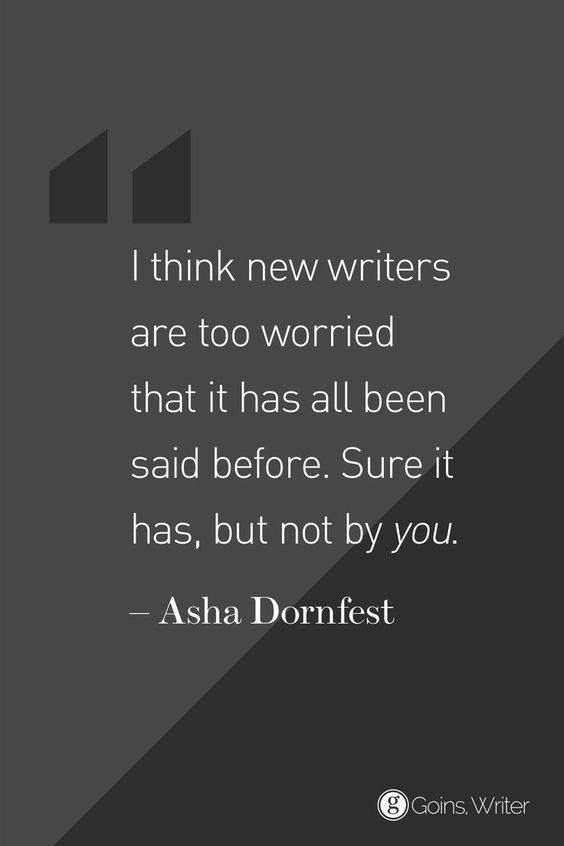
Some things to know before you begin:Welcome to Flyg0n's Writing Block Busting Thread! This is an idea I've been tinkering with for some time now. The idea is simple. I believe writer's block is a complex thing, and by understanding it, you can more easily overcome it.
In my experience, writers block is more complex than simply feeling unable to write. There can be many factors and underlying reasons. The goal is to help you understand what kind of writer's block you're facing, why, and how to overcome it. At the end of the day, my aim for this thread to help you defeat your writer's block and help you learn a little more about yourself. And hopefully, help you become a better writer.
Everything within this thread is based on my experience and those I know personally. Some of it may not apply to you or it might look different for you.
Ultimately, the only one who can defeat Writer's Block is you. If you have insight, tips or thoughts of your own, PLEASE feel free to add them!
This isn't a fix-all. Nothing can help you unless you have the drive to help yourself too. Writing is not unlike exercise. You can read all the books, watch the videos, get a personal trainer. But no one can make you exercise. At the end of the day, you have to lift the weights, do the crunches, jog around the block.
Disclaimer: As mentioned, the following is based on my personal experience. If it doesn't work for you, thats okay. But try to be open too, to working at something new. Remember that working through this is a non-linear process and takes time and is an ongoing process. You can shift through different forms of writers block and there's not a one size fits all simple solution. Be patient with yourself, work hard, and rest hard.
What
First, I've created a questionnaire. Ideally, the questionnaire should help you examine your writing and state of mind, and help you figure out what you're struggling with. The answers are projected answers, but feel free to erase them and use your own.
(I eventually would like to have either flow-chart or a quiz available too)
After that, I will go into a lengthy discussion of breaking down writers block, trying to understand it, and trying to overcome it.
At the end of this post will be a steadily growing list of resources and helpful articles and whatnot.
Questions
- Would you consider yourself more of a panster, a 'planster' or a planner?
Pansters are free spirits who prefer to only know the barest of details about their story and just sit in front of a blank page and WRITE. They have fun figuring everything out along the way.
Planners prefer to map out every little detail beforehand. They have summaries, characters bios, world maps and everything else made before they write.
Plansters are right in between. They enjoy a good structure and have loose outlines, but like to not be too rigid. - Have you been able to write at all? No, hardly a word/A little here and there/I keep trying, but then deleting every sentence.
- When you sit down to write, how do you feel? Exhausted/Uninspired/Sad/Tired of this same darn character/Dissatisfied/Unmotivated
- Have you been stuck on one project, or all your projects?
- If one project, Have you found yourself stuck at one plot point for while? Yes/Not really/Kind of
- Do you write daily? Yes/No
- If yes, approximately how many words a day?
Once you have filled this out, take a look at it, study it, and try to do just a wee bit of self-analyzing. If you're comfortable, perhaps posting here will help you reflect on what you might be struggling with.
Hopefully, these questions will help you figure out what type of writer's block you struggle with.
Below I have compiled a list of what I believe to be five main types of writer's block.
- Fear - You start writing, but you never get far with a project. You scribble ideas sometimes, but even when you have the time to start them, you don't. You know what happens next in your story, and how you want to write it, but don't. You may second guess or create too many versions of a story.
- Procrastination - It seems too daunting overwhelming in your eyes so you put it off because you don't know how to begin or where to go next. You have lots of big ideas and grand plans. But... you don't know where to start. So you don't. Or you've been stuck on one part of your story for a while.
- Burnout - You've been working, thinking, writing about this project for days/weeks on end. Now its muddled and messy and you feel tired of it. Alternatively, you've been spending most of your spare time writing, and just feel exhausted in general of writing and thinking about writing.
- Discouragement - You feel like you'll never reach your goal or accomplish the end of it, so better to give up now. You feel like you're not making enough progress. You don't even know why you're bothering with this anyway.
- Perfectionism - The product has to be perfect NOW. You probably keep going back and rewriting as you write. The words don't come out write and now everything is convoluted. You barely get out more than a paragraph without stopping.
Why
Now its time to discuss the why of writer's block. This might get a bit psychological.

When you struggle with Fear, it likely stems from a fear of how your work may be perceived by others. Whether its friends, family, or random readers on the internet, you feel afraid of potential criticism (whether or not you realize it). You want people to like your work, but you also want to write things your way. For example, (at the time of writing this) I've been slow to update my most recent chapter of my 'Flames of Victory' fanfic. Now that I'm on the last chapter, I know part of me is afraid people may not like the ending or approve of my creative choices.
Your work is a part of you, and you want it to be good. When people don't like it, it hurts because it feels like a personal attack against you and your opinions/beliefs/values.
Your work is a part of you, and you want it to be good. When people don't like it, it hurts because it feels like a personal attack against you and your opinions/beliefs/values.
Procrastination is a tricky, many-layered beast. This is because procrastination for a writer is rarely simple laziness. More often than not, procrastination can come from a variety of things, and even be tied to the other forms of writer's block (such as perfectionism and fear). Usually, it stems from having a disproportionately high correlation between your performance and your value as a person. So failure becomes ridiculously painful to even contemplate. This leads to putting off anything that you might fail at (such as writing the next chapter of your fanfic and publishing it).
This is probably the simplest of them, and the easiest to identify. If you've been focusing on one thing too long, you have Burnout. Whether it's one project or writing in general, if you find that you've been thinking about it non-stop, you have probably gotten sick of it. For example, if you were to work at Chick-fil-a all day every day, and eat breakfast/lunch there every single day, you'd probably be sick of the food for a while. Or if you had pasta and meatballs for dinner every. single. night.
This can often happen a lot if you are the type to hyperfixate on one thing a lot. (Like me). You love the thing so much and are so passionate about it, you inadvertently drown yourself in it. And suddenly he joy is mysteriously gone. The drive that seized you when you first began has vanished, and without that magical 'drive', you don't know how to write. Another key aspect of burnout can be a loss of knowing why you even write in the first place. Don't worry, we'll talk about that soon.
This can often happen a lot if you are the type to hyperfixate on one thing a lot. (Like me). You love the thing so much and are so passionate about it, you inadvertently drown yourself in it. And suddenly he joy is mysteriously gone. The drive that seized you when you first began has vanished, and without that magical 'drive', you don't know how to write. Another key aspect of burnout can be a loss of knowing why you even write in the first place. Don't worry, we'll talk about that soon.
Discouragement happens when you take a step back and begin to focus on everything you haven't done rather than what you have done. You see all the grand plots, complex characterizations, and writing you haven't done yet. And boy is it a lot. You have such big dreams but the more you look at them, the more you begin to think they're unattainable. If you tend towards pessimism in life, you may struggle with this more. You don't believe in yourself or you are insecure. You think 'well... I can't do this.' It's too much for me. I'm not good enough, skilled enough, strong enough, etc to accomplish this. And I never will be. You suddenly feel very small and inadequate.
Ah yes, my old friend perfectionism. A blessing and a curse. A big, big curse. You hold yourself to such a high standard (probably for the reasons discussed in 'Procrastination') that you get caught up in the small details all sounding right. Before you know it, you have one ridiculously good sentence or paragraph and... that's it. Nothing. Or worse yet, you spend so much time stopping and editing that you end up with nothing.
You allow the details to become so important to you, that you stop yourself from accomplishing anything. It can stem from a desire for control. You want this one aspect of things to be right because its the one thing you believe you have complete control over and by getting it perfect, you feel secure. Confident again. You finally did something good/meaningful. Ouch. I say this because this is another I struggle deeply with.
You may hold yourself to such a ridiculously high standard because if you can do it perfectly, then people will like/approve of you. Because once you write the perfect piece, no one can criticize you, right?
You allow the details to become so important to you, that you stop yourself from accomplishing anything. It can stem from a desire for control. You want this one aspect of things to be right because its the one thing you believe you have complete control over and by getting it perfect, you feel secure. Confident again. You finally did something good/meaningful. Ouch. I say this because this is another I struggle deeply with.
You may hold yourself to such a ridiculously high standard because if you can do it perfectly, then people will like/approve of you. Because once you write the perfect piece, no one can criticize you, right?
Whew. That's a lot to take in. Hopefully, it didn't make you feel worse. Because there's hope! First, you're not alone. Every writer I've known has struggled with one or more of these. Me included (I've managed to hit all five these past couple of months. Woohoo!). But I've managed to defeat all of them too.
I hope that the insight I am about to provide can help you do the same! Now that you understand the what and the why better, it's time to discuss the best part of all this. The how. How to overcome them.

How
So how do you overcome these monsters? There are a great many ways, and some of my methods may not work for you, but hopefully understanding them will help you get started beating them. That said, let's start with some basic principles.
Go write! RIGHT NOW. I'm serious. I want you to open up one of your projects, any of them, and write a single sentence. That's it, just one. I don't care if its good, bad or ugly. If it's your current project or one you dug up from 20 years ago. Open a new tab on your browser and write a sentence. And don't come back here until you do.
...
....
.....
......
.......
Done? Good. Now we can get on to some meatier bits. First, a few bits of general advice.
- DO. NOT. COMPARE YOURSELF TO ANYONE. You are not them. Don't try to be them. Learn from them but don't become them. There's only one you in the world. Trying to become someone else only leads to disaster.
- No writer ever sits down and churns out a book/piece perfectly on the first try. If you saw some of your favorite author's first drafts, you'd be horrified. Writing is a skill that can be honed.
- You won't always feel like writing. Write anyway. Even if its 1 line.
- You will always have someone who will dislike you/your work. Period. This world is filled with hundreds of people, some kind and some cruel, all with their own thoughts, opinions, and values. You will never ever please them all, so stop trying. Grow a thick skin. And (as harsh as this sounds) Get. Over. It.
- Writing is a talent and a skill. Even if you think you suck, you can get better. But it will take work. And it won't always be fun or easy. There may even be times you hate writing and want to burn everything. Which leads to my FINAL point
- NEVER. DELETE. ANYTHING. No matter how much you hate a scene/paragraph/page/chapter. If a draft. If you don't like it, copy/paste it to a separate document for 'deleted scenes'. This serves a multitude of purposes. It lets you learn from your past writing. And you will often find that there are parts of your old drafts that can inspire you. Save them. Plus its fun to look back on!
So fear stems from not living up to expectations. Yours or others. The only real way to get past this is to grow some thick skin. As I mentioned, there will always be people who don't like your work.
What you should strive for instead is to stay true to your own themes and established plot points. Write something that you believe in and that represents what you want to put out. It's better to have an audience who likes your work, not twist yourself to fit someone else's desire.
It is also critical to learn how to separate good critique from useless ones and haters. It is EXTREMELY helpful to have at least one close and trusted friend to give you feedback. Someone with a good head on their shoulders who can be honest about your work. Having one other trusted voice of reason can help tell you when a critique is baseless or valid.
At the end of the day though, you must write anyway. And keep doing it, regularly. Even if you have to force yourself to write something, at least you can edit it later. And usually, you'll find its not as bad as you thought.
What you should strive for instead is to stay true to your own themes and established plot points. Write something that you believe in and that represents what you want to put out. It's better to have an audience who likes your work, not twist yourself to fit someone else's desire.
It is also critical to learn how to separate good critique from useless ones and haters. It is EXTREMELY helpful to have at least one close and trusted friend to give you feedback. Someone with a good head on their shoulders who can be honest about your work. Having one other trusted voice of reason can help tell you when a critique is baseless or valid.
At the end of the day though, you must write anyway. And keep doing it, regularly. Even if you have to force yourself to write something, at least you can edit it later. And usually, you'll find its not as bad as you thought.
There's a rich kind of irony in the fact that I ended up procrastinating on writing this section. In this instance, I procrastinated because I felt a bit bored and distracted by other things. This is one of the key components of procrastination. Distraction. I don't know about you, but once I get sidetracked, it is difficult to write for the rest of the day. If I open my laptop and head straight to netflix/pinterest/social media/whatever, then my chances of writing that day decrease. It is crucial to fully utilize your motivation by capitalizing and writing first and 'play' later. So, step 1 to beating procrastination is try to eliminate distractions. If you have a desk, try to use the desk space for ONLY writing and nothing else. And if you don't have a desk, try to set aside the first part of your free time to write. Alternatively, find a time that does work for you.
Next, I will address another side of procrastination. There's often the conception that procrastination=laziness, but that's not always true. Often, artists suffer from believing their performance is directly linked to their value, as I mentioned above. This is simply not true. Let's establish something right now. You, as a human being living on this earth, are valuable. You are worth something. So even if you wrote something poorly, that wouldn't change. You must try. And fail. And learn. It's ok to fail. It will happen and its natural. When you do though, look back and try to see where you went wrong.
This may sound cheesy but that doesn't mean it isn't true. I tried writing many things in the past, and failed. I either didn't finish them or sometimes finished poorly. But looking back allowed me to discover what works and what doesn't work for me as a writer. That is what you should strive for. Discovering what works for you and what doesn't.
Next, I will address another side of procrastination. There's often the conception that procrastination=laziness, but that's not always true. Often, artists suffer from believing their performance is directly linked to their value, as I mentioned above. This is simply not true. Let's establish something right now. You, as a human being living on this earth, are valuable. You are worth something. So even if you wrote something poorly, that wouldn't change. You must try. And fail. And learn. It's ok to fail. It will happen and its natural. When you do though, look back and try to see where you went wrong.
This may sound cheesy but that doesn't mean it isn't true. I tried writing many things in the past, and failed. I either didn't finish them or sometimes finished poorly. But looking back allowed me to discover what works and what doesn't work for me as a writer. That is what you should strive for. Discovering what works for you and what doesn't.
Once again, I think burnout is a bit more straightforward. No less difficult, but the solution is more simple. First, discern whether you are suffering from writing burnout or project burnout. The easiest way to tell is just to see if you have been working on multiple projects or one.
If you are sick of one project, you have a couple options. One, if you are close to finishing, FORCE yourself to just finish. It'll suck, but you'll be much happier and clear-headed. If its too long to finish quickly, put it aside. Plan something else or take a break from that project. It can be helpful to do a 'stress relief' project. This can be fluff, romance, comedy or whatever amuses you. As long as it takes your mind of your current project. Ideally, the more tired you are, the longer of a break you may need.
If you are tired of writing however, then you need a real break. What I like to do is make something with my hands. Arts and crafts, origami, sculpting are all stuff I do when I need to break from writing. Reading is also a good idea, as you can get inspired from a good story. Its good to read stuff in the same genre as whatever you like to write.
At the end of the day, make sure to work hard and play hard. And take the time to be proud of work you do. If you write that day, be proud! You're one step closer to finishing!
A further note on Burnout:
I would like to add some recent insight into Burnout.
(And hopefully, this will be remanded to the main post soon)
Another aspect of long term burnout is a loss or disillusionment of why you write.
If you see other stories more popular, it can be disheartening. Perhaps you want a story that's popular and beloved. Perhaps you sit down one day and just ask yourself "Wait. Why am I doing this anyway? What's the point? It's just a dumb fanfic."
I know I have.
One of the truths of burnout is that if it stems from not knowing why you write, you might never break free. (Might). You must know why you write. Because at some point, it may be the only thing keeping you going on a rough day. Do you write for a friend? For yourself? For fame, faith, love, popularity, fun? Everyone has a reason, I promise you. The more you dig into your reason, the more it will be your guiding light, the thing that you hold on to even when you simply don't feel like writing. You can have multiple reasons too!
On those days, I remind myself of all the reasons I write. And I must push past my own fear, disillusionment, insecurity, and obsessive need for perfection. I stand up and say no I will write, no matter if it takes me an hour to write a paragraph today.
Because ALL progress is good.
Now get out there and write!
(P.S. Writing for popularity is very very dangerous, I do not recommend it. Popularity is fleeting and cruel, and will not make you happy.)
If you are sick of one project, you have a couple options. One, if you are close to finishing, FORCE yourself to just finish. It'll suck, but you'll be much happier and clear-headed. If its too long to finish quickly, put it aside. Plan something else or take a break from that project. It can be helpful to do a 'stress relief' project. This can be fluff, romance, comedy or whatever amuses you. As long as it takes your mind of your current project. Ideally, the more tired you are, the longer of a break you may need.
If you are tired of writing however, then you need a real break. What I like to do is make something with my hands. Arts and crafts, origami, sculpting are all stuff I do when I need to break from writing. Reading is also a good idea, as you can get inspired from a good story. Its good to read stuff in the same genre as whatever you like to write.
At the end of the day, make sure to work hard and play hard. And take the time to be proud of work you do. If you write that day, be proud! You're one step closer to finishing!
A further note on Burnout:
I would like to add some recent insight into Burnout.
(And hopefully, this will be remanded to the main post soon)
Another aspect of long term burnout is a loss or disillusionment of why you write.
If you see other stories more popular, it can be disheartening. Perhaps you want a story that's popular and beloved. Perhaps you sit down one day and just ask yourself "Wait. Why am I doing this anyway? What's the point? It's just a dumb fanfic."
I know I have.
One of the truths of burnout is that if it stems from not knowing why you write, you might never break free. (Might). You must know why you write. Because at some point, it may be the only thing keeping you going on a rough day. Do you write for a friend? For yourself? For fame, faith, love, popularity, fun? Everyone has a reason, I promise you. The more you dig into your reason, the more it will be your guiding light, the thing that you hold on to even when you simply don't feel like writing. You can have multiple reasons too!
On those days, I remind myself of all the reasons I write. And I must push past my own fear, disillusionment, insecurity, and obsessive need for perfection. I stand up and say no I will write, no matter if it takes me an hour to write a paragraph today.
Because ALL progress is good.
Now get out there and write!
(P.S. Writing for popularity is very very dangerous, I do not recommend it. Popularity is fleeting and cruel, and will not make you happy.)
You got this! Yeah, cheesy. But still true. First of all, you have to start believing in yourself. Easier said than done though. Because as often as you hear believe in yourself, how does one do that?
It begins with how you talk about yourself. If you say 'man this will never get done' then it won't. Instead, you can say 'I can't wait to finish this project!' Don't say; 'This story sucks'. That's unfair and cruel. Instead, you have to change it to something like 'This story has some flaws, but it has good parts too!"
As a general guide, when you talk about yourself/your projects, pretend you are talking to your best friend. You wouldn't cruelly insult your friend. You would encourage them. EVen if it wasn't the greatest, you might tell them 'keep trying though!'
Second, always focus on what you have accomplished, not how much you haven't. If you wrote 1 paragraph today, GOOD JOB! You are one paragraph closer to your goal. You did work today and that's good. Now keep trying! Push yourself just a little more! Writing is like exercise. A little is better than none. And if you can start, then just do a little. Then a little more. And a little more. I don't remember it exactly, but there's a quote that I really like. It goes something like this.
"Write a word. Now write another few words. Now you have a sentence. Write another sentence. Now a few more. There, you have a paragraph. Do that a few more times and you have a page. Keep doing that and you'll have a chapter."
I think you get the gist. It seems insurmountable, but just keep plugging away, and in a month you'll realize you have a lot. Small daily work takes you further than you realize!
It begins with how you talk about yourself. If you say 'man this will never get done' then it won't. Instead, you can say 'I can't wait to finish this project!' Don't say; 'This story sucks'. That's unfair and cruel. Instead, you have to change it to something like 'This story has some flaws, but it has good parts too!"
As a general guide, when you talk about yourself/your projects, pretend you are talking to your best friend. You wouldn't cruelly insult your friend. You would encourage them. EVen if it wasn't the greatest, you might tell them 'keep trying though!'
Second, always focus on what you have accomplished, not how much you haven't. If you wrote 1 paragraph today, GOOD JOB! You are one paragraph closer to your goal. You did work today and that's good. Now keep trying! Push yourself just a little more! Writing is like exercise. A little is better than none. And if you can start, then just do a little. Then a little more. And a little more. I don't remember it exactly, but there's a quote that I really like. It goes something like this.
"Write a word. Now write another few words. Now you have a sentence. Write another sentence. Now a few more. There, you have a paragraph. Do that a few more times and you have a page. Keep doing that and you'll have a chapter."
I think you get the gist. It seems insurmountable, but just keep plugging away, and in a month you'll realize you have a lot. Small daily work takes you further than you realize!
NEWS ALERT!!!!!
YOU AREN'T PERFECT!
You'll never be perfect! NEVER! Because its an impossible standard.
Whew. Okay, sorry but it had to be said. It a difficult thing to accept and consciously believe, but important.
The trick to beating perfectionism is to get accustomed to imperfections. Now obviously, you want to do your best. But there is a thick line between doing your best and crippling yourself with an overpowering need to do everything right.
Write silly things. Write bad things. Write first drafts that no one ever has to see.
One common trait of perfectionists, myself included, is stopping to edit as you write. (And I'm not talking about fixing a spelling error). I mean, 'I just wrote two paragraphs but instead of writing a third I'm going to stop and scrutinize every detail of the two'.
Writing and editing are two completely different things, and should NOT be mixed. Write when you write, edit when you edit.
Some practical tips are;
Above all, accept that you will never have perfection. Instead, strive to stay true to your own standards and goals. Write quality but don't expect yourself to write the next Lord of the Rings. Especially if you haven't had practice.
YOU AREN'T PERFECT!
You'll never be perfect! NEVER! Because its an impossible standard.
Whew. Okay, sorry but it had to be said. It a difficult thing to accept and consciously believe, but important.
The trick to beating perfectionism is to get accustomed to imperfections. Now obviously, you want to do your best. But there is a thick line between doing your best and crippling yourself with an overpowering need to do everything right.
Write silly things. Write bad things. Write first drafts that no one ever has to see.
One common trait of perfectionists, myself included, is stopping to edit as you write. (And I'm not talking about fixing a spelling error). I mean, 'I just wrote two paragraphs but instead of writing a third I'm going to stop and scrutinize every detail of the two'.
Writing and editing are two completely different things, and should NOT be mixed. Write when you write, edit when you edit.
Some practical tips are;
- Change your text color to white so you have no choice but to just WRITE and not edit as you go.
- Try using Fighters Block, a fantastic little writing app that forces you to keep your flow as you write, and not stop! I used it for a while and it helped break my bad habit. You can set a word count goal and the app won't let you stop until you reach it.
- There are similar apps too, ones that 'hide' the sentence as you write it, so you can't go back. Whatever works for you.
Above all, accept that you will never have perfection. Instead, strive to stay true to your own standards and goals. Write quality but don't expect yourself to write the next Lord of the Rings. Especially if you haven't had practice.
*takes a big, deep breath*. Wow. That was a lot.
This brings me to my conclusion. I hope that something in this thread helped you. I truly believe understanding one's fear can help you overcome them. So I hope reading this helped you understand your writer's block more. And maybe even pulled out of it!
Closing Thoughts
At the end of the day, there will be times when you will have to make yourself write. I think there's some kind of urban myth that a great writer will just 'feel' like writing and pop out quality content in the snap of a finger. That's a lie.
Great writers are the ones who make a choice to write, in spite of what they feel, because they love it. Motivation follows action. NOT the other way around. To build up morivation you will often have to take action.
Set a small goal for yourself tonight. Maybe you want to write TWO sentences. Or ONE paragraph. Start with something small and simple, and go do it. And whatever your goal is, write one more sentence after you reach it.
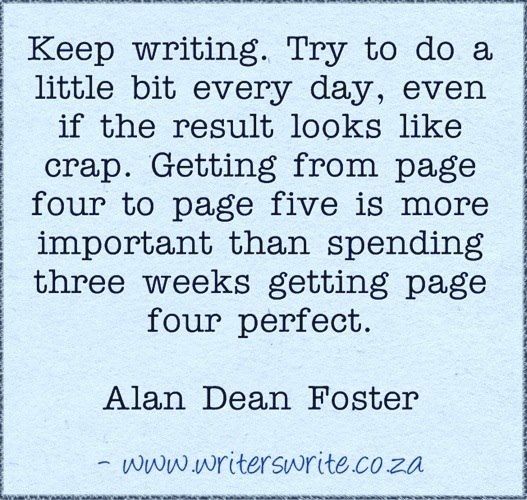
Write daily. Write poorly. Read a lot. Learn. Write again. Learn from your mistakes. And never give up.
I leave you with this quote.
[If you have feedback, personal experiences, or anything else to share, go right ahead! The more the merrier!
Also this thread is a constant work in progress, so I will be looking to add/expand on topics as they come to me. If anything seems unclear or confusing, please let me know.

]
Resources
https://thousandroads.net/fanfic/rewrites-harmful This link discusses why doing a full rewrite of your story can be very harmful
https://www.fanfiction.net/u/1591992/ScytheRider This author has a long bio on their page with goes into lovely detail on many aspects of writing
Fighter's Block http://cerey.github.io/fighters-block/#
grammarly.com - lovely free spellcheck program
Change your font to comic sans! As silly as this sounds, it has helped me and many other people.
https://www.fanfiction.net/u/1591992/ScytheRider This author has a long bio on their page with goes into lovely detail on many aspects of writing
Fighter's Block http://cerey.github.io/fighters-block/#
grammarly.com - lovely free spellcheck program
Change your font to comic sans! As silly as this sounds, it has helped me and many other people.
Last edited:


